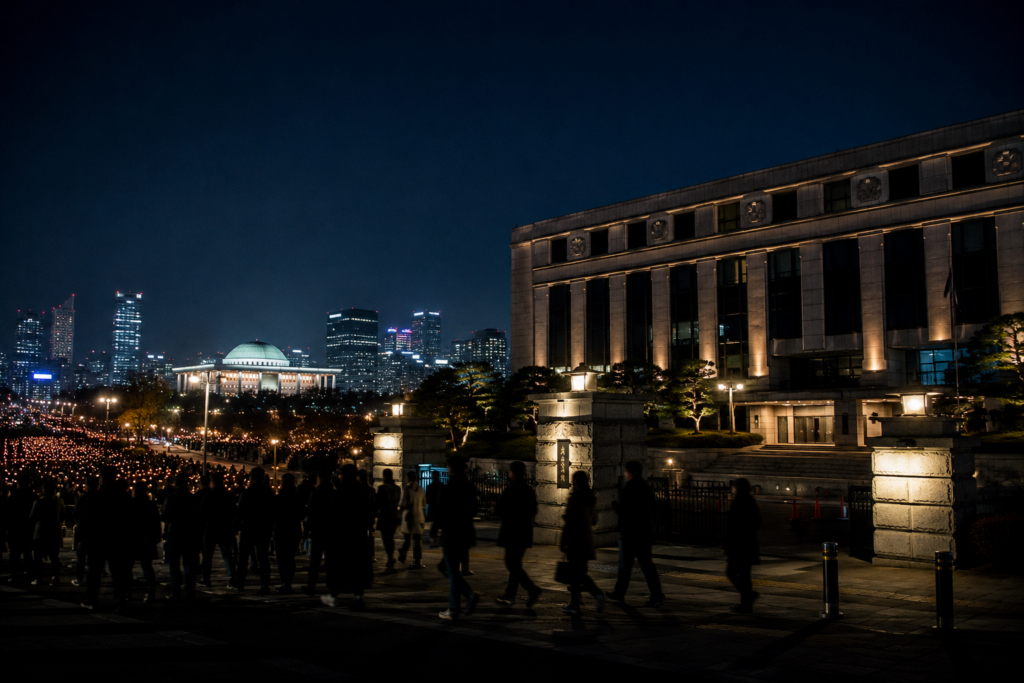
In South Korea, the word impeachment can change the temperature of a room.
Mention it in a café, on a university campus or during a conversation about the evening news, and it rarely sounds like a remote constitutional procedure. It carries the memory of crowds in winter coats, candles held above heads, flags outside the National Assembly and television screens filled with parliamentary votes. At certain moments, a president’s name can become almost inseparable from the fate of the government itself.
For an outsider, the frequency with which the word appears in Korean political news can be startling. Under the current constitutional system, South Korea has experienced three presidential impeachment trials: Roh Moo-hyun in 2004, Park Geun-hye in 2016 and Yoon Suk Yeol after the National Assembly voted to impeach him in December 2024. Roh was reinstated after the Constitutional Court dismissed the case, Park was removed from office in March 2017, and the Constitutional Court removed Yoon on April 4, 2025.
Three cases across two decades is hardly an impeachment every few years. Yet the word has acquired an unusually large place in South Korea’s political vocabulary.
Part of that comes from what impeachment means within the country’s constitutional system. Part comes from the kind of presidency Korea built after democratization. And part comes from the fact that, in moments of severe political conflict, impeachment is not simply discussed as an abstract legal possibility. It becomes something citizens can watch unfold in real time.
The Presidency Was Designed to Be Powerful
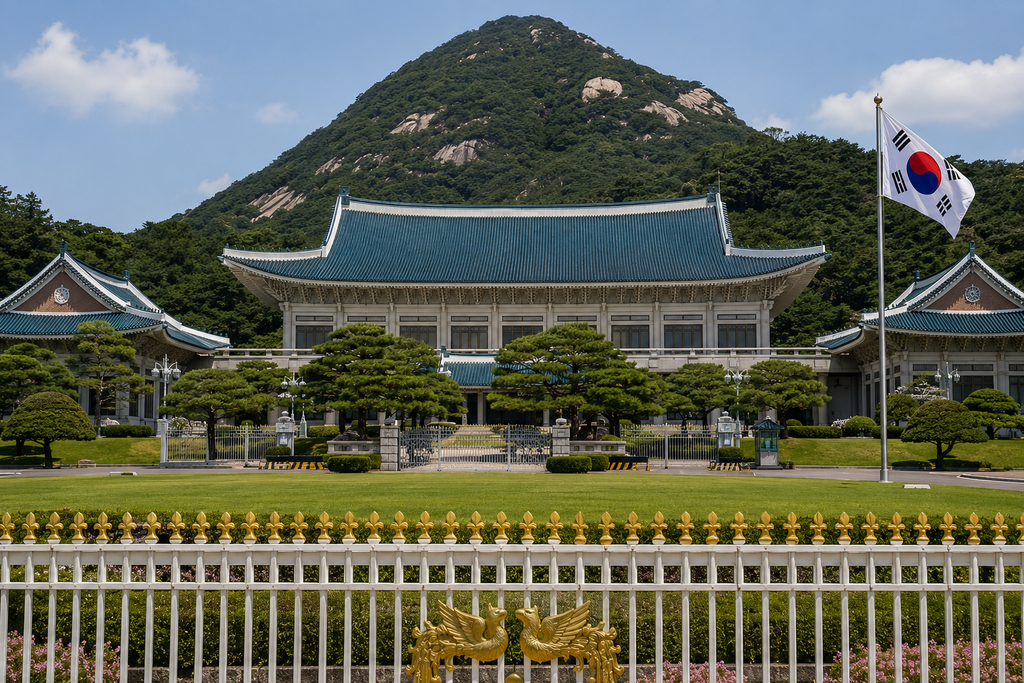
To understand why impeachment carries such weight in South Korea, it helps to start with the office itself.
The modern Korean presidency is a strong executive position. Under the Constitution, the president is directly elected for a single five-year term with no reelection. The president appoints the prime minister with the consent of the National Assembly, appoints the cabinet, directs the executive branch and holds substantial authority over national policy and foreign affairs.
The system reflects Korea’s modern political history.
For much of the country’s postwar period, political power was heavily concentrated in the executive branch. South Korea’s rapid industrialization took place under governments in which the presidency exercised extraordinary influence over economic policy, the bureaucracy and national security. Democratic institutions developed around a state that was already unusually centralized.
That history did not disappear when Korea democratized.
The Constitution adopted in 1987 established the framework of the current Sixth Republic, including direct presidential elections and a strengthened system of constitutional checks and balances. The Constitutional Court began operating under that framework in 1988.
The result is a political structure in which the president remains powerful enough to shape the direction of the state, while institutions outside the presidency retain significant tools for checking that power.
Impeachment sits at the sharpest end of that arrangement.
Impeachment Is Not a Vote of No Confidence
The distinction matters.
In some parliamentary systems, a government can fall because it has lost the confidence of the legislature. South Korea does not work that way. A president cannot simply be removed because the opposition has won a majority of seats or because public approval has collapsed.
Impeachment is a constitutional process tied to alleged violations of the Constitution or other laws committed in the exercise of official duties.
The National Assembly begins the process. For a president, an impeachment motion requires the support of two-thirds of all Assembly members. Once the motion passes, the president is suspended from exercising presidential powers while the Constitutional Court reviews the case.
The final decision does not belong to parliament.
That last stage is crucial. South Korea’s Constitutional Court determines whether the president should actually be removed from office, and at least six of the court’s justices must support the impeachment for removal to take effect.
Political action and constitutional judgment are therefore placed in separate hands. The National Assembly can say that a president should face an impeachment trial; it cannot, by itself, decide that the president is guilty.
The Constitutional Court Changed the Meaning of the Process
The existence of a court specifically empowered to make the final decision gives impeachment a different character from an ordinary political confrontation.
Roh Moo-hyun’s case demonstrated why.
In March 2004, the National Assembly voted to impeach Roh, suspending his presidential powers. The case centered on his conduct surrounding the 2004 parliamentary elections and other alleged violations of the Constitution and election law. Two months later, on May 14, the Constitutional Court dismissed the impeachment and restored Roh to office.
The political system had absorbed a major confrontation without removing the president.
For many Koreans, that episode established an important precedent: impeachment could be serious enough to suspend a president while still ending with the court determining that removal was not justified.
The second case, involving Park Geun-hye, had a different outcome.
After a scandal involving Park’s longtime associate Choi Soon-sil and allegations of abuse of presidential authority, the National Assembly voted overwhelmingly to impeach Park in December 2016. On March 10, 2017, the Constitutional Court unanimously upheld the impeachment and removed her from office.
The image of Park’s removal became one of the defining political moments of contemporary South Korea. The country had not merely debated whether a president should leave office.
It had actually done it.
Yoon Turned an Already Familiar Word Into a National Crisis
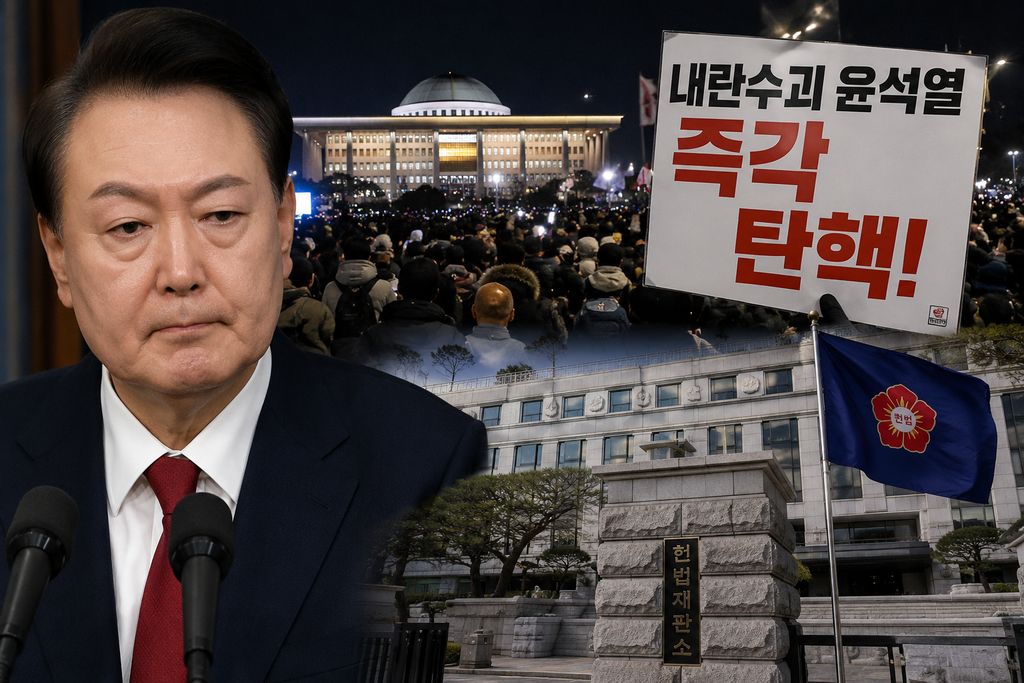
The third presidential impeachment came less than eight years later.
On the night of December 3, 2024, President Yoon Suk Yeol declared emergency martial law. The declaration lasted only a matter of hours. The National Assembly convened during the night and voted to demand its termination, after which the martial law order was lifted.
The political consequences were much larger.
The National Assembly voted to impeach Yoon on December 14, 2024, suspending his presidential powers while the Constitutional Court considered the case. On April 4, 2025, the court unanimously upheld the impeachment and removed Yoon from office.
The facts of the case made the word impeachment impossible to separate from a wider argument about democratic institutions. The Constitutional Court found that Yoon’s martial-law measures and related actions seriously violated the Constitution and laws, concluding that the violations justified removal from office.
For a country that had already experienced two presidential impeachment cases, the speed with which the word returned to everyday conversation was striking.
The legal mechanism was familiar. The circumstances were not.
Why Does It Keep Reaching the National Assembly?
There is no single explanation, and it would be misleading to suggest that South Korea has some uniquely impulsive appetite for removing presidents.
The more interesting problem is structural.
The president holds substantial executive power but cannot seek a second term. That creates an unusual political clock: a new administration enters with a large mandate and a fixed five-year window, while the next presidential election is always approaching and the governing party cannot rely on the incumbent remaining on the ballot.
The National Assembly, meanwhile, can be controlled by a different political force.
When the presidency and legislature fall into sustained conflict, there are relatively few institutional mechanisms for cooling the dispute. Parliamentary elections do not remove a president. Presidential elections may be years away. A parliamentary majority can block or constrain government policy, but it cannot by itself replace the head of state.
Impeachment occupies that narrow space.
It is not intended to function as a routine political weapon. But when a confrontation becomes severe enough, it can become the constitutional route through which a political system forces the dispute into a formal process.
That makes impeachment unusually visible.
Politics in Korea Is Often Played at High Volume
There is also a cultural and political history behind the intensity.
South Korea’s democracy was not created gently. It emerged from decades of authoritarian rule, mass protest and repeated struggles over political legitimacy. The democratization movement of the 1980s remains part of the country’s political memory, and large demonstrations are still a familiar feature of public life.
The candlelight demonstrations surrounding Park Geun-hye’s impeachment were enormous. Millions of people took part in demonstrations across the country over several months, with Seoul’s Gwanghwamun Square becoming the visual center of the movement.
The protests were peaceful, highly organized and extraordinarily visible.
By the time the Constitutional Court issued its decision, impeachment was no longer something discussed only among politicians and lawyers. It had become a public civic event.
The same broad civic culture was visible again after Yoon’s martial-law declaration. Demonstrators gathered almost immediately, while supporters of the president organized counter-rallies. The dispute moved rapidly between parliament, the courts, the streets and television screens.
In Korea, constitutional politics can become street politics very quickly.
That does not mean the public always agrees. Quite the opposite. The intensity comes partly from how many people feel entitled to participate in the argument.
The Legislature and Presidency Are Both Powerful Enough to Clash
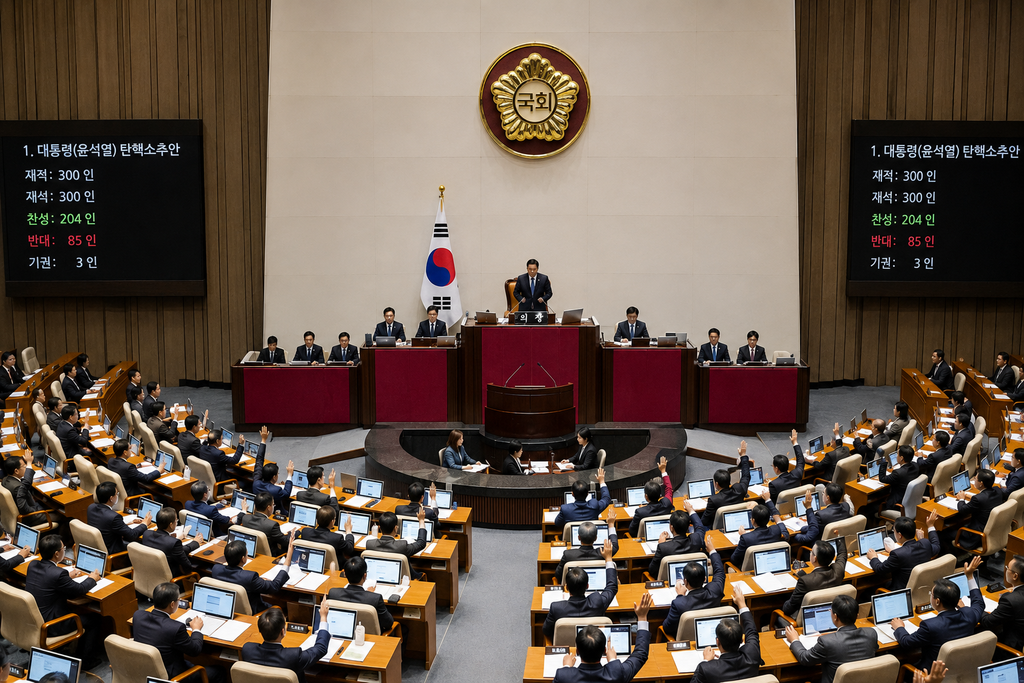
South Korea’s political system also concentrates a large amount of authority in two institutions that are both capable of claiming democratic legitimacy.
The president has a nationwide electoral mandate. Members of the National Assembly have their own electoral mandates.
When the two sides disagree, neither can easily dismiss the other as politically irrelevant.
A president can argue that a national election gave the administration authority to govern. A parliamentary majority can argue that its election gave lawmakers the authority to scrutinize, block or investigate the government’s actions.
That tension exists in many democracies. In South Korea, the stakes can rise quickly because the presidency is so consequential and political divisions can become closely tied to questions of national direction. Economic policy, relations with North Korea, relations with Japan and the United States, prosecution policy, housing and social issues can all become part of the same political argument.
Once trust collapses, an ordinary institutional dispute can acquire a much larger meaning.
Impeachment Requires More Than Anger
This is where the legal threshold matters.
A president cannot be removed simply because millions of people dislike the government’s decisions. Political mistakes, declining approval ratings and unpopular policies are not, by themselves, grounds for impeachment.
The National Assembly needs a two-thirds majority to pass a presidential impeachment motion. After that, the Constitutional Court examines whether the president’s conduct amounts to a sufficiently serious violation of the Constitution or law to justify removal.
Roh’s case and Park’s case offer the clearest contrast.
The National Assembly impeached both.
The Constitutional Court removed only one.
That distinction is more important than the headline. It means the Korean system contains a built-in separation between political accountability and constitutional removal. Parliament can trigger the process, but the court decides whether the president has crossed the line far enough to lose office.
The mechanism is therefore neither purely political nor purely judicial.
It is deliberately both.
Why the Word Feels More Common Than the Statistics Suggest
Part of the answer lies in the scale of the events.
There have been hundreds of political controversies since democratization. Only a small number have reached the point of a presidential impeachment vote, and only two presidents have actually been removed through the Constitutional Court.
But successful impeachments are not ordinary news.
They reshape governments, trigger new presidential elections and dominate the national conversation for months. International media often cover them extensively because they offer a dramatic shorthand for political instability, democratic conflict or institutional accountability.
That can create the impression that Korea is constantly impeaching its presidents.
The reality is more specific.
Presidential impeachment has become possible, politically meaningful and institutionally credible in Korea. It has not become routine.
That distinction matters.
The Street and the Court Tell Different Parts of the Story
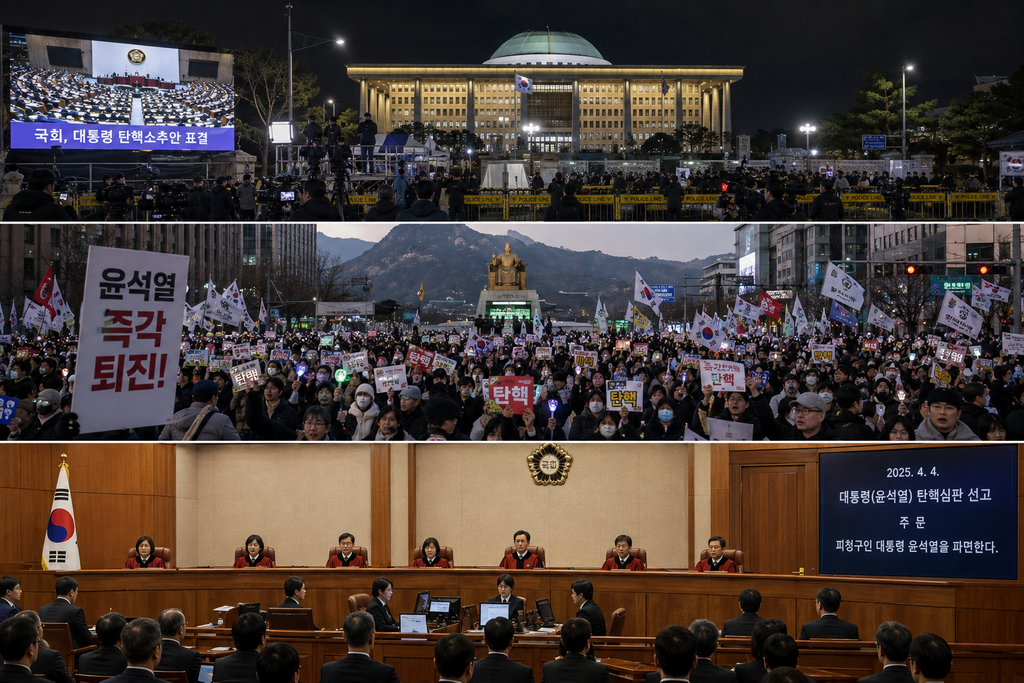
There is another reason impeachment has such emotional force in South Korea: the public can watch each stage unfold.
The National Assembly is televised. Demonstrations are highly visible. The Constitutional Court broadcasts major proceedings and publishes its decisions. Newspapers and broadcasters translate complicated legal arguments into a daily political narrative.
The process therefore has a physical geography.
You can stand outside the National Assembly while lawmakers vote. You can walk through Gwanghwamun during a demonstration. You can watch the Constitutional Court announce its ruling.
The institutions are real places, and the conflict can be seen in them.
For foreigners, that can make Korean politics appear unusually theatrical.
For Koreans, the locations are part of the political memory.
Impeachment Has Become a Test of the Democratic System Itself
Every presidential impeachment case raises a question larger than the president involved.
How much power can the presidency exercise before constitutional limits become meaningful? How far can parliament go in challenging an elected president? When does political misconduct become a constitutional violation serious enough to justify removal?
And perhaps most importantly, can the institutions built to contain a crisis still function when the country is deeply divided?
Korea’s recent history has given those questions unusually concrete answers.
In 2004, the Constitutional Court restored a president whose impeachment had passed the National Assembly. In 2017, it removed a president after months of mass demonstrations and an extensive constitutional review. In 2025, it removed another president following a crisis that had begun with a short-lived declaration of martial law.
The institutional path was similar.
The facts were not.
That consistency is part of the reason the system has survived such dramatic tests.
So Why Has Impeachment Become Such a Powerful Word in South Korea?
Because the word carries more than the possibility of removing a president.
It represents one of the few constitutional moments when the country’s strongest elected official can be forced to answer to another part of the democratic system.
The presidency is powerful. The National Assembly is powerful. The Constitutional Court has the final say on whether a president should remain in office. None of those institutions can simply erase the others.
When relations between them break down badly enough, impeachment becomes the language through which the conflict is formalized.
That is why the word can sound so heavy in Korea.
It contains memories of Roh Moo-hyun’s suspension and return, Park Geun-hye’s removal, the candlelight demonstrations that surrounded her fall, and Yoon Suk Yeol’s martial-law crisis and eventual removal. It also carries a broader memory of a country that spent decades arguing over how much power a president should have and what democratic accountability should look like.
South Korea does not have a culture of casually removing presidents.
It has a political system in which impeachment, although rare, is a credible constitutional possibility when a president is accused of serious wrongdoing.
That may be the more revealing story.
The word has become powerful not because Korea has forgotten how elections work, but because, in moments when an election no longer seems enough to resolve a constitutional crisis, the country has a mechanism designed to ask a much harder question:
Can a president remain in office when the institutions meant to limit presidential power say that he or she should not?