
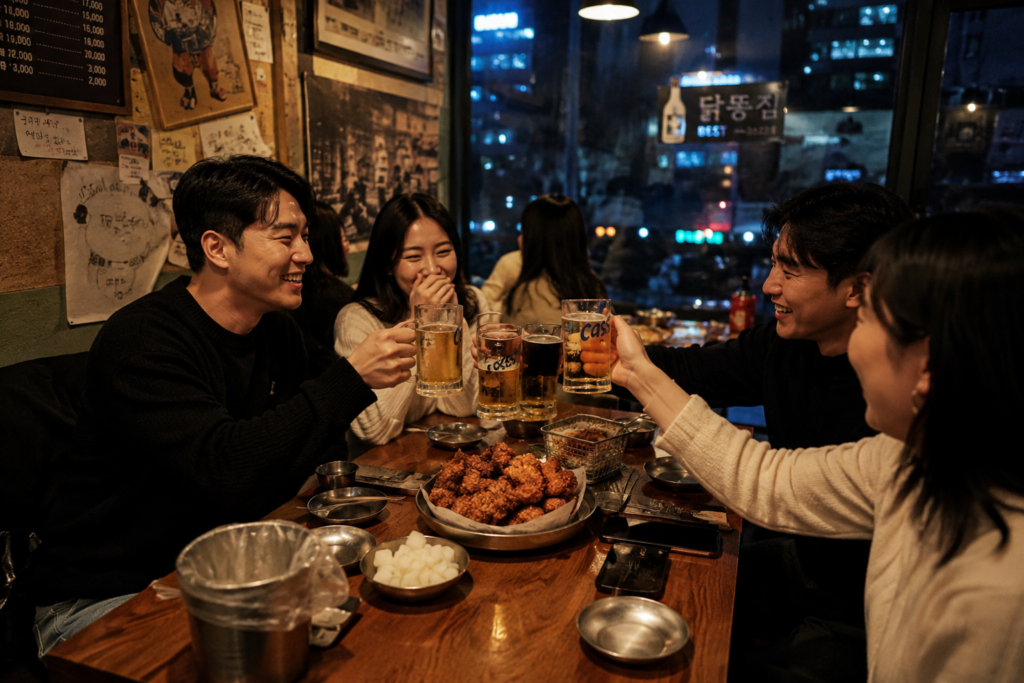
Walk into a Korean fried chicken restaurant in Seoul on a Friday evening and the order rarely arrives quietly.
A platter of glossy chicken lands on the table, still crisp beneath its coating, with pickled radish on the side and a cold drink close at hand. Around it, conversations stretch late into the night. Some tables are eating after work, others are watching a football match, and plenty are simply there because fried chicken has become one of the most reliable ways to spend an evening in Korea.
The same meal now looks perfectly at home in cities far from Seoul. Korean fried chicken restaurants have appeared across the United States, Britain, Australia and much of Asia, while the food has become a familiar subject on TikTok, YouTube and food-travel channels. In the United States, Korean food-service companies operated 1,106 outlets by the end of 2025, more than twice the number recorded five years earlier. Chicken restaurants and bakeries together accounted for roughly 64 per cent of all overseas outlets operated by Korean food-service companies.
There is an obvious explanation for some of this. Fried chicken is already one of the world’s most legible foods. You do not need to understand Korean history or know how to pronounce the name of a dish to understand the attraction of hot, crunchy chicken. What Korea changed was everything around that basic idea: the texture, the sauces, the way it is eaten, the speed at which it can arrive and the social ritual that grew around it.
Korea Did Not Invent Fried Chicken
Fried chicken was not originally a Korean dish. The modern Korean version developed from an American food culture that arrived on the peninsula in the decades following the Korean War, when fried chicken and other Western foods became increasingly visible in Korea. It took several decades before the dish developed a character of its own.
The turning point came in the 1970s and 1980s, as economic growth changed Korean eating habits and small chicken restaurants began appearing in neighbourhoods across the country. One of the most influential developments was yangnyeom chicken, in which fried chicken is coated with a sweet, spicy and savoury sauce. Rather than treating the sauce as something added at the table, Korean cooks made it part of the dish itself.
That distinction matters because Korean fried chicken was built around texture as much as flavour. The chicken is often fried twice, producing a thin, unusually crisp shell that can withstand sauce without immediately becoming soggy. The result is different from the heavier crust associated with many American versions of fried chicken: the coating is lighter, the crunch more pronounced and the meat remains relatively easy to eat with chopsticks or by hand.
By the 1990s, chicken had become deeply embedded in everyday Korean food culture. Franchise chains multiplied, delivery networks expanded and the dish became increasingly detached from the idea of a special occasion. Fried chicken was becoming something you could order on an ordinary Tuesday night.
The Second Fry Changed Everything
The double-frying technique may sound like a minor culinary detail, but it has shaped much of what makes Korean fried chicken distinctive.
After the first fry, the chicken is removed and allowed to rest before being returned to the oil. Moisture escapes, the exterior firms up and the second fry creates the brittle surface that has become one of the defining characteristics of Korean fried chicken.
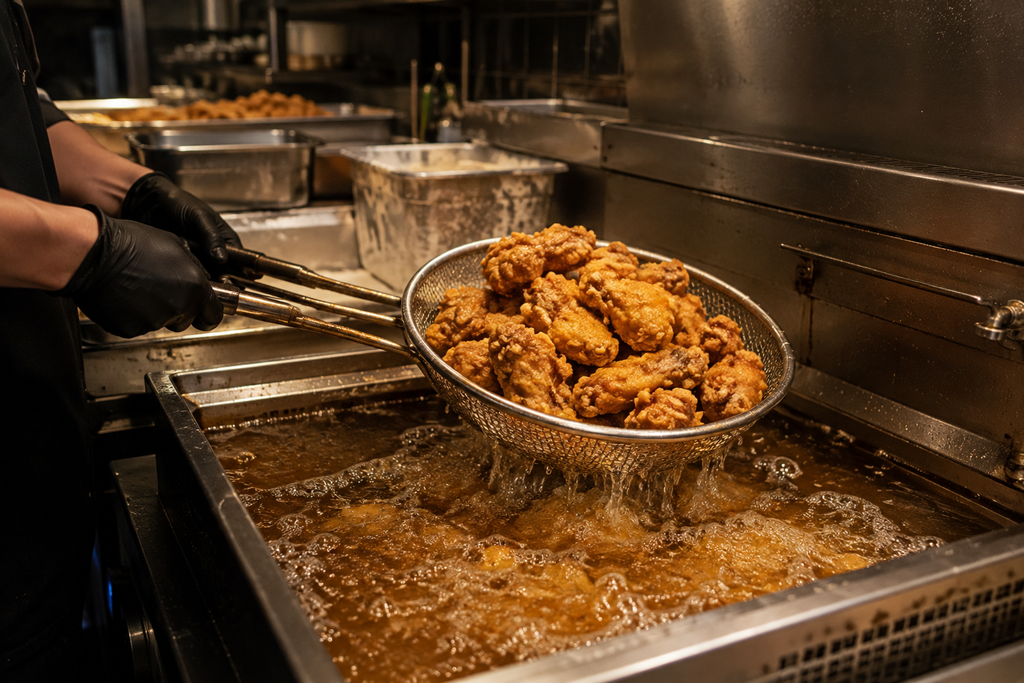
That texture also solves a problem that many fried foods struggle with: delivery. A piece of chicken that is perfect when it leaves the fryer can be disappointing twenty minutes later if steam has softened the coating. Korean fried chicken developed alongside Korea’s exceptionally dense delivery culture, and its cooking methods proved unusually well suited to the journey from restaurant to doorstep.
This is one reason the Korean version travels so well. A customer does not have to eat it immediately over the fryer to understand what makes it different. Even after a short ride across town, the contrast between crisp coating, tender meat and sauce remains part of the experience.
Then Korea Added the Sauce
Korean fried chicken is unusually comfortable with flavour.
There are the familiar sweet-and-spicy sauces, often built around gochujang, garlic and sugar, but the range has expanded considerably. Soy garlic, honey butter, cheese, spicy pepper and spring-onion varieties sit alongside simpler versions that are served almost completely bare. Many restaurants encourage customers to order two or more flavours at once, making the chicken itself a kind of tasting menu.
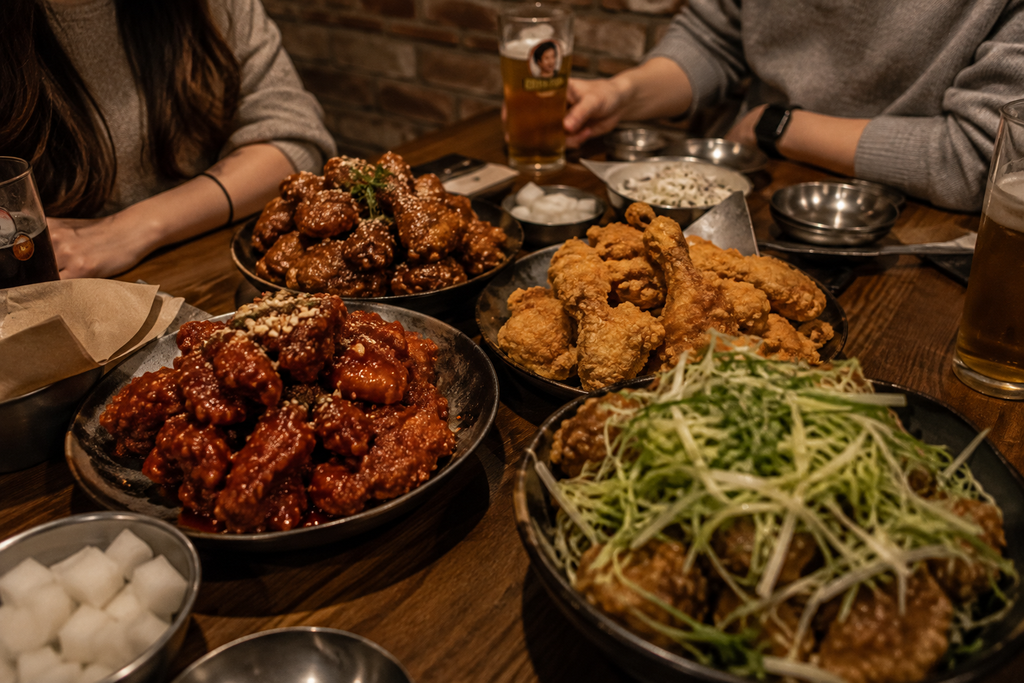
The sauces also helped turn fried chicken into something visually distinctive. Glossy red yangnyeom chicken looks different from a traditional Western fried chicken bucket; pale soy-garlic pieces covered in chopped garlic or spring onion have their own visual language. In an age when food is often discovered through a phone screen before it is ever tasted, that matters.
There is a practical advantage, too. Sauce allows Korean chicken restaurants to keep developing new versions without changing the basic product. The kitchen can remain recognisably a chicken restaurant while continually giving customers something new to try.
That combination of familiarity and variation is useful when a food crosses borders. Someone encountering Korean fried chicken for the first time already understands the chicken.
The unfamiliar part is the flavour.
Chimaek Turned Chicken Into a Social Ritual
Korean fried chicken became much bigger than a restaurant menu item because of what happened around it.
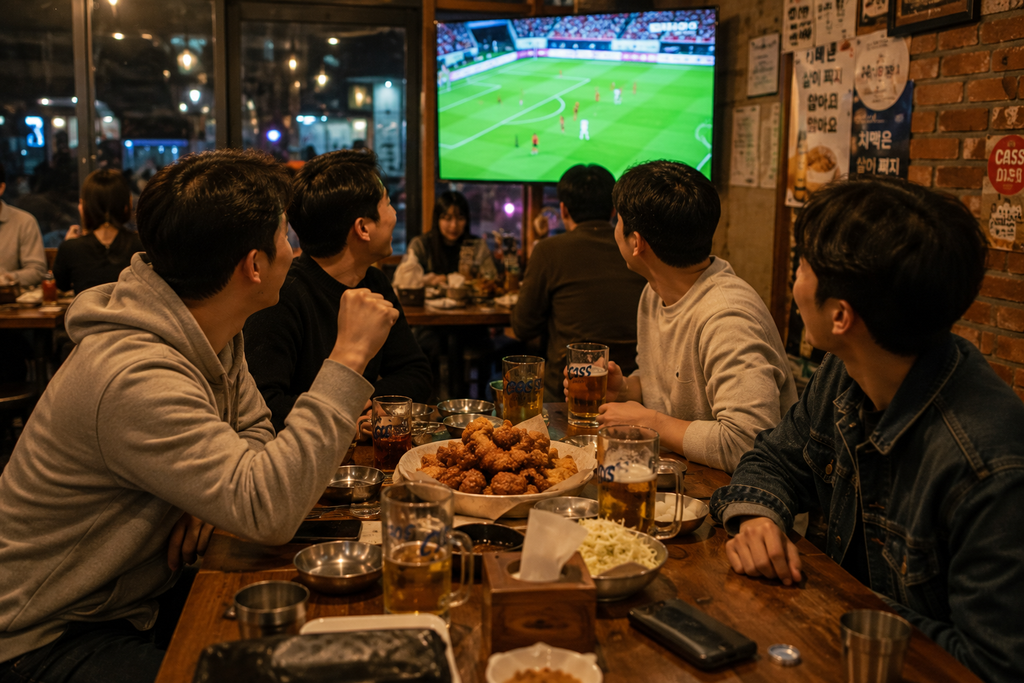
The pairing of chicken and beer, known as chimaek, became one of the country’s most recognisable food-and-drink combinations. The appeal is not complicated: salty, crisp food works well with cold beer, and a large order is easy to share. But the social setting is important. Chicken became associated with watching sports, meeting friends, late-night conversations and informal gatherings where nobody had to plan an elaborate meal.
Korean dramas helped make the image recognisable outside Korea. The 2014 drama My Love from the Star became an important cultural moment for the global visibility of chimaek, with scenes of the lead characters eating fried chicken and drinking beer helping introduce the combination to viewers across Asia and beyond.
What audiences encountered was not simply another recipe. It was a small piece of Korean everyday life: food arriving in a cardboard box, several people reaching across the table, beer poured into glasses and an evening that could continue long after the meal itself had finished.
Delivery Made Chicken Part of Everyday Life
Korea’s relationship with food delivery is unusually sophisticated, and fried chicken benefited enormously from it.
Chicken shops could serve customers far beyond the people who happened to walk past their doors. A restaurant in a residential neighbourhood could build a substantial business from orders travelling through the surrounding streets, while customers could eat restaurant food at home without turning dinner into an event.
The relationship worked in both directions. Delivery encouraged restaurants to think carefully about how their food would survive the journey, while the demands of delivery helped reinforce techniques that made Korean fried chicken particularly durable.
This helps explain why the dish feels so ordinary in Korea despite its increasingly international reputation. It is not necessarily treated as an ambassador of Korean culture by the person ordering it. It is dinner. It is something to share after work. It is what a group orders when nobody wants to cook.
That ordinariness is part of its strength abroad.
Korean Fried Chicken Does Not Ask You to Learn Very Much
There are Korean foods that require a little explanation.
Fermented vegetables, raw seafood, blood sausage or certain traditional soups can be unfamiliar to a first-time visitor. Fried chicken has almost none of that barrier. It starts with an ingredient almost everyone already recognises and changes the experience through technique, seasoning and context.
This makes it particularly effective as an entry point into Korean food.
A diner in London or New York may order Korean fried chicken without knowing what gochujang is. They may not have tried kimchi before. They may have never heard of chimaek. The chicken does not demand that they understand any of those things before they enjoy it.
The discovery can happen afterwards.
That pattern is increasingly visible in global consumer research. In a 2025 survey of 11,000 consumers across 22 cities, Korean-style fried chicken ranked as both the Korean dish respondents had eaten most frequently over the previous year and the Korean dish they liked most. Overall familiarity with Korean food reached 68.6 per cent, its highest level since the survey began.
Korean Fried Chicken Ranks No. 1
In a 2025 survey of 11,000 consumers across 22 cities, Korean-style fried chicken was the Korean dish respondents had eaten most frequently and liked most. Overall familiarity with Korean food reached 68.6 per cent.
America Has Become a Major Market
The United States is particularly important to the story.
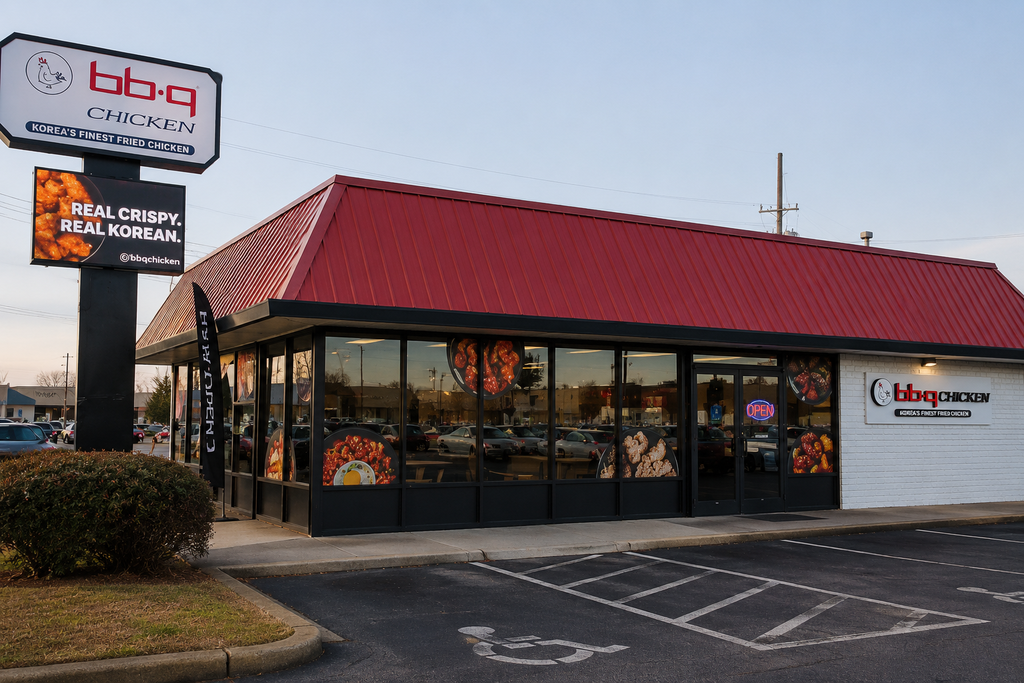
By the end of 2025, Korean food-service companies were operating 1,106 outlets in the US, making it their largest overseas market. The number had more than doubled over five years, while the overall number of Korean food-service outlets worldwide reached 4,644 across 56 countries. Chicken restaurants alone accounted for 1,809 of those outlets.
Brands such as Bonchon helped establish Korean fried chicken as a recognisable category rather than an obscure variation on American fried chicken. Once consumers understood that “Korean fried chicken” was its own thing, restaurants had room to compete on sauces, texture and atmosphere rather than simply explaining where the food came from.
There is also an interesting reversal in the American market. Fried chicken was once one of the foods Korea encountered from the United States. Korean restaurants are now taking their own version of it back into the American market, where customers can compare two traditions that began with the same basic idea.
The food has travelled in a circle.
The Korean Wave Opened the Door, but Chicken Had to Stand on Its Own
K-pop and Korean television clearly helped.
Someone who discovered Korea through BTS, Squid Game or a Korean drama may become curious about the food appearing on screen. Social media then makes the discovery much easier: a video of sauce being brushed over fried chicken, a close-up of an impossibly crisp piece or a late-night Korean chicken restaurant can reach millions of people who have never visited Korea.
But cultural visibility can only take a food so far. A novelty dish might attract attention once; it does not become a global restaurant category unless people want to eat it again.
Korean fried chicken has managed that second step.
Its growth now sits within a much broader expansion of Korean food-service businesses. MAFRA’s 2025 survey found that Korean food-service companies had expanded into 56 countries, while the number of overseas outlets had risen by about 24.8 per cent since 2020. The US accounted for 23.8 per cent of those outlets, the largest share of any country.
The Korean government has even begun treating chicken as a tourism asset. In 2026, the Ministry of Agriculture, Food and Rural Affairs launched the K-Chicken Belt, linking regional chicken dishes with nearby tourist destinations as part of a broader gastronomic tourism programme.
It Is More Than Korean-Style Fried Chicken
There is a temptation to describe the success of Korean fried chicken as another uncomplicated victory for the Korean Wave. The reality is more interesting.
The dish works because several Korean systems happened to reinforce one another: dense cities, quick delivery, franchise businesses, late-night socialising, highly developed fried-food techniques and a culture comfortable with constantly changing flavours. Popular culture gave the food visibility, but the food itself was already capable of surviving outside the country.
That distinction is important as K-food becomes more global.
A Korean dish does not have to remain exactly as it is eaten in Seoul to travel successfully. Restaurants adapt spice levels, portion sizes, menus and ingredients to local markets. What tends to remain is the basic logic: crisp chicken, strong flavour, generous sharing portions and the pleasure of ordering more than one variety.
The result is recognisably Korean without being difficult to understand.
The Global Version Is Already Changing
Korean fried chicken is not simply being exported intact. It is being interpreted.
In some cities, restaurants lean heavily into Korean branding, with neon signs, Korean-language menus and television screens. Others barely emphasise the Korean connection at all, allowing the food to compete directly with local fried chicken on its own terms. Some specialise in traditional yangnyeom and soy-garlic flavours; others experiment with local ingredients or flavours that would be unusual in Korea.
That process is normal for food that becomes international. Pizza changed when it left Italy. Sushi changed when it moved through the United States. Fried chicken itself has travelled through several countries and acquired entirely different forms.
Korean fried chicken is now entering the same stage of its life.
The interesting question is no longer whether people outside Korea will eat it. They already are. The more revealing question is what parts of Korean chicken culture will survive as the food settles into different cities, different dining habits and different ideas of what fried chicken should be.
Why Does Korean Fried Chicken Feel So Korean?
Perhaps because Korea did not need to invent a completely new food.
It took something familiar and spent decades refining the parts that could be refined: a thinner crust, a second fry, sauces designed to cling, flavours that could keep changing, delivery that made the food accessible almost anywhere and a social ritual that turned a simple meal into an evening.
That is a very Korean way for a food to become global. The dish remains easy to understand, but the experience around it carries traces of the place where it evolved.
Today, Korean fried chicken sits in a curious position. It is both one of the world’s most familiar foods and one of Korea’s most successful cultural exports. In 2025, overseas consumers named it their favourite Korean dish, while Korean chicken restaurants formed the single largest category among the country’s food-service businesses operating abroad.
Perhaps that is why the food has travelled so well.
You do not have to know Korea to like Korean fried chicken.
But once you understand why it tastes, travels and is eaten the way it does, you begin to understand a little more about Korea itself.
Korean fried chicken did not conquer the world by becoming less Korean.
It became global by making the Korean way of eating chicken remarkably easy to love.