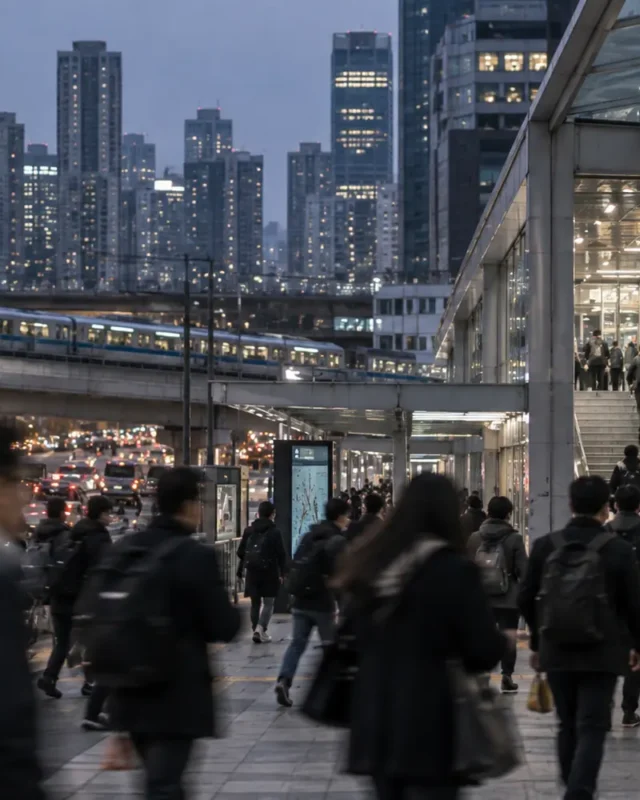
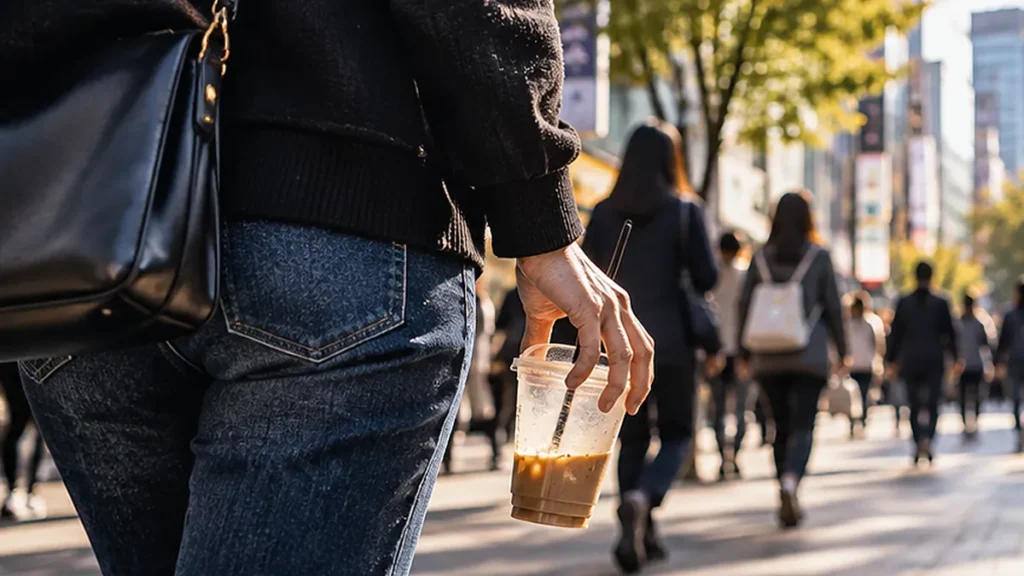
Buying a takeaway coffee in Seoul is rarely difficult
Finding somewhere to throw away the empty cup can be another matter. The drink is finished; the cup accompanies you past shops, across intersections, and toward the next subway entrance.
Part of that inconvenience traces back to a decision made in 1995, when South Korea began charging households for waste according to how much they discarded. Public bins offered a way around the charge, and local authorities removed thousands of them. Seoul has since brought many back. The harder task has been keeping them where people need them, without inviting the dumping that prompted their removal.
When the Bag Acquired a Price
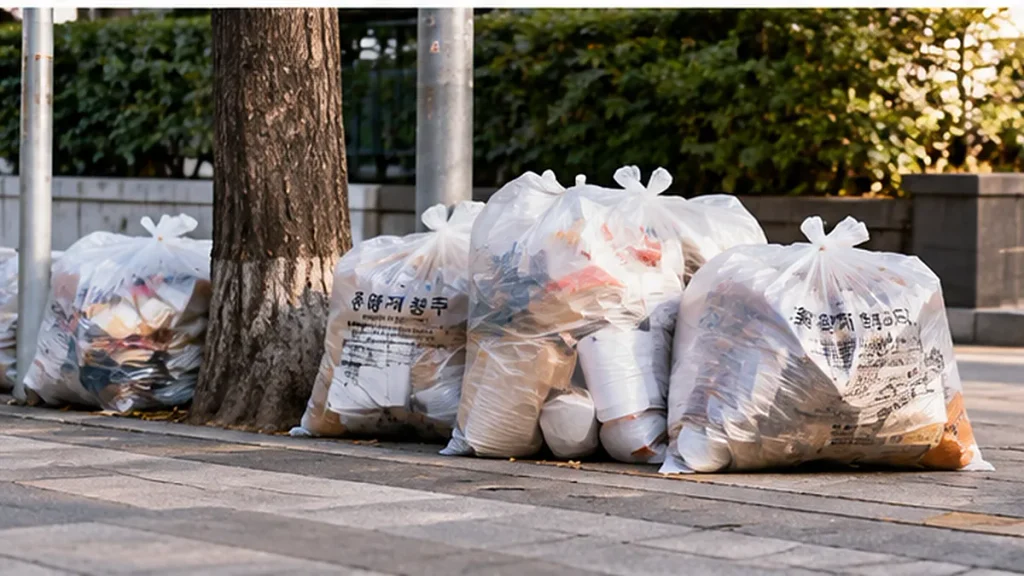
South Korea introduced its nationwide volume-based waste fee system, known as jongnyangje, on January 1, 1995. For ordinary household trash, the charge generally comes through the purchase of designated disposal bags. Recyclables and food waste follow separate collection arrangements. The system gave households a financial reason to reduce what went into the general-waste bag.
A public street bin complicated that arrangement. Some households and businesses put their waste there instead, bypassing the designated bags. Seoul’s account of the period describes district authorities removing bins in response. From 7,607 in 1995, the city’s street-bin count fell to 3,707 in 2007—a reduction of more than half.
The distinction between household waste and street litter was clear enough administratively. A container on the sidewalk could not enforce it. Removing that container eliminated a disposal point for someone avoiding a fee and for someone carrying a single food wrapper.
Responsibility for maintaining the remaining bins rested with local authorities facing different street conditions. A residential road, an office district, and a late-night food market generate different demands. Restoring bins therefore required decisions about collection routes, staffing, and placement across Seoul’s 25 districts, rather than simply returning them to the pavement.
A Trash Can with Opening Hours
In Myeongdong, the shopping and street-food district, bins themselves became the subject of competing complaints. Jung-gu’s February 2024 account described a decade of installing and removing them: dumping and odors followed installation; demands for removal followed the odors. Waste also accumulated during hours without regular cleaning coverage.
The district brought vendors into the collection system. Street stalls were instructed to display signs offering to accept trash and to keep designated waste bags available. After closing, vendors were to gather their waste and take it to specified disposal points.
Cleaning shifts were extended. Two additional workers covered the period from 3 p.m. to 10 p.m., while a separate team continued collecting waste until midnight. The district also considered eight mobile bins that workers would put out at 3 p.m. and remove at 10 p.m. This was a proposal, not confirmation that the arrangement had been implemented.
The proposed bins had operating hours. Their availability would depend on someone arriving to position them, empty them, and take them away. For a pedestrian, that work might remain invisible until the container overflowed—or disappeared.
The Bins Return
Seoul’s street-bin network has expanded and contracted repeatedly since the original removals. A city council budget review described renewed expansion planning in 2013, subsequent removals, and another expansion plan in 2023. It criticized the inconsistency and called for maintenance staffing to accompany installation.
The 2023 announcement set a goal of 7,500 bins by the end of 2025, with tourist areas and bus stops among the priorities. The city finished 2025 with 7,085, falling short of that target. Its February 2026 report listed 884 installations during the previous year and retained 7,500 as the goal for 2026. Annual installations and the total network count are different measures; the former should not be read as a net increase.
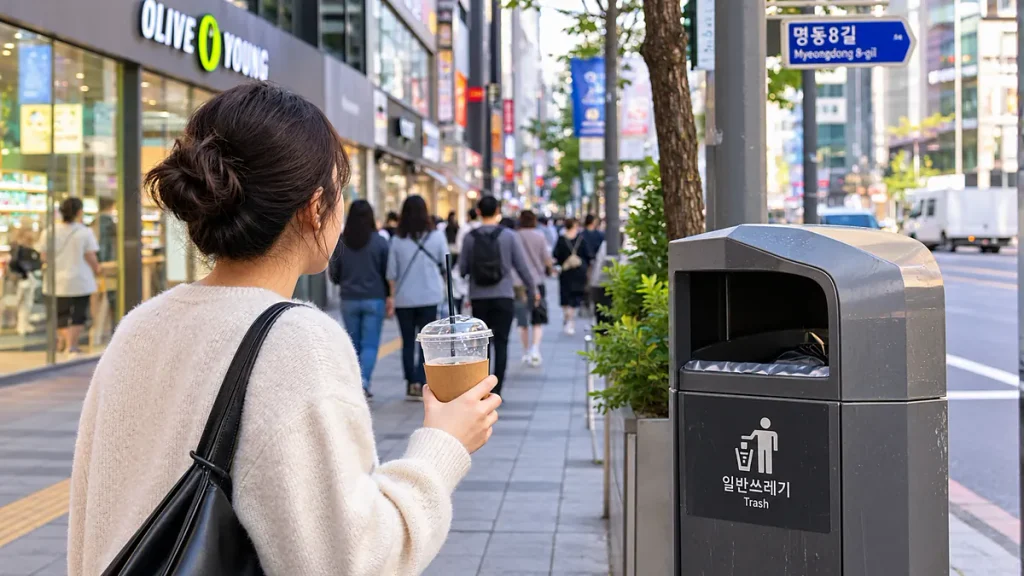
Design received attention alongside numbers. In April 2024, Seoul announced 30 redesigned bins at 15 busy locations, including areas near City Hall and Dongdaemun Design Plaza. The city cited complaints about inconspicuous colors and small openings. The replacements included more visible recycling containers, larger openings, and features intended to make emptying them easier for sanitation workers.
These changes address different failures. A bin may be absent, difficult to recognize, awkward to use, or full when someone reaches it. A citywide installation count captures only part of that experience. Even a growing network can leave gaps along an individual walking route.
Where the Empty Cup Goes
Seoul’s February 2026 plans paired further installations with a proposed sensor-equipped bin pilot in areas including Myeongdong. Sensors would monitor filling levels and overflow to help direct collection. The report also set out an expansion of the dedicated street-cleaning team from 80 to 100 people and identified continuing litter problems in Myeongdong, Hongdae, and Seongsu. These were reported plans and priorities, not proof that the streets had already improved.
For visitors, the immediate choices remain modest. Use designated public bins and follow their sorting labels. Ask before using a business’s private bin; its presence does not make it a public disposal point. Where a vendor explicitly offers to take customers’ waste, use that arrangement. Otherwise, carry the packaging until an appropriate disposal point is available.
That can be easier along a familiar commute than on a first visit. A resident may know the next bin’s location; a visitor cannot infer it from the number installed across Seoul. The relevant distance is the stretch of pavement between the finished drink and somewhere to leave its container.
The purchase ends at the café counter. Disposing of the cup may require another stop.