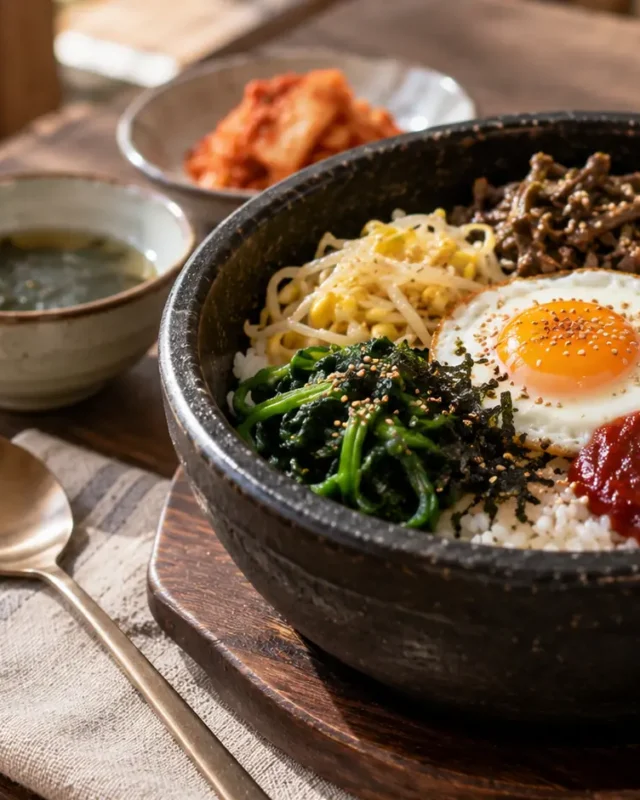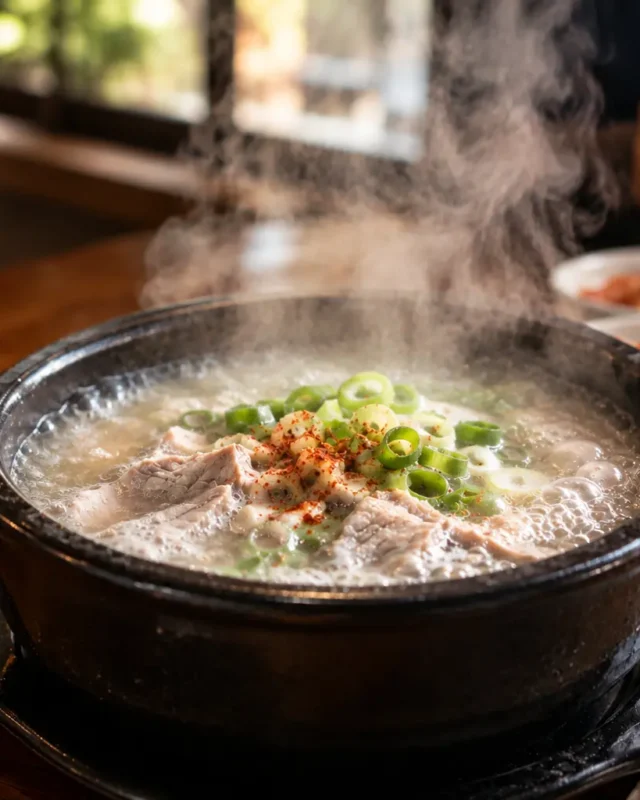
The first thing that arrives at a Korean restaurant is often not what you ordered.
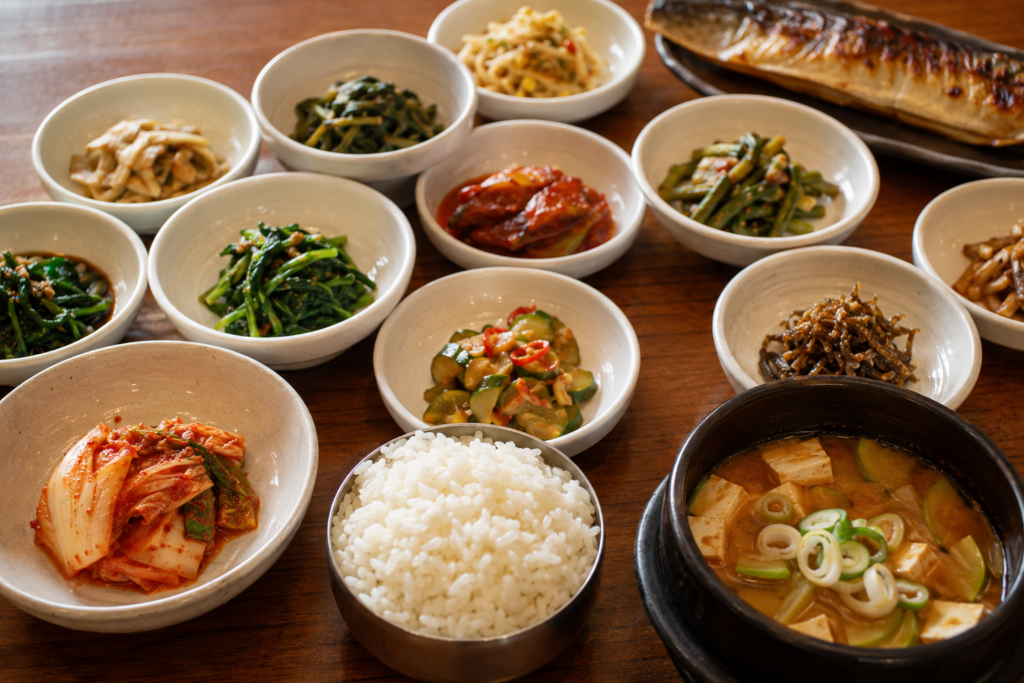
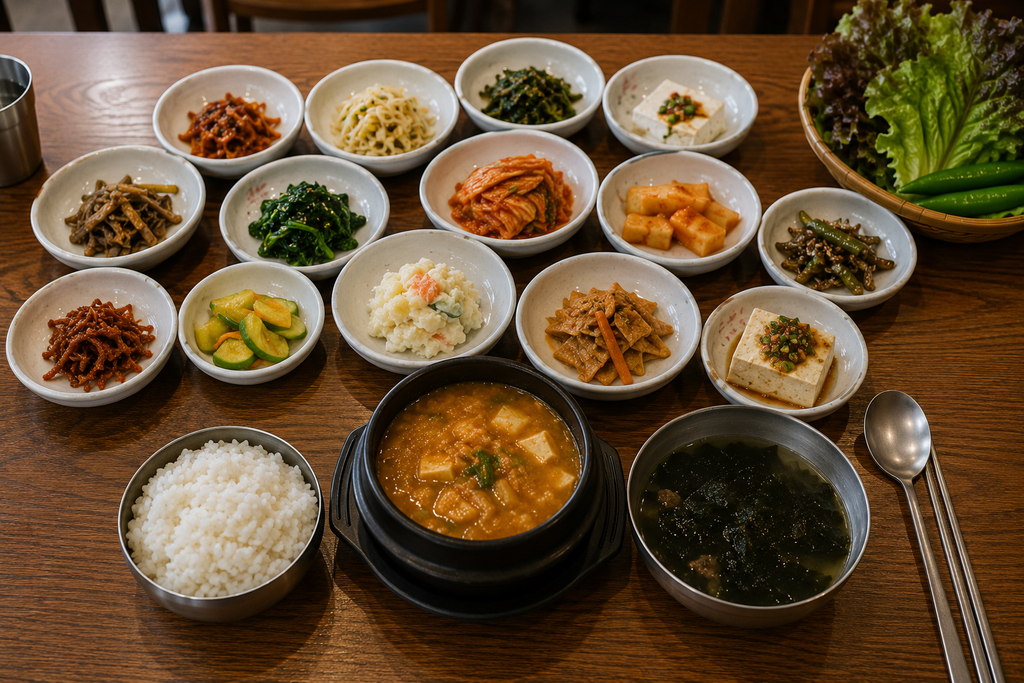
A small plate of kimchi appears, followed by seasoned bean sprouts, perhaps some spinach dressed with sesame oil, a few slices of pickled radish and something braised in soy sauce. By the time the main dish reaches the table, half a dozen little bowls may already be spread between the rice and soup.
For someone seeing the arrangement for the first time, the obvious question is almost impossible to resist: why are there so many side dishes? Korean side dishes, known as banchan, usually arrive before the main dish and remain part of the meal from beginning to end.
The Korean word is banchan (반찬), usually translated as “side dishes,” although the English label can make them sound more optional than they really are. Korean meals have traditionally been organized around rice, soup, kimchi and an assortment of banchan eaten together, with different dishes bringing their own ingredients, seasonings and textures to the same bowl of rice. A study of Korean dietary traditions published by researchers from several Korean food and nutrition institutions describes this combination as a longstanding feature of the Korean meal.
Once you stop thinking of banchan as extras, the crowded table starts to make more sense.
A Meal Designed to Be Mixed, Not Plated Separately

A Korean table is arranged differently from the Western habit of giving each person a finished plate.
Rice and soup sit in front of the diner, while many of the smaller dishes are placed in the middle for everyone to share. One bite might combine rice with kimchi; the next could bring seasoned greens, a piece of fish or something pickled. The meal shifts subtly with every spoonful, even though everyone is eating from the same collection of dishes.
VisitKorea describes this arrangement as han sang charim, a style in which rice and soup anchor the meal while banchan surround them. The diner decides how to combine the different foods, creating a sequence of tastes rather than moving through a single fixed plate.
That is one reason the number of dishes can feel excessive to a visitor. The meal is not built around one dominant flavor.
It is built around choice.
Rice Is the Quiet Center of the Table
Rice explains more of banchan culture than it might seem at first.
Steamed rice is deliberately mild. The dishes around it provide salt, acidity, sweetness, heat, fragrance and texture, allowing the same bowl of rice to support very different combinations. The traditional Korean diet has long paired bap with soup, kimchi and a range of banchan eaten together as a complete meal.
That relationship changes the role of the side dish.
Kimchi can wake up a spoonful of rice. A little jangjorim adds something savory and dense. Blanched vegetables provide a lighter bite, pickles bring acidity and a soft braised dish changes the texture altogether.
None of these foods has to carry the entire meal on its own.
Together, they give rice somewhere to go.
Variety Was Also a Practical Advantage
The abundance has a less romantic explanation as well.
Korea has four distinct seasons, a landscape that ranges from mountains and farmland to an extensive coastline, and a long culinary tradition of transforming whatever was available into food that could be eaten immediately or stored for later. The Korean Food Foundation’s material on traditional cuisine connects banchan with seasonal ingredients as well as preserved foods such as kimchi, fermented sauces and salt-fermented seafood.
That helped produce a cuisine in which vegetables, seafood, grains, legumes and other ingredients could be prepared in many different ways.
Some dishes were meant to be eaten fresh. Others were salted, dried, pickled or fermented. A meal could bring several of those techniques together, creating variety without requiring every ingredient to be prepared from scratch at that moment.
The result is what a modern Korean table still looks like in miniature: fresh alongside preserved, crisp beside soft, lightly seasoned next to something stronger.
The abundance has roots in necessity as much as aesthetics.
Seasonality Is Supposed to Show Up on the Table
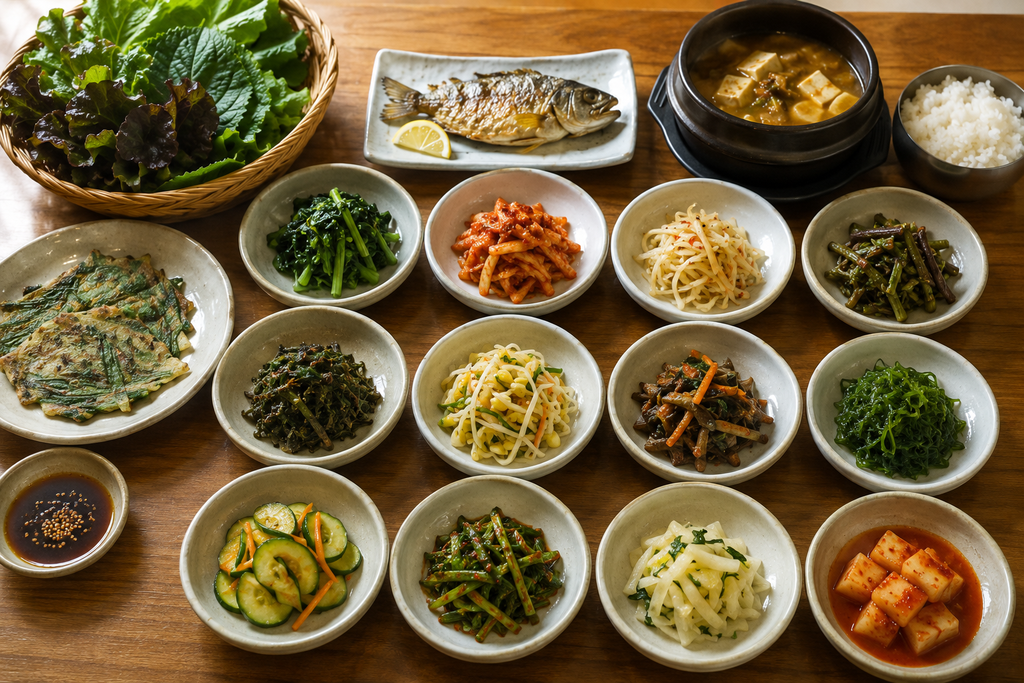
A Korean meal can change considerably with the time of year.
Spring greens appear when they are available. Summer brings different vegetables and chilled preparations. Autumn and winter lean more heavily on foods that can be stored, salted or fermented. The exact lineup varies by household, region and restaurant, but the idea of adapting food to the season remains deeply embedded in the cuisine.
VisitKorea notes that namul, broadly referring to seasoned vegetable dishes, are considered an essential part of Korean meals and are prepared from seasonal ingredients using different cooking and seasoning methods.
That helps explain why “How many side dishes?” is often the wrong question.
There is no universal number.
A simple everyday meal may have only a few. A more elaborate table can have many more, while formal dining has its own traditions. Even within the same category, the dishes can change according to what is available and what the cook wants to prepare.
The small bowls are a format.
What goes inside them is constantly moving.
Preservation Changed What People Could Eat
One of the most consequential features of Korean food culture is its long reliance on preservation.
Before refrigeration made year-round storage routine, Korea’s winters created an obvious problem: what would happen to vegetables, seafood and other perishable foods when fresh produce became difficult to obtain?
Salting, drying, pickling and fermentation provided answers.
The Korean diet research published in the Journal of Ethnic Foods describes fermentation as one of the most characteristic traditional Korean techniques, useful both for preserving food and developing flavor. It also notes the historical importance of banchan prepared through seasoning, blanching, boiling and pickling.
Banchan therefore became an efficient way to keep a range of foods available in smaller portions.
A household could prepare preserved foods in advance and use them across many meals.
That history is still visible in the refrigerator of a Korean family today. Kimchi may have been made weeks earlier. Pickles can last for some time. Seasoned or braised dishes can be prepared in batches. What looks like a table full of tiny servings is partly the result of having learned, over generations, how to make many kinds of food useful beyond the moment they were cooked.
The Number of Dishes Can Tell You Something About the Meal
Korean dining has long distinguished between everyday meals and more formal spreads.
Historical terminology even categorized a bansang according to the number of banchan served with the meal. The best-known example is the twelve-dish surasang associated with the royal court, where the king’s table included rice, soup, stew, hot pot, kimchi, pastes and various side dishes.
The important point is that royal cuisine should not be treated as a direct template for an ordinary Korean lunch.
The court table was designed for the highest level of formal dining. What it reveals is something more basic: Korean food culture had developed a vocabulary for organizing a meal through multiple accompanying dishes.
That idea survived far beyond the palace.
The modern restaurant table may be much simpler, yet the basic logic remains recognizable.
Why Are They Shared?

Look at the table and another detail becomes obvious.
The banchan are often placed within everyone’s reach. One person takes some kimchi. Someone else adds a little spinach to their rice. A shared dish of seasoned vegetables moves across the table. Everyone is constructing their own meal while eating together.
That shared arrangement fits the wider structure of Korean dining, where many foods are placed at the center rather than divided neatly into individual portions. VisitKorea describes banchan as shared dishes around the main meal, allowing each diner to choose different combinations with each bite.
It also gives the table a social quality.
You do not have to order three different vegetable dishes for three different people. One bowl can serve everyone. The table becomes a common space from which each person takes what they like.
That is a small distinction in table etiquette, but it changes the experience of eating together.
“Side Dish” Is a Slightly Awkward Translation
In English, a side dish usually sits next to the main event.
The main plate arrives, and the sides accompany it.
Banchan can work differently. They are eaten throughout the meal, often with rice, meat, soup or noodles, and many are integral to the character of the meal rather than decorative additions. Even Korean meals that appear to revolve around a single dish can arrive with several smaller preparations surrounding it.
This is why the translation can feel insufficient.
The physical position is at the side.
The culinary role is much closer to the structure.
A recent 2026 Korean study on banchan consumption makes a related point from a modern perspective: side-dish culture remains tied to the norms of home cooking even as more people buy prepared banchan from specialized stores rather than making everything themselves. The study found that these stores now function as everyday food-culture spaces where ideas about home cooking are being reshaped rather than simply abandoned.
The little dishes have survived because the habits surrounding them are adaptable.
Restaurants Have Their Own Version of Abundance
Walk into a Korean restaurant and the banchan may look more generous than they would at home.
Part of that is hospitality. Part of it comes from the restaurant tradition of presenting a meal as a complete table rather than a single main plate.
There is also a practical distinction between different kinds of restaurants.
A baekban restaurant, for example, It is built around rice, soup and a changing collection of banchan. Korean food writers and historians describe this kind of meal as a framework rather than a fixed recipe: the exact side dishes depend on the establishment and on the ingredients available that day.
In a barbecue restaurant, the side dishes serve another purpose. Grilled meat can be rich and fatty, so kimchi, pickled vegetables, salads and other sharper or fresher dishes provide different textures and flavors around it. A diner can wrap meat in lettuce, add ssamjang, reach for a pickled side dish, then return to rice.
The meal keeps changing without requiring another main course.
That is part of the pleasure.
The Table Is Meant to Feel Generous
There is also a social expectation that a meal should feel complete.
That does not necessarily mean expensive ingredients or an enormous amount of food. A table can look plentiful through many modest portions, each contributing something different.
Korean food culture has often treated variety as a virtue in its own right. The Korean Food Foundation describes the traditional meal as an arrangement of rice, soup, kimchi and multiple side dishes, reflecting the diversity of Korea’s ingredients, regions and seasons.
That sense of abundance is visible even in a very ordinary restaurant.
One small dish of sprouts. Another of tofu. A few pieces of braised fish cake. Some kimchi.
None of it looks especially significant alone.
Put together, the table feels generous.
And Yes, You Can Have Something You Did Not Order
For foreign visitors, perhaps the strangest part comes when a server replaces a nearly empty dish without adding it to the bill.
Refills are common for many basic banchan in Korean restaurants, although practices vary by restaurant and by dish. What matters culturally is the expectation that the smaller shared foods are part of the meal rather than individually priced side orders.
That expectation changes how abundance is perceived.
You are not sitting at a table counting every bowl as a separate purchase. The restaurant has already decided that the meal includes a surrounding cast of smaller dishes.
Modern banchan shops show another side of the same culture. The 2026 study on Korean side-dish consumption found that purchasing prepared banchan has become part of how households negotiate the work of cooking, with customers relying on specialized shops while retaining familiar ideas about what a home meal should contain.
The food may now arrive in plastic containers instead of small ceramic dishes, but the underlying habit has not disappeared.
Why Do Koreans Eat So Many Side Dishes?
There is no single historical event that explains the Korean table.
Banchan grew within a food culture organized around rice, seasonal ingredients, preservation, fermentation and shared eating. Small dishes made it possible to bring together vegetables, seafood, meat, pickles and fermented foods without asking one preparation to do everything. Historical Korean meals developed sophisticated ways of arranging those foods, and the format survived because it remained practical as everyday life changed.
That is why a Korean restaurant table can look almost excessive to someone encountering it for the first time.
The little bowls are doing several jobs at once. They add flavor to rice, preserve seasonal ingredients, create variety, accommodate different tastes and turn a meal into something shared across the table. Their number can change, their ingredients can change and the cooking methods can change, but the basic idea remains remarkably durable.
So when the banchan arrive before the dish you ordered, there is no need to wonder whether the restaurant accidentally brought too much food.
The meal has already begun.