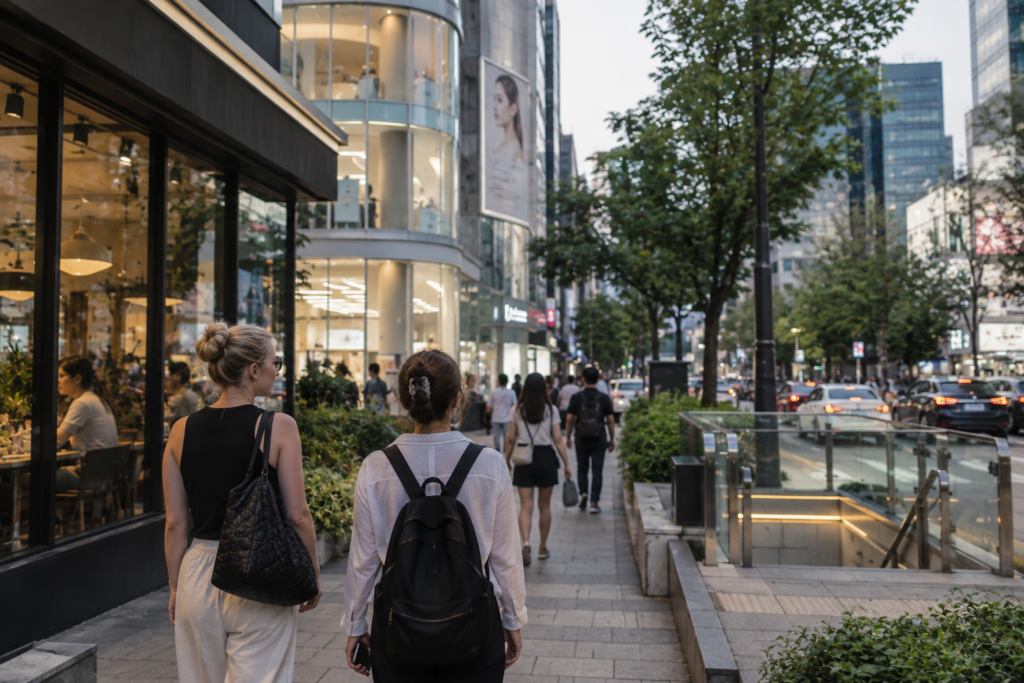
Walk through a Seoul neighbourhood such as Gangnam on an ordinary weekday and the signs change quickly.
A café gives way to a dermatology clinic, then a pharmacy, then another clinic with polished photographs in the window. Somewhere nearby, a visitor who arrived for a few days of sightseeing may have an appointment for a skin consultation, a treatment or a procedure that, not long ago, would have required a separate medical trip.
Korea’s beauty industry has been moving in that direction for years, but the scale is now difficult to overlook. In 2025, more than 2 million foreign patients visited Korean medical facilities for the first time. Dermatology accounted for 1.31 million patients, or 62.9 per cent of the total, while plastic surgery made up another 11.2 per cent.
The shift is visible beyond hospitals and clinics, too. Korea’s tourism authorities are packaging beauty into experiences that can be booked alongside hotels and tours, from personal-colour consultations and makeup classes to scalp care, wellness programmes and medical beauty. For some travellers, beauty is no longer something to shop for after arriving in Korea. It has become one of the reasons to come.
The Beauty Trip Has Changed
Medical tourism once conjured a fairly specific picture: a patient travelling abroad for an operation, spending several days recovering and then returning home. Korea still receives visitors for serious medical treatment, but much of the current growth looks different.
The 2025 figures include people seeking dermatology, plastic surgery, dental care, health checks and other outpatient services. Overall, 87.7 per cent of foreign patient visits were to outpatient clinics. A medical appointment can therefore sit between shopping, restaurants and the rest of a Seoul itinerary rather than determining the shape of the entire trip.
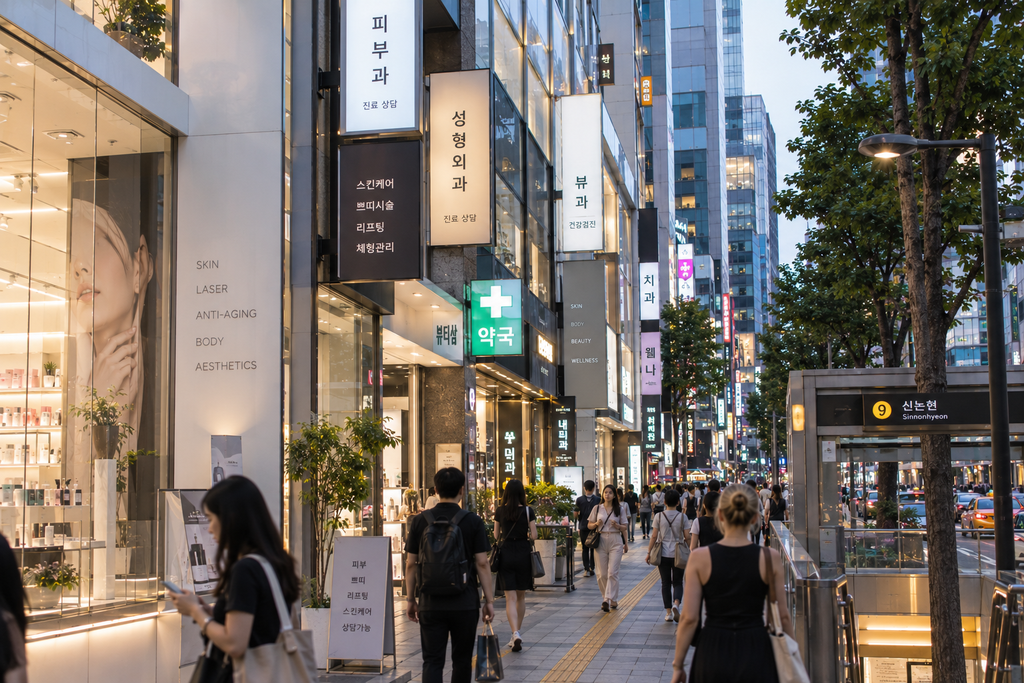
Seoul dominates the market. Of the 2.01 million foreign patients recorded nationwide in 2025, 87.2 per cent received treatment in the capital. Foreign patients visiting Seoul reached 1.75 million, while spending through foreign-issued cards on medical tourism in the city rose to KRW 908.4 billion in the first half of 2026, a 63.3 per cent increase from the same period a year earlier.
For a traveller, the concentration is convenient. Clinics, pharmacies, department stores, cosmetic shops and beauty services often sit within the same parts of the city, close enough for several appointments to fit into a single day.
Dermatology Became the Main Door
The phrase “medical tourism” covers more ground than the behaviour of many foreign visitors suggests. In 2025, dermatology accounted for nearly two-thirds of foreign patient visits, while plastic surgery represented 11.2 per cent. The larger market is built around skin, maintenance and treatments that can be worked into ordinary urban life.
That goes some way towards explaining the close relationship between Korean beauty clinics and the wider K-beauty industry. A visitor may first encounter Korean skincare through a cleanser, sunscreen or sheet mask, then become curious about the treatments and professional services behind the country’s beauty culture. The boundary between cosmetic retail and medical beauty is less sharply drawn in the Korean consumer experience than it can appear from abroad.
The government has followed that overlap closely. The 2026 Korea Beauty Festival, running from June through September, brings together K-beauty, medical tourism and wellness, with programmes covering makeup, hair, personal-colour analysis, skincare, massage and medical-beauty experiences.
Seoul Makes Beauty Easy to Add to a Trip
There is a practical reason the model works so well in Seoul: density.
A visitor can spend the morning around Myeong-dong, head to a clinic in Gangnam for an afternoon appointment and still have the evening free for dinner or shopping. There is no need to travel to a separate resort or medical district. Beauty services are already woven into the commercial landscape.
Foreign visitors are also becoming more accustomed to arranging experiences before they arrive. The 2026 Korea Beauty Festival is working with global online travel agencies to offer more than 800 K-beauty experience programmes, covering makeup, hair, skincare and wellness. They can be booked as part of an existing Korea trip rather than organised as a separate medical journey.
For the traveller, a treatment can begin to occupy the same place in an itinerary as a cooking class or museum visit. The service itself may be medical, and therefore requires considerably more care, but the way it enters the trip is becoming more familiar.
K-Beauty Built the Trust Before the Clinics
Korean beauty did not arrive overseas with medical tourism attached to it. Skincare came first.
For years, Korean cosmetics introduced international consumers to unfamiliar product categories, elaborate routines and a different vocabulary around skin. Korean brands built recognition through beauty retailers, online communities and social media long before a visitor had reason to search for a dermatologist in Seoul.
By the time medical beauty began appearing more prominently in travel conversations, Korea already had a large international audience familiar with its approach to skincare.
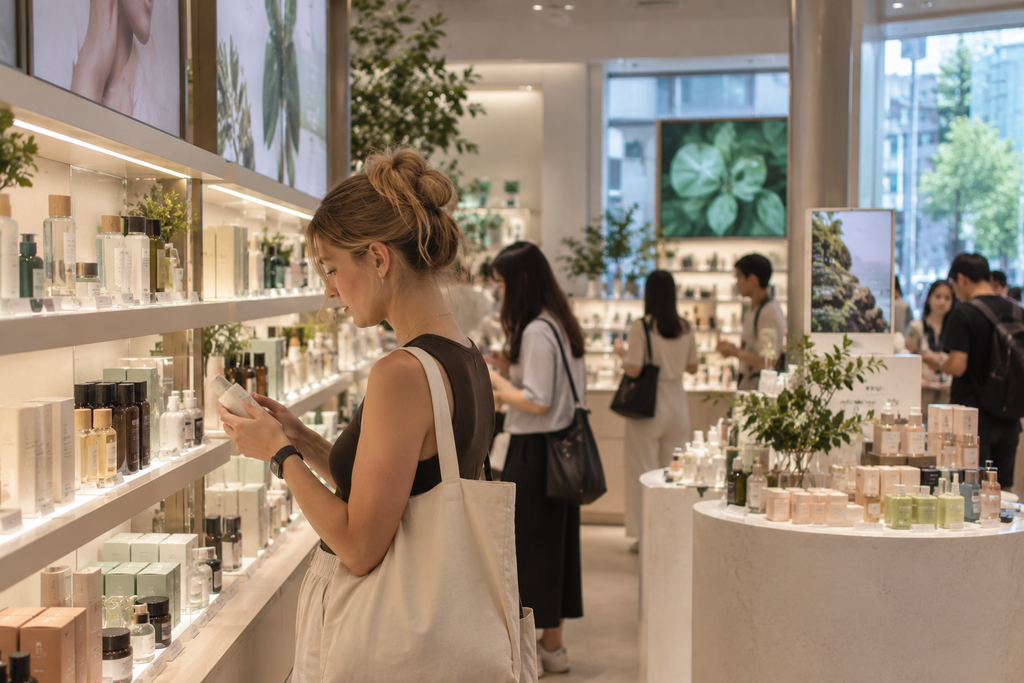
The connection also appears in the government’s explanation of the 2025 surge in foreign patients. The Ministry of Health and Welfare attributed the growth partly to the international popularity of Korean cosmetics and beauty, alongside the wider Korean Wave. Foreign patients from the United States increased 70.4 per cent in 2025, while those from Canada rose 59.1 per cent.
K-pop may create curiosity. K-beauty gives that curiosity somewhere practical to go.
The Experience Is Becoming Part of the Product
A beauty appointment in Seoul does not necessarily begin with a treatment. It might start with a consultation, a skin analysis, a personal-colour session or a conversation about what a visitor actually wants.
At the Korea Beauty Festival’s HiKR Ground, international visitors can book one-to-one sessions in makeup, nail care and other beauty and wellness activities. The festival’s exhibition also brings together programmes that can be booked through overseas travel platforms.
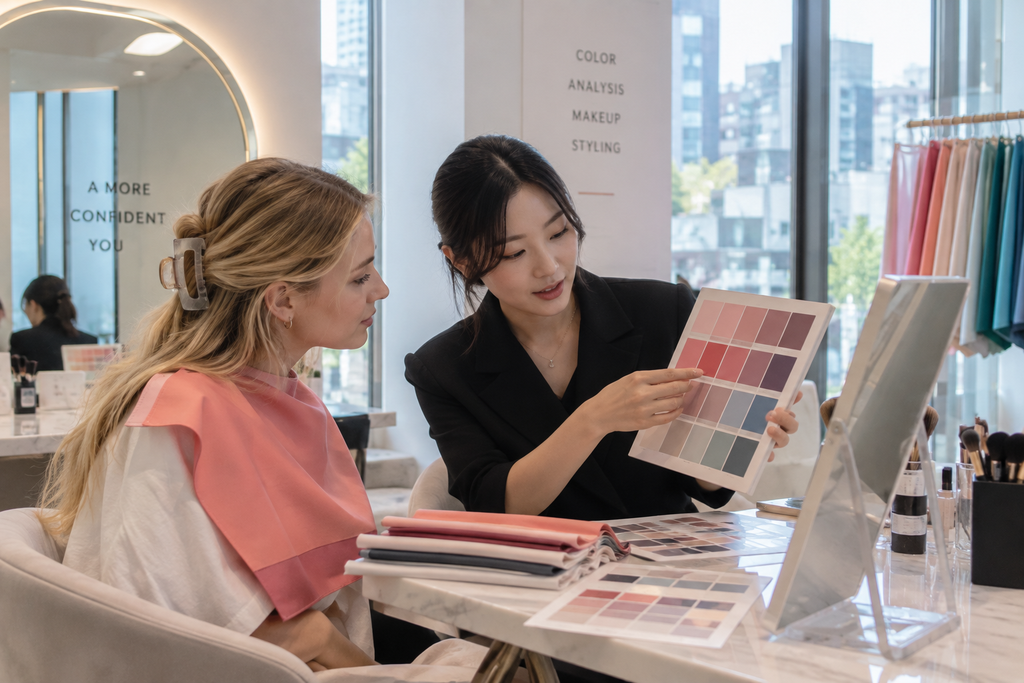
Personal colour offers a straightforward example. In Korea, the practice of identifying colours that suit an individual’s skin tone, hair and overall appearance has developed into a recognisable service. For an overseas visitor, it works neatly as an experience: sit down, receive an assessment, try different colours and leave with something personal to take away.
Medical beauty follows a more complicated version of the same travel logic. The appointment no longer has to sit outside the rest of the itinerary under the label of “medical tourism”; it can be part of a broader trip built around Korean beauty.
There Is Serious Money Behind the Trend
The industry is not relying on Instagram alone.
In 2024, 1.17 million people from overseas received treatment in Korea. An analysis by the Korea Health Industry Development Institute estimated that foreign patients and their companions spent KRW 7.5 trillion on medical tourism that year.
2 MILLION FOREIGN PATIENTS
Korea recorded 2,011,822 foreign patients in 2025, the first time the annual figure passed two million.
The market expanded again in 2025. Foreign patient numbers reached 2,011,822, almost doubling in a single year and marking the third consecutive annual record since the post-pandemic recovery began. China became the largest source market, followed by Japan, with the United States and Taiwan also among the leading groups.
The geographical spread is worth watching. Seoul still receives the overwhelming majority, but Busan and Jeju recorded particularly high growth in foreign patients in 2025, increasing by 151.5 per cent and 114.7 per cent respectively.
Beauty tourism is beginning to move along the same lines as Korean tourism more broadly, with visitors spending beyond the conventional sightseeing itinerary on experiences associated with everyday Korean life.
Korea Is Selling a Beauty Ecosystem
A single appointment rarely tells the whole story.
Someone visiting Korea for dermatology may also buy skincare from a Korean brand, stop at a department store, book a scalp treatment or explore a cosmetics district. Another visitor might never enter a medical clinic, instead spending a day moving between a personal-colour studio, hair salon and makeup appointment.
The tourism industry is increasingly presenting these activities together. The Korea Beauty Festival describes its programme as spanning beauty, medical tourism and wellness, while curated travel products combine beauty experiences with accommodation and other travel services. One current programme, “K-Beauty Holic in Seoul,” is specifically marketed to international visitors interested in Korean beauty and lifestyle experiences.
That broader ecosystem is difficult for a single clinic or cosmetic brand to reproduce. The visitor is moving through an environment in which products, services and experiences reinforce one another.
The Global K-Beauty Consumer Is Already Familiar With the Language
A decade ago, terms associated with Korean skincare often needed explanation. Today, international consumers are much more likely to recognise the basic vocabulary.
That familiarity lowers the barrier to trying something new. Someone who already knows Korean sunscreen, sheet masks or cushion foundation does not arrive in Seoul encountering an entirely unfamiliar beauty culture. The products, aesthetics and routines may be more developed in Korea, but they are no longer foreign.
The industry has also learned how to present itself visually. Clinics, brands and beauty studios operate in a media environment where before-and-after images, treatment explanations, product reviews and personal experiences circulate constantly. None of that makes every claim reliable, and medical decisions still require professional advice, but it has made the category unusually visible.
For younger travellers in particular, the path from discovering a Korean cosmetic brand to finding a clinic can run through the same social platforms.
It Is Not All About Surgery
The international image of Korean beauty still leans heavily towards cosmetic surgery. The current numbers describe a broader market.
Dermatology attracted 62.9 per cent of foreign patients in 2025, compared with 11.2 per cent for plastic surgery. Dental services, internal medicine and health checkups also form part of the market. The overwhelming share of outpatient visits further suggests that much of the activity involves treatments that can be fitted around ordinary life rather than long hospital stays.
That does not make the procedures trivial. Medical treatments carry risks wherever they take place, while international patients also have to consider language, follow-up care, medical records and what happens after they return home.
Korea’s growing beauty tourism industry therefore covers a broad spectrum. At one end are experiences such as personal-colour analysis and makeup. At the other are medical procedures requiring proper consultation and aftercare. Between them sits a large and expanding market for dermatology, wellness and aesthetic services.
The Beauty Trip Is Becoming a Korean Travel Category
Perhaps the clearest sign of the change is how tourism authorities now describe the experience.
The 2026 Korea Beauty Festival is not presented simply as a shopping promotion. Its official programme places beauty alongside medical tourism, wellness, lifestyle and hands-on experiences, while global travel platforms are being used to sell those activities directly to international visitors.
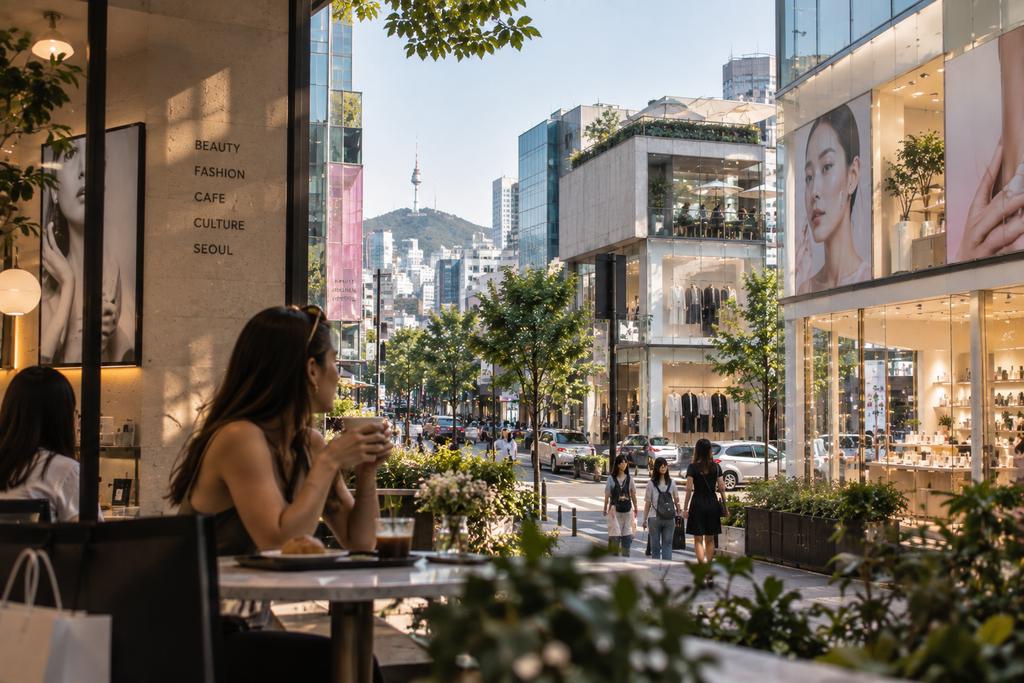
Seoul’s tourism data points in the same direction. In the first half of 2026, international visitors spent KRW 5.6 trillion in the city through foreign-issued cards, with medical and wellness accounting for 24.4 per cent of spending. Beauty spending alone reached KRW 463.7 billion, up 40 per cent from the previous year.
Visitors are also moving beyond the traditional shopping centres of Myeong-dong and Gangnam into neighbourhoods such as Hongdae and Seongsu, where local culture, fashion, food and everyday experiences have become part of the attraction. Beauty fits naturally into that broader way of travelling.
Korea Is Becoming a Place People Come to Change Something
There is a subtle difference between buying Korean beauty and travelling to Korea for it.
A bottle of sunscreen can cross a border in a parcel. A personal-colour consultation cannot. Skincare can be recommended by an influencer in Los Angeles or London, while a treatment still requires someone to get on a plane and sit in a clinic in Seoul.
That physical element gives beauty tourism an unusual relationship with the Korean Wave. The products and images travel first; the experience follows later.
Korea’s beauty industry has spent years making its methods, products and aesthetic familiar to people overseas. Now some of those people are travelling back to the source, not only to see where K-beauty comes from, but to experience it in person.
The appointment might take an hour. The trip around it can take several days.