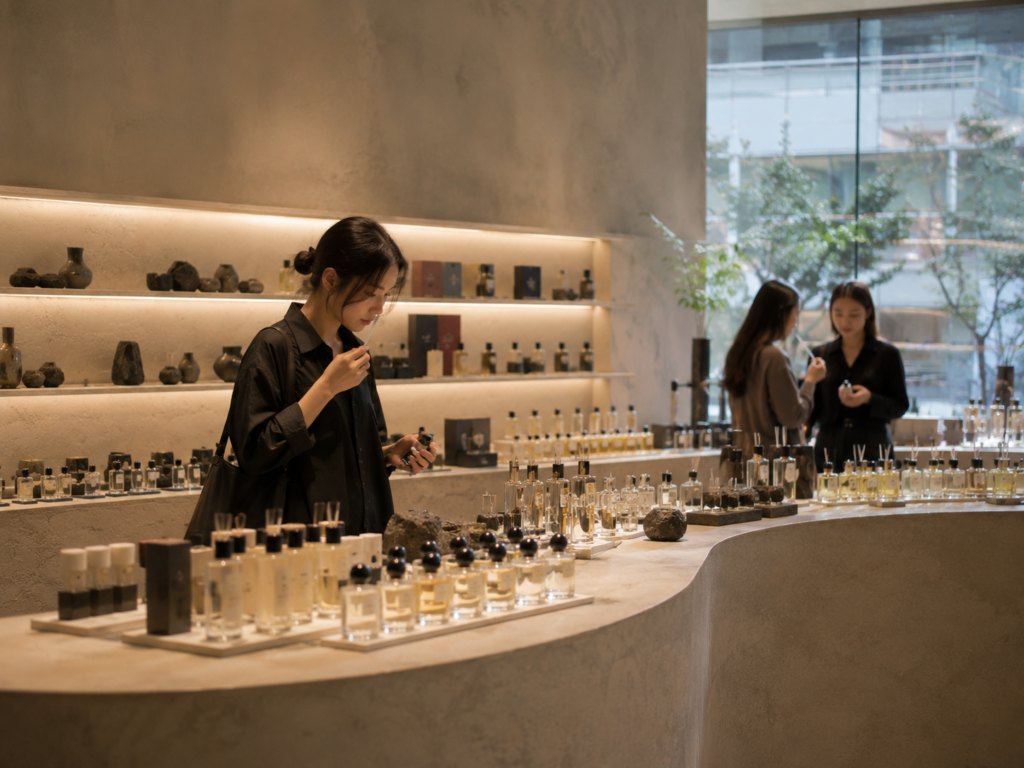
Walk through a department store in Seoul and the perfume counter can feel less like a place to buy fragrance than a small exhibition.
Bottles are arranged with unusual care; the rooms are often dark, quiet and heavily designed, with names that suggest places, textures or memories rather than simply listing a floral note. In some stores, customers are encouraged to move slowly from scent to scent, smelling strips of paper before trying anything on skin.
For years, Korean beauty was almost synonymous with skincare. Sheet masks, cushion foundations and elaborate routines carried the Korean Wave into bathrooms around the world, particularly in the US, UK and across Asia. Fragrance seemed like a different category, one dominated by established European houses with decades of accumulated prestige.
That distinction is becoming harder to maintain. Korean fragrance brands such as Nonfiction and Tamburins have opened international stores, while newer names including Elorea and BornToStandOut have begun appearing in Western beauty coverage. Korean perfume exports have also been climbing sharply: between January and May 2026, Korea exported $33.62 million worth of perfumes and toilet waters, an increase of 71.8 per cent from the same period a year earlier. The United States was the largest destination, accounting for $8.9 million.
Something has shifted. Korean fragrance is no longer simply being discovered by people who are already interested in K-beauty. It is beginning to occupy a space of its own.
Korea Had a Fragrance Culture Before It Had a Fragrance Industry
It is tempting to think of Korean perfume as a recent invention, born somewhere between Seoul’s concept stores and the global expansion of K-pop. The commercial category is young, but the relationship between Korea and scent is considerably older.
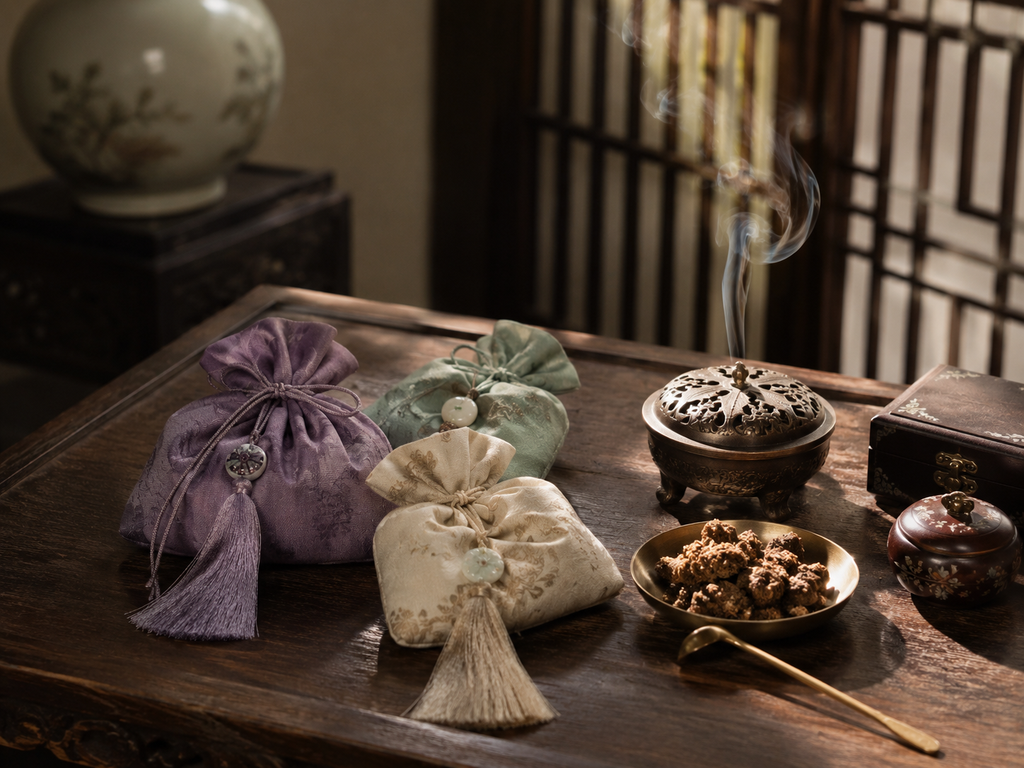
Traditional Korean culture had its own ways of thinking about fragrance, particularly among the court and upper classes. Incense, scented objects and hyangnang—small perfume pouches traditionally carried on the body or attached to clothing—belonged to a broader culture in which fragrance could be associated with refinement, ritual and personal presentation.
The modern Korean fragrance industry did not inherit that tradition in any straightforward commercial line. Contemporary perfume houses are not simply reproducing historical scents and selling them in new bottles. What has survived is something subtler: the idea that scent can carry atmosphere, memory and personality without needing to announce itself loudly.
That sensibility helps explain some of the language surrounding Korean fragrance today. Rather than building every product around an immediately recognisable rose, vanilla or oud, brands often describe a mood—clean linen, an old library, damp earth, skin after a shower, a quiet room, a particular kind of wood.
It is a different way of selling perfume. The customer is invited to imagine a place before deciding whether they want to smell like it.
Hyangnang: Korea’s Traditional Scent Pouch
Hyangnang were small scented pouches traditionally carried or worn in Korea. Their role was not simply practical; fragrance was also associated with elegance, symbolism and personal expression.
Korean Beauty Changed What Consumers Expected From a Brand
The rise of Korean fragrance makes more sense when viewed alongside the transformation of Korean beauty.
K-beauty succeeded internationally not just because Korean products were effective or novel, but because the industry became exceptionally good at turning ordinary routines into experiences. Packaging mattered. Texture mattered. The language around a product mattered. Even something as mundane as washing your face could be presented as a small act of self-care.
Fragrance companies have taken that lesson and moved it into another sensory category.
A Korean perfume store can therefore feel closer to a fashion boutique, gallery or interior space than to the traditional department-store fragrance counter. The bottle is part of the object. The store is part of the product. The name, photography and architecture complete the story that the liquid inside the bottle begins.
This matters because perfume is unusually difficult to sell online. A customer cannot smell a fragrance through a screen, so everything around the scent has to create enough curiosity to make someone want to experience it in person.
Korean brands have become particularly adept at creating that invitation.
Their advantage is not simply the perfume itself. It is the world built around it.
The New Korean Fragrance Brands Don’t Look Like Traditional Perfume Houses
Spend time looking at the visual identity of Seoul’s newer fragrance brands and one thing becomes obvious: many are deliberately avoiding the codes of conventional luxury perfume.
There are no elaborate coats of arms, ornate bottles or overwhelming references to European aristocracy. Instead, the visual language tends to be restrained, architectural and contemporary. Some bottles look almost like objects designed for a modernist interior rather than something destined for a dressing table.
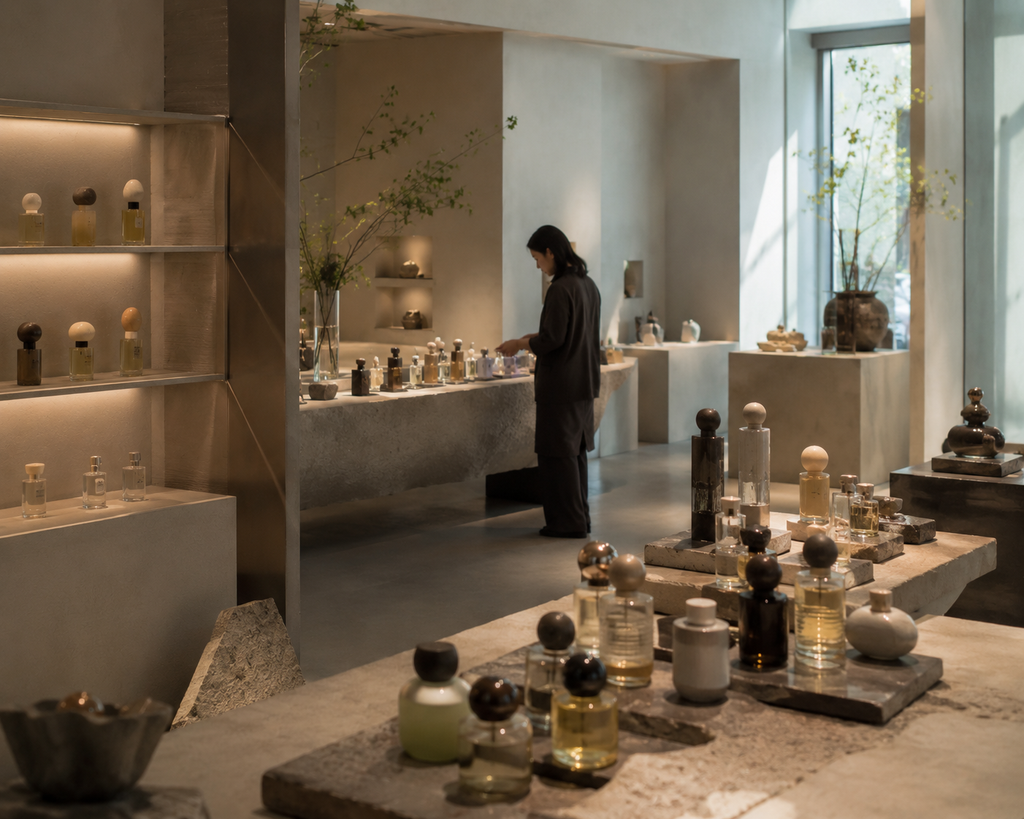
Nonfiction has built its identity around a quiet, tactile world of fragrance, body care and objects for the home. Tamburins approaches perfume through a much more fashion-led lens, with striking retail spaces and sculptural displays that make visiting the store part of the experience.
BornToStandOut takes a different route, deliberately embracing louder packaging and unconventional scent descriptions. Elorea has also positioned Korean fragrance for an international audience, drawing on Korean landscapes, history and cultural references without turning the products into conventional souvenirs.
The differences between these brands are important. There is no single “Korean scent.”
What they share is an understanding that fragrance can be treated as a cultural product rather than merely a luxury commodity.
Korean Perfume Exports Rose 71.8%
South Korea exported $33.62 million worth of perfumes and toilet waters between January and May 2026, up 71.8 per cent year on year. The United States was the largest export market at $8.9 million.
Why Do Korean Perfumes Smell Different?
There is no scientific rule that Korean perfume has to smell a particular way, and the idea of one universal Korean fragrance profile is too simplistic. Still, Western beauty editors have increasingly noticed a preference among Korean brands for scents that feel lighter, cleaner and closer to the skin.
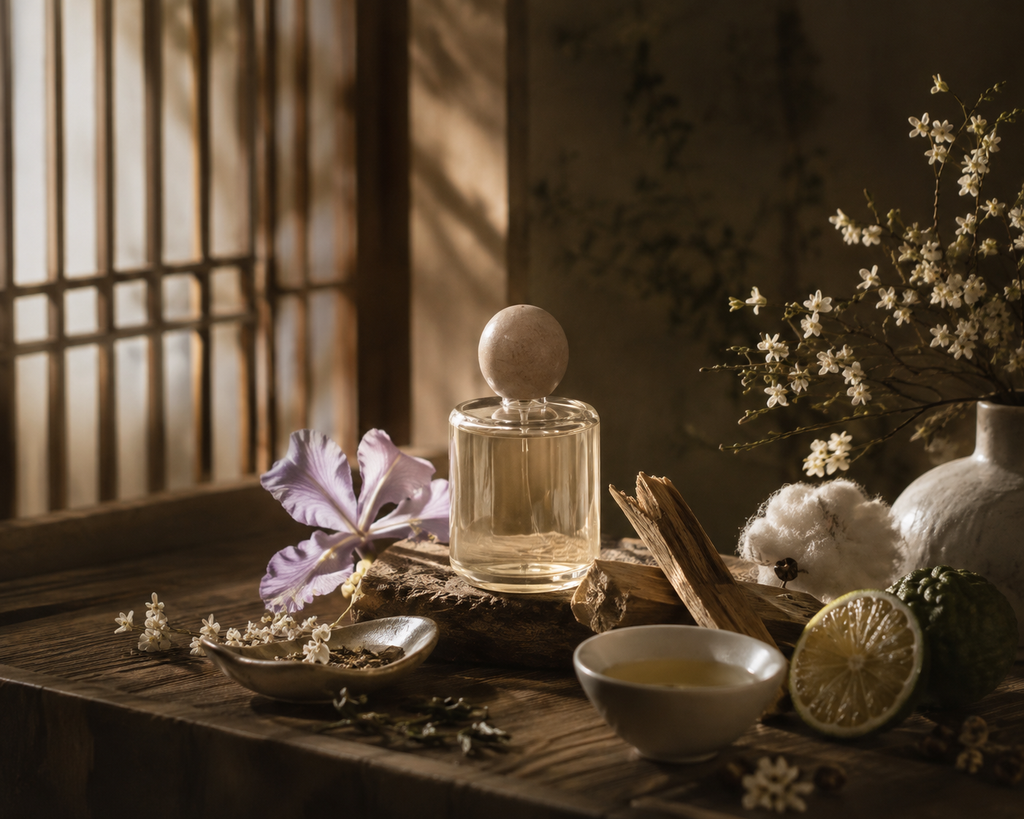
That does not mean Korean perfumers avoid powerful fragrances. Some contemporary houses are doing precisely the opposite. But a number of popular Korean compositions lean towards combinations of woods, musk, tea, iris, powder, citrus and soft florals rather than the heavy sweetness or intense projection traditionally associated with certain Western luxury fragrances.
There is a cultural logic behind that restraint.
In Korea, appearance has long been connected to looking polished without necessarily appearing to have tried too hard. The same idea can extend to fragrance: something noticeable at close range can feel more sophisticated than something that fills an entire room.
Perfume becomes part of personal space rather than a declaration to everyone nearby.
That quality has become particularly attractive to younger consumers, who may want fragrance to feel intimate, wearable and versatile. A perfume that works at the office, in a café or on a casual evening out is easier to incorporate into everyday life than something reserved for formal occasions.
The result is a category that can feel luxurious without always behaving like traditional luxury.
Western Consumers Are Looking for Something Less Familiar
There is another reason Korean fragrance is arriving at the right moment.
The Western perfume market is crowded. Established luxury houses remain enormously powerful, while niche fragrance has spent years expanding the idea that consumers should look beyond department-store bestsellers. For people who already know the major European brands, discovering a Korean house offers something increasingly valuable: unfamiliarity.
The attraction is not necessarily that Korean perfume is objectively better. It is that it comes with a different set of references.
A customer who encounters a fragrance inspired by Korean architecture, a particular landscape or a distinctly Seoul-like atmosphere is being offered a story they may not have encountered through traditional European perfume marketing. That sense of discovery is particularly powerful at a time when consumers increasingly want to know where products come from and what cultural world produced them.
Korean fragrance also benefits from an audience that has already been trained to pay attention to Korea.
Someone who discovered Korean skincare through YouTube, learned the names of Korean beauty brands through TikTok or travelled to Seoul after becoming interested in K-pop is already familiar with the idea that Korean consumer culture can look different from its Western equivalent. Fragrance does not have to introduce Korea from scratch.
It can simply give that audience another reason to look.
K-Pop Opened the Door, but Perfume Is Walking Through It
The Korean Wave has undoubtedly helped.
K-pop has made Korean fashion, beauty and lifestyle products visible to a global audience that might previously have had little reason to encounter them. Idols, actors and influencers have also helped turn personal grooming into a highly visible part of contemporary Korean pop culture.
But fragrance has an unusual advantage over many other K-culture exports: it does not require the consumer to become a fan.
You can buy a Korean perfume without knowing the group that inspired it, without understanding a Korean television series and without having any particular interest in Korean entertainment. The cultural connection can remain in the background.
That may be one reason the category has the potential to travel further than its original audience.
The numbers suggest that this is already happening. British Vogue reported in 2026 that Korean fragrance had become a rapidly growing category, citing Boots data showing a 1,155 per cent increase in popularity for Korean fragrance. British retailers have begun expanding their Korean fragrance selections alongside the K-beauty products that helped establish the category in the first place.
The transition is subtle but significant.
Korea is moving from being a source of beauty products to being a source of beauty taste.
The Store Is Part of the Perfume
One of the most interesting things about Korean fragrance is what happens before the bottle is opened.
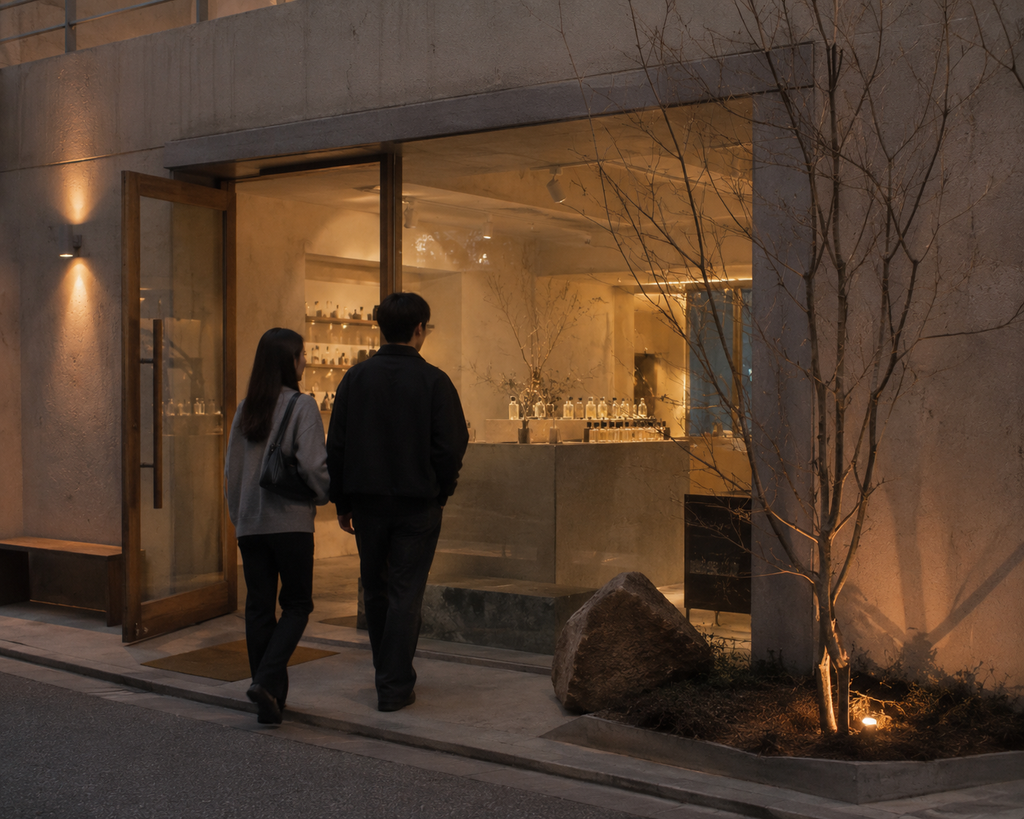
In Seoul, fragrance stores increasingly operate as destinations. Their interiors are photographed, their displays become social-media content and their architecture can be as memorable as the products themselves. The experience encourages people to linger, take pictures and talk about what they have seen.
That may sound like a marketing trick, but it reflects a broader characteristic of contemporary Korean retail.
A café is rarely just a place to drink coffee. A convenience store can become a place to eat dinner. A beauty shop can function as a showroom. Retail has become increasingly experiential, particularly among younger consumers who are accustomed to discovering products through images and short-form video before ever entering a store.
Fragrance fits naturally into that environment because the product itself cannot be fully communicated through a photograph.
The store has to do some of the storytelling.
Seoul’s Fragrance Scene Is Part of a Larger Shift
The rise of Korean perfume is easier to understand when placed alongside what has happened to Seoul’s wider lifestyle economy.
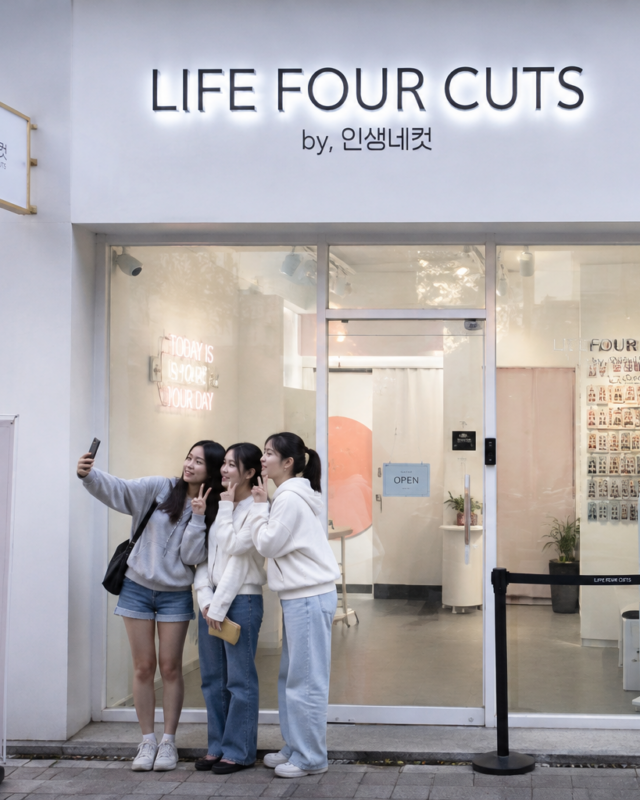
International visitors are increasingly interested in things that would once have been considered ordinary parts of Korean life: convenience stores, cafés, beauty treatments, neighbourhood restaurants, photo booths and small independent shops. Seoul’s appeal has moved beyond monuments and famous attractions towards the details of everyday urban culture.
Fragrance belongs to that same ecosystem.
A visitor may discover a perfume shop while walking through a neighbourhood such as Seongsu, where fashion, food, design and pop-up retail overlap almost constantly. They might not have arrived in Korea specifically to buy perfume, but the experience of encountering a beautifully designed store becomes part of the trip.
The product then travels home with them.
That is an important distinction from the traditional souvenir economy. A Korean perfume does not necessarily say, “I went to Korea.” It can simply become part of someone’s life after they return.
That makes it a particularly effective cultural export.
There Is Also Something Very Korean About Making the Ordinary Feel Special
Korean fragrance has arrived during a period when consumers are paying more attention to small sensory experiences.
A cup of coffee, a carefully designed room, a handwritten note, a photo strip or a particular scent can all become ways of marking an otherwise ordinary day. Korea’s contemporary lifestyle culture has become remarkably good at turning those moments into products and places without stripping them entirely of their intimacy.
Perfume is almost perfectly suited to that idea.
You cannot see it. You cannot keep it forever. It changes depending on the person wearing it, the weather, the time of day and even what happened before you put it on. A good fragrance is less like an object than a memory trigger.
Korean brands have understood that emotional quality and built their businesses around it.
Rather than insisting that a perfume should make its wearer feel powerful, glamorous or seductive, many of the newer brands are comfortable with quieter emotions: calm, nostalgia, curiosity, warmth, cleanliness or simply the feeling of being somewhere else for a moment.
That language travels surprisingly well.
From K-Beauty to K-Fragrance
Korea’s beauty influence is expanding beyond skincare and cosmetics. Fragrance, haircare and wellness are increasingly being treated as parts of the same broader Korean lifestyle ecosystem
The Next K-Beauty Export May Not Look Like Beauty at All
The most interesting thing about Korean fragrance is not that Korean companies have learned how to make perfume.
It is that they have learned how to make perfume feel culturally specific.
For decades, the global fragrance industry was built around a relatively narrow set of luxury references, many of them rooted in French and Italian perfume traditions. Korean brands are entering that conversation with a different visual vocabulary, different retail environments and a different relationship with understatement.
They are not replacing European perfume. Nor are they creating a completely separate category.
They are adding another accent to the conversation.
That distinction matters because the Korean Wave has matured. The first generation of global K-culture exports often arrived with an obvious connection to entertainment: music, television, film. The next generation is increasingly embedded in everyday life. People may encounter Korea through the way a café looks, the convenience of a four-cut photo booth, a particular skincare routine or, increasingly, the smell of a perfume they happen to discover in a shop.
Korean fragrance sits comfortably in that second wave.
The bottle is small. The cultural journey behind it is not.
Korean Fragrance Is Becoming a Lifestyle, Not Just a Trend
There will inevitably be a point when the phrase “Korean fragrance” becomes less novel. More brands will enter Western retailers, more consumers will recognise the names, and the category will eventually lose some of the mystery that makes it exciting today.
That is not necessarily a problem.
The strongest Korean fragrance companies are not relying entirely on novelty. They are building identities that can survive outside the immediate excitement around Korean culture. Their stores, packaging, storytelling and scents are designed to work even when the customer knows nothing about the Korean Wave.
That may be the real reason the category is growing so quickly.
Korean fragrance did not appear out of nowhere. It emerged from a country that spent years learning how to turn beauty, design, retail and everyday rituals into experiences worth paying attention to. K-pop helped put Korea in front of the world, but fragrance does something quieter.
It asks people to take a little piece of that world home with them.
And unlike a photograph or a souvenir, you cannot quite see it coming.
Korean fragrance is not simply Korea’s next beauty export.
It is Korea teaching the world how to remember a place by its scent.