On a Saturday afternoon in Seongsu, the queue outside a temporary fashion shop can stretch onto the pavement.
A few subway stops away, Gwangjang Market tightens around trays of bindaetteok and tteokbokki, while in Dongmyo, shoppers sift through racks of clothes with the concentration of people hunting for something they cannot quite name. Beyond the apartment blocks, a trail climbs Achasan, opening onto a view of the city.
None of these places was built as Seoul’s defining monument. Their appeal lies in what happens there: eating, browsing, waiting, walking, buying, wandering.
That is beginning to reshape the way overseas visitors encounter the city. In 2026, Trazee Travel named Seoul the world’s favourite city for Gen Z and Millennial travellers for the fifth consecutive year. The more telling signal sits elsewhere, in the kinds of places Seoul now puts forward alongside that accolade — Seongsu pop-ups, Gwangjang Market, Dongmyo vintage shops and urban hiking trails. The city is learning to market the hours between the landmarks.
The Map Is Getting Wider
For decades, a first trip to Seoul followed a familiar sequence: Gyeongbokgung Palace, Myeong-dong, N Seoul Tower, a department store, perhaps an evening in Hongdae.
Those places have hardly disappeared from the itinerary. Myeong-dong remains Seoul’s most visited major tourist destination, followed by N Seoul Tower, Samsung Station and COEX in the city’s tourism data. The difference lies in everything that now surrounds them.
In 2025, international visits to Hongdae and Naksan Park climbed 10.5 per cent, while Gwangjang Market rose 10.4 per cent and Achasan Mountain 11.8 per cent. DDP recorded a 12.1 per cent increase, and Gwanaksan rose 10 per cent. The figures come from mobile foot-traffic data analysed by the Seoul AI Foundation.
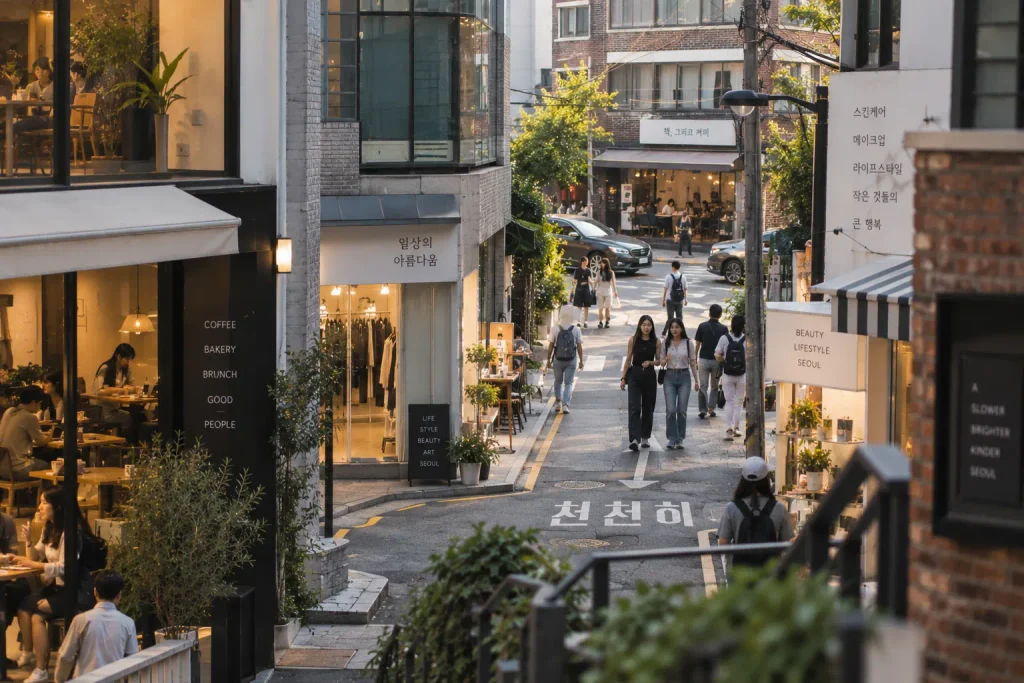
A traveller can spend the morning inside a palace and the afternoon doing something a Seoul resident might barely describe as sightseeing. That ordinary quality has acquired its own pull.
Seongsu Makes the Walk Part of the Destination
Seongsu offers perhaps the clearest expression of the shift.
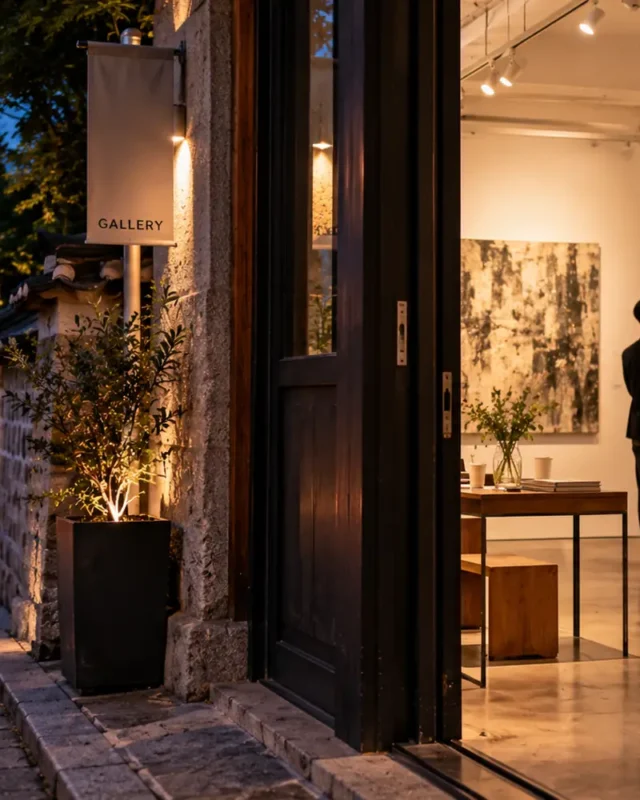
The neighbourhood grew around factories, workshops and small industrial businesses. Much of that physical fabric remains: brick buildings, production spaces, narrow streets. Their interiors now accommodate cafés, galleries, flagship stores and temporary retail installations, with one concept store often replacing another.
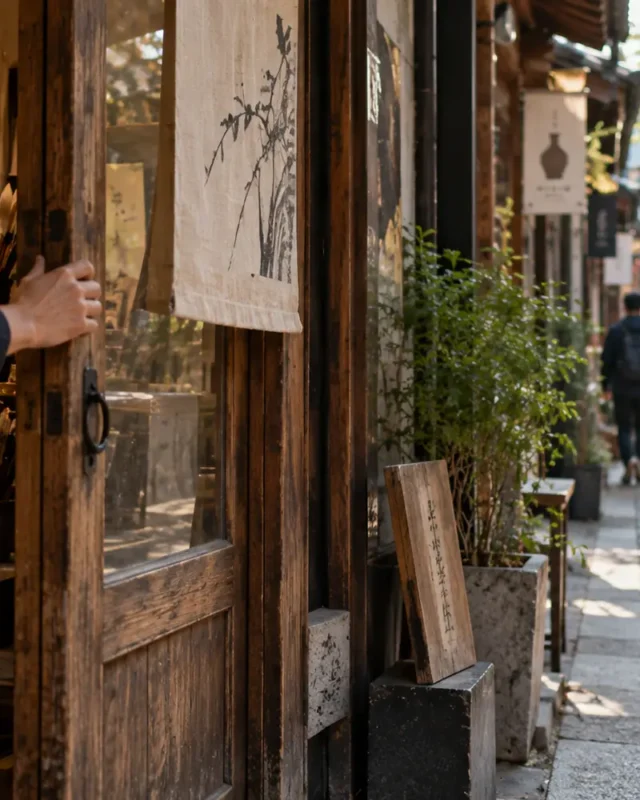
There is no single monument that defines Seongsu. A visitor moves through it instead.
A café leads to a shop. A shop leads to a pop-up. A side street catches the eye. Something that did not exist on yesterday’s itinerary may have opened this morning. The neighbourhood resists the fixed checklist because its appeal depends partly on what happens to be there when you arrive.
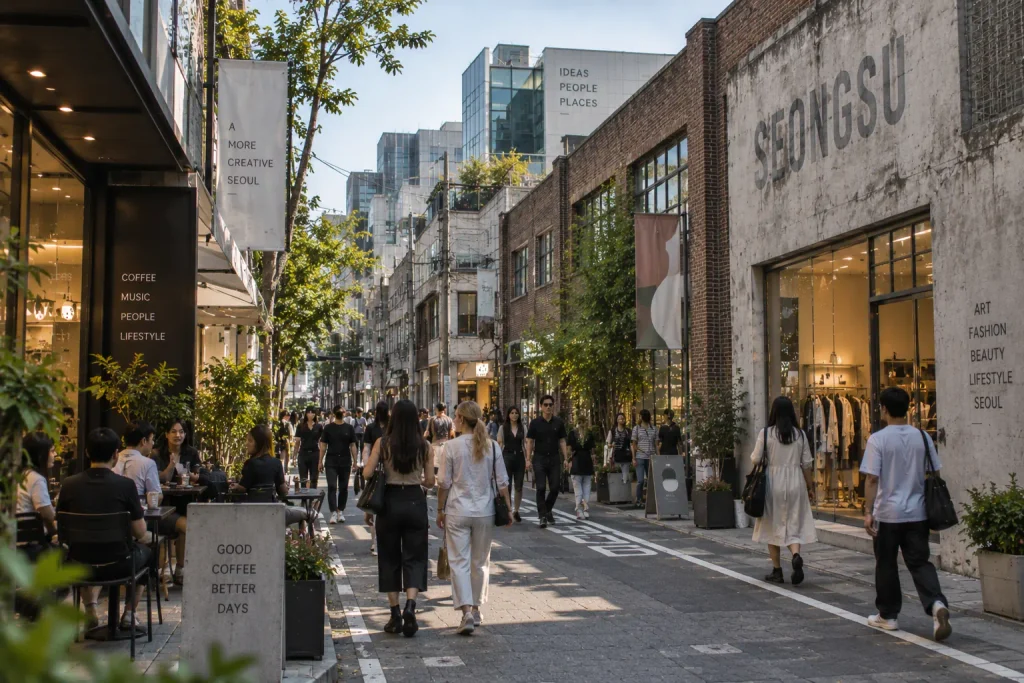
Seoul has leaned into that quality. Seongsu has become one of the city’s most recognisable destinations for younger international travellers, drawn by its cafés, art spaces, flagship stores and constantly changing pop-up scene.
Gwangjang Keeps the City Working
Gwangjang Market offers a different version of the same experience.
The food brings visitors through the entrance. The market itself keeps them there. Bindaetteok sizzles beside other dishes, vendors work in close quarters and the movement around the stalls becomes inseparable from what ends up on the plate.
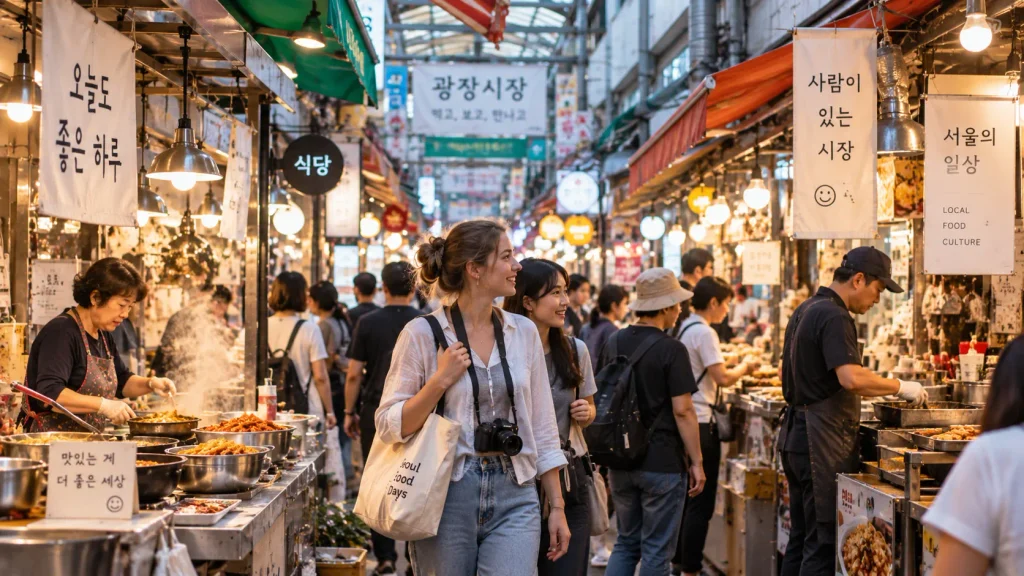
Seoul’s Metropolitan Government promotes Gwangjang as a place where international visitors can encounter K-food alongside the workings of a traditional Korean market. International visits increased 10.4 per cent in 2025.
The market does not need to reconstruct Korea for tourists. Its existing rhythm does enough.
At Dongmyo, the attraction takes another form. Vintage shoppers work through piles and racks, looking for clothes that cannot be predicted in advance. The souvenir is incidental. The search itself becomes the activity.
Seoul Lets Small Plans Become Full Days
The geography helps.
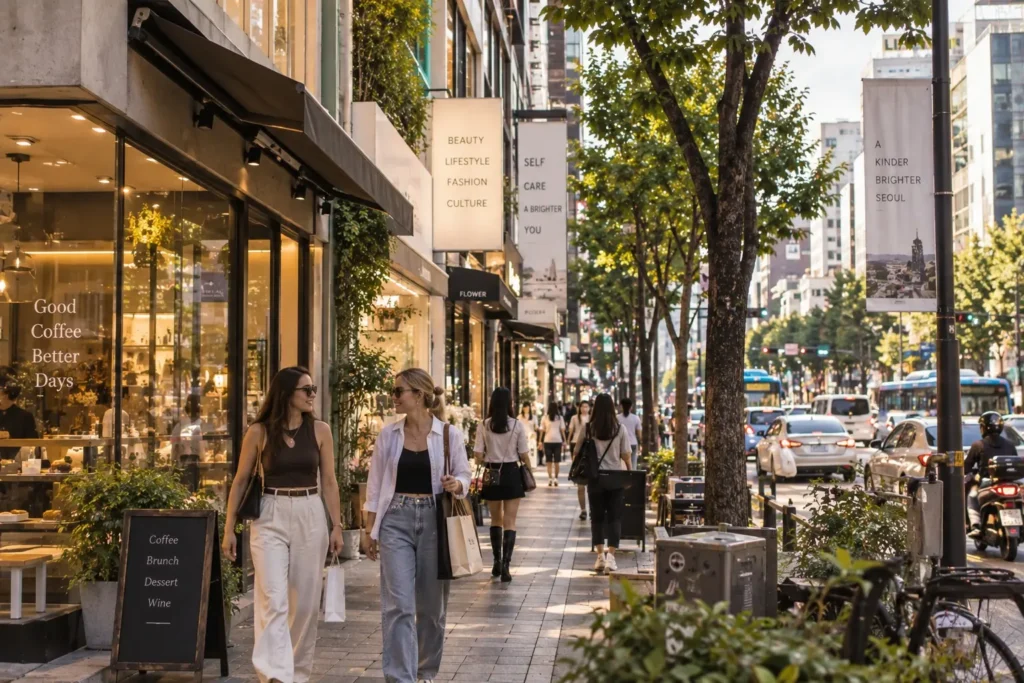
A traveller can leave a department store for a traditional market, move from a beauty appointment to a café, or trade a neighbourhood shopping street for a mountain trail without leaving the metropolitan area. Seoul’s dense commercial districts and extensive public transport make these combinations unusually easy to assemble.
That changes the way a day can unfold. A neighbourhood might enter the itinerary because a particular café happens to be nearby. A pop-up spotted online can redirect an afternoon. A market stall recommended by someone else can become the next destination.
The spending figures follow the same scattered pattern. During the first half of 2026, international visitors spent more than KRW 1 trillion per month in Seoul from April through June. Shopping accounted for 46.4 per cent of foreign-card spending, followed by medical and wellness at 24.4 per cent and food and beverages at 13.1 per cent.
23 MILLION INTERNATIONAL VISITORS
Seoul welcomed 8.23 million international visitors in the first half of 2026, while foreign-issued card spending reached KRW 5.6 trillion.
The city is being consumed in pieces.
K-Culture Opens the Door
K-pop and Korean dramas still provide much of the invitation.
A traveller might book a trip after discovering an artist, a filming location, a beauty brand or a dish online. Once in Seoul, the original reason for coming can spread into the rest of the city. A drama location becomes a neighbourhood walk. A beauty appointment sits between lunch and shopping. A favourite food becomes an excuse to cross town.
Seoul’s 2025 tourism campaign connected Korean content with the physical city, while its 2026 messaging has placed greater weight on everyday culture and local tastes. The city has also linked filming locations and performances with nearby neighbourhood attractions rather than presenting Korean content as a destination in itself.
A screen can create curiosity about Seoul. It cannot reproduce the crush of a market, an hour spent in a café, the discovery of a vintage jacket or the climb above the apartment towers.
The physical city still has to carry the rest of the trip.
The Strange Logic of Urban Hiking
Few things capture Seoul’s geography better than its mountains.
For visitors from cities where hiking usually means leaving the urban area behind, taking the subway and then walking uphill can sound almost contradictory. Seoul makes the combination routine. Mountains sit inside the metropolitan fabric, folded between apartment districts, roads and rivers.
International visits to Achasan rose 11.8 per cent in 2025. Gwanaksan and Naksan Park also recorded increases, as Seoul’s tourism authorities pushed urban hiking as a way to experience the city without travelling far from its central districts.
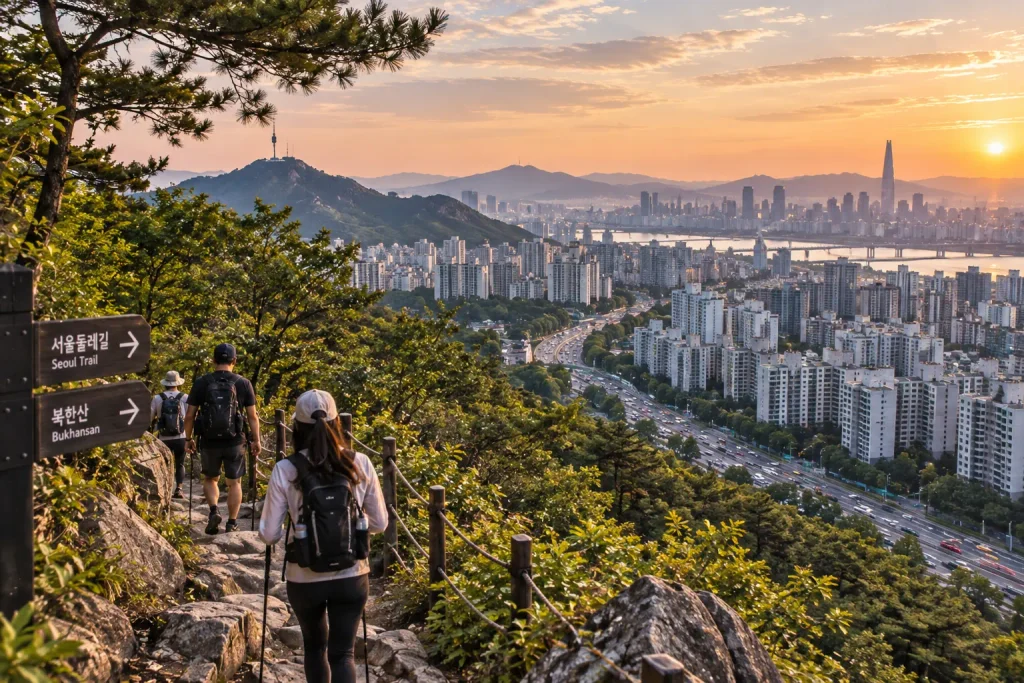
The reward is not limited to the summit.
From a trail, apartment towers, roads, rivers and neighbourhoods that seemed separate at street level begin to settle into one view. The city changes scale. For someone spending several days in Seoul, an afternoon on a mountain can leave a stronger impression than another observation deck.
Seoul Is Learning to Sell Hours
A conventional attraction has a recognisable rhythm. You arrive, look, take a photograph and move on.
Everyday experiences consume time differently.
A market asks to be wandered through. A café can take an hour. Vintage shopping depends on what turns up. A pop-up may require a queue. A hike occupies an afternoon. A beauty appointment can anchor the space between lunch and dinner.
Tourism spending has followed that broader rhythm. During the first half of 2026, international visitors spent KRW 908.4 billion on medical and wellness services in Seoul, while beauty spending reached KRW 463.7 billion, up 40 per cent from the previous year. Food, shopping and neighbourhood businesses occupy the same expanding itinerary.
The longer visitors remain in one district, the more businesses can enter the tourism economy without looking like tourism businesses at all.
A café does not need a famous façade. A salon does not need a landmark view. An independent shop or market stall can become part of a visitor’s memory simply because someone happened to walk through the door.
A Neighbourhood That Refuses to Stay Still
The model carries another advantage: it gives people a reason to come back.
A palace can remain unchanged for years. A neighbourhood built around independent businesses cannot.
Seongsu depends on this churn. Pop-ups close and new ones appear. Brands occupy temporary spaces. Industrial buildings acquire new uses. Seoul’s official travel guide presents the district partly through that continual sense of discovery.
The same mechanism operates elsewhere. Hongdae shifts with its shops and nightlife. Dongmyo depends on whatever happens to be waiting on its vintage racks. Food districts gain new restaurants while older ones persist. Festivals temporarily redraw public spaces.
For an international visitor, Seoul begins to resemble a collection of neighbourhoods rather than a checklist of attractions.
The Hotel Door Is No Longer the Boundary
The move towards everyday experiences extends into accommodation.
In 2026, Seoul selected 18 properties for its “Best Seoul Stay” programme, including urban homestays and hanok stays, presenting them as ways for international visitors to experience residential parts of the city.
The logic is straightforward. A traveller does not have to sleep in a conventional hotel district to remain close to the city they came to explore.
Breakfast in a neighbourhood, a short walk to a local café or the view from a residential street can settle into the memory of a trip without ever appearing on a traditional sightseeing map.
The Famous Seoul Has Not Gone Anywhere
None of this has pushed Seoul’s landmarks aside.
Gyeongbokgung remains among the best-rated attractions for international visitors. Seoul Forest has drawn particularly strong responses in visitor reviews. Myeong-dong continues to lead the city’s major tourist destinations.
The itinerary has simply become less rigid.
A palace can lead to a market. Shopping can turn into a neighbourhood walk. A beauty appointment can end with dinner somewhere else. Breakfast downtown can precede a mountain trail.
The famous city and the ordinary city now fit comfortably into the same day.
A City With No Final Checklist
The revealing moment may come after the landmarks have been crossed off.
There is another street. Another café. Another market stall. A pop-up has appeared since the last visit. A neighbourhood that once served only as someone’s commute has become a reason to cross the city.
Seoul spent years exporting its culture through music, television, food and beauty. Now visitors are arriving with an appetite for the physical city behind those images — the shops, markets, cafés, streets and trails where the culture keeps moving.
For a traveller, a day in Seoul can now end without a famous destination at all.
Just a neighbourhood street, a half-finished cup of coffee, and somewhere else to walk.