Walk into a Korean jjimjilbang on a weekday afternoon and the scene may look different from the stereotype.
There are still older regulars moving between the baths, towels folded neatly on their heads, but increasingly there are also people in their twenties and thirties, arriving alone after work, meeting friends, or treating a few hours in the heat as part of a carefully assembled wellness routine.
The shift is happening at a curious moment. Korean public bathhouses have been disappearing for years as operating costs rise and lifestyles change, yet sauna culture is finding a new audience among people who did not necessarily grow up visiting them. In July 2026, one Seoul jjimjilbang reported that 21 of 36 visitors on a weekday afternoon were in their twenties or thirties. Staff who had watched the business for years said the proportion of younger customers had changed dramatically.
The revival is not simply nostalgia. For younger Koreans, the sauna can mean recovery after a workout, a few hours without a phone, an inexpensive way to spend an afternoon, or a place to meet people without the usual pressure to drink or spend heavily. The old bathhouse has acquired a surprisingly contemporary appeal.
The Korean Sauna Was Never Just a Place to Get Clean
To understand why the culture is returning, it helps to separate the Korean sauna from the Western idea of one.
In Korea, the word “sauna” can refer to several overlapping experiences. A neighbourhood bathhouse usually combines hot and cold baths with dry or steam rooms, while a jjimjilbang takes the idea further, adding heated rooms, communal lounges, food, rest areas and, in some cases, sleeping quarters. The result is less like a single treatment than a place where an entire stretch of the day can disappear.
That distinction matters because Korean bathing culture has traditionally been social. Friends and family could visit together, spend time in the common areas, eat simple food and stay far longer than a quick shower-and-go visit would suggest. Some larger facilities even combine restaurants, cafés, games and other amenities with their bath and sauna areas.
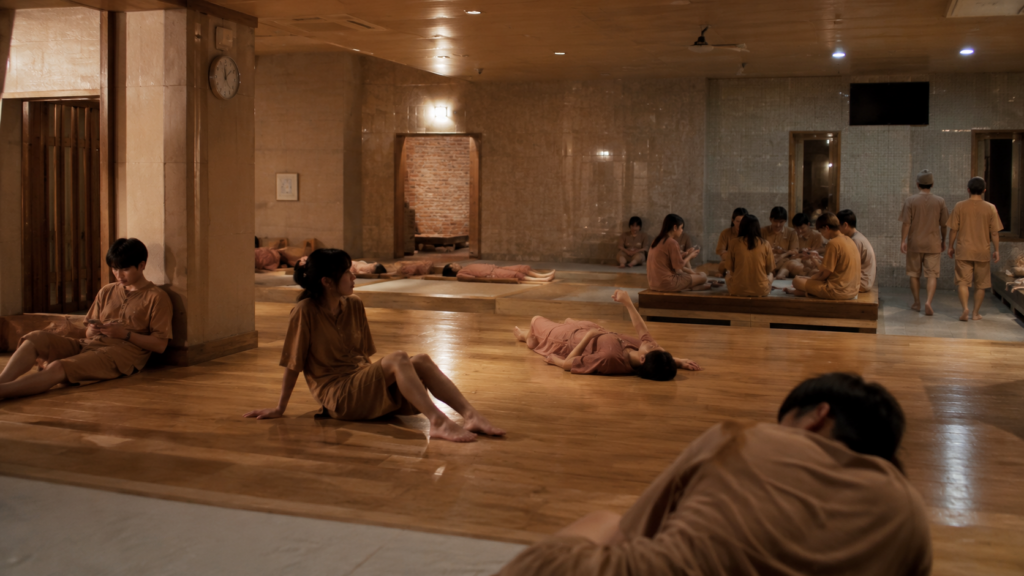
For foreigners, the details can initially seem unusual. You shower before entering the baths, and men and women generally use separate bathing areas where communal bathing is taken for granted. Once dressed in the loose clothes provided by a jjimjilbang, however, the experience opens into a shared space where people sit, sleep, eat, talk or simply do nothing for a while.
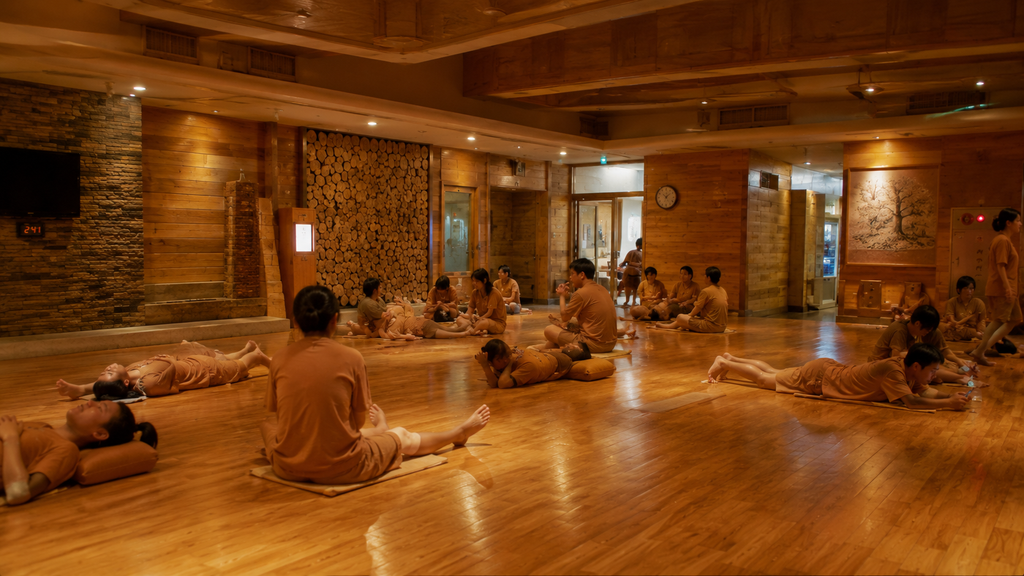
Doing nothing is increasingly valuable.
A Culture That Was Supposed to Be Fading
For years, Korea’s neighbourhood bathhouses seemed to belong to another generation.
The numbers tell part of the story. According to the Korea JoongAng Daily, the number of public bathhouses in South Korea fell from a peak of 10,098 in 2001 to 5,668 in 2025. Rising utility costs, changing housing patterns, the pandemic and shifting leisure habits have all made the traditional bathhouse business harder to sustain.
There is an irony here. Just as the old infrastructure has been shrinking, the idea of the sauna has become more culturally interesting.
Many younger Koreans did not have the same childhood relationship with bathhouses that their parents did. For them, going to a sauna is not necessarily a routine inherited from family life. It can feel like discovering something old as though it were new, particularly when the experience arrives through Instagram, YouTube or a recommendation from a friend.
One sauna publisher interviewed by The Korea Times described precisely this generational disconnect: people who did not grow up with regular bathhouse visits can approach the experience as something unfamiliar, even adventurous. Young visitors have described the retro atmosphere, the food and the simple pleasure of spending several hours there as part of its appeal.
The culture is being rediscovered partly because it is no longer being taken for granted.
Why Are Young Koreans Going Back?
The most obvious explanation is wellness, but even that word needs some unpacking.
Korean sauna culture has always involved heat, water and rest. What has changed is the way younger consumers talk about those things. A sauna visit can now be folded into a broader routine involving exercise, cold plunges, recovery, skincare and mental decompression.
One 29-year-old office worker interviewed by the Korea JoongAng Daily described going to a sauna several times a week, sometimes choosing a gym specifically because it had good sauna facilities. His routine involved moving between a hot bath, sauna and cold plunge rather than simply sitting in the heat.
The distinction is subtle but important. The sauna is becoming less of an occasional place to sweat and more of a deliberate ritual.
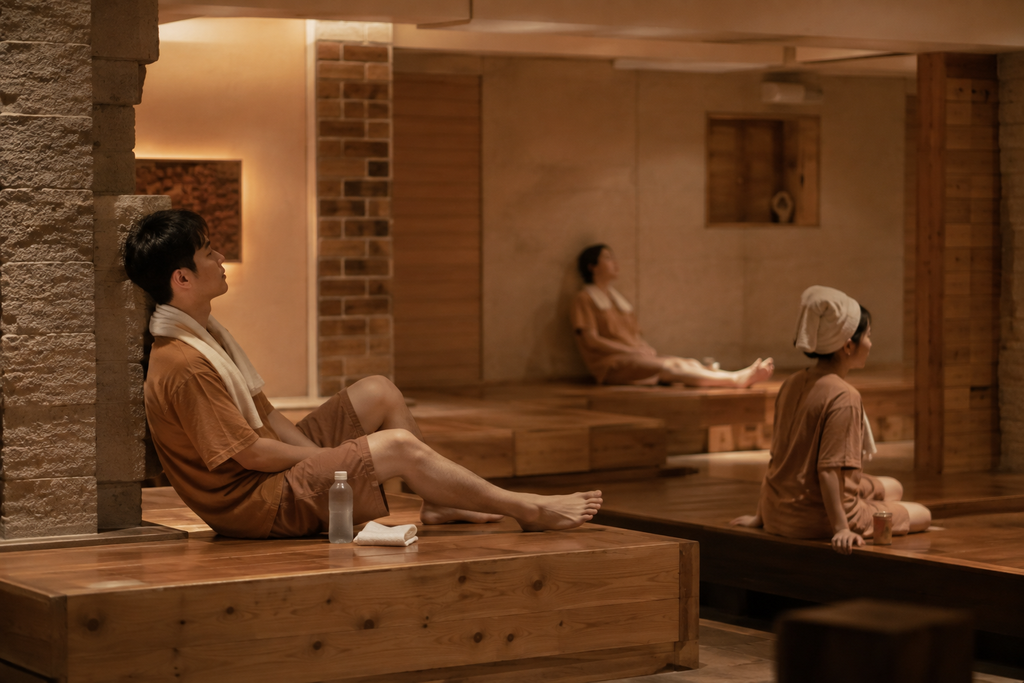
That shift can also be seen in the emergence of sauna-focused social media. Korean creators now post what amounts to lifestyle content around their sauna routines, from reviews of different facilities to “what’s in my sauna bag” videos featuring skincare products, towels and recovery accessories. Some younger visitors seek private rooms or premium facilities, while others join organised sauna gatherings or finish running-club sessions with a shared visit.
The old bathhouse has acquired the language of contemporary wellness without having to reinvent its basic ingredients.
The Most Modern Part May Be the Digital Detox
There is another reason the sauna makes sense now: you cannot take your phone everywhere.
For a generation accustomed to carrying a screen through almost every part of the day, that restriction can feel strangely luxurious. Many heated sauna rooms are not places where you can comfortably use a smartphone, and the bathing areas themselves require phones to be left behind.
What used to be an inconvenience has become part of the attraction.
A sauna curation account with a substantial social-media following told The Korea Times that younger visitors increasingly want somewhere they can put their phones down and disconnect from work and social media. The Korea JoongAng Daily similarly found younger sauna users describing the experience as a kind of “forced digital detox.”
This may be the most interesting transformation of all. Korea did not invent digital detox as a wellness concept. Yet an ordinary institution that existed long before smartphones now happens to offer exactly the condition people are paying for elsewhere: uninterrupted time away from them.
Jjimjilbang Is Part Spa, Part Living Room
A Western visitor might expect a sauna to be quiet, minimal and vaguely luxurious. A jjimjilbang can be much less precious.
What Is a Jjimjilbang?
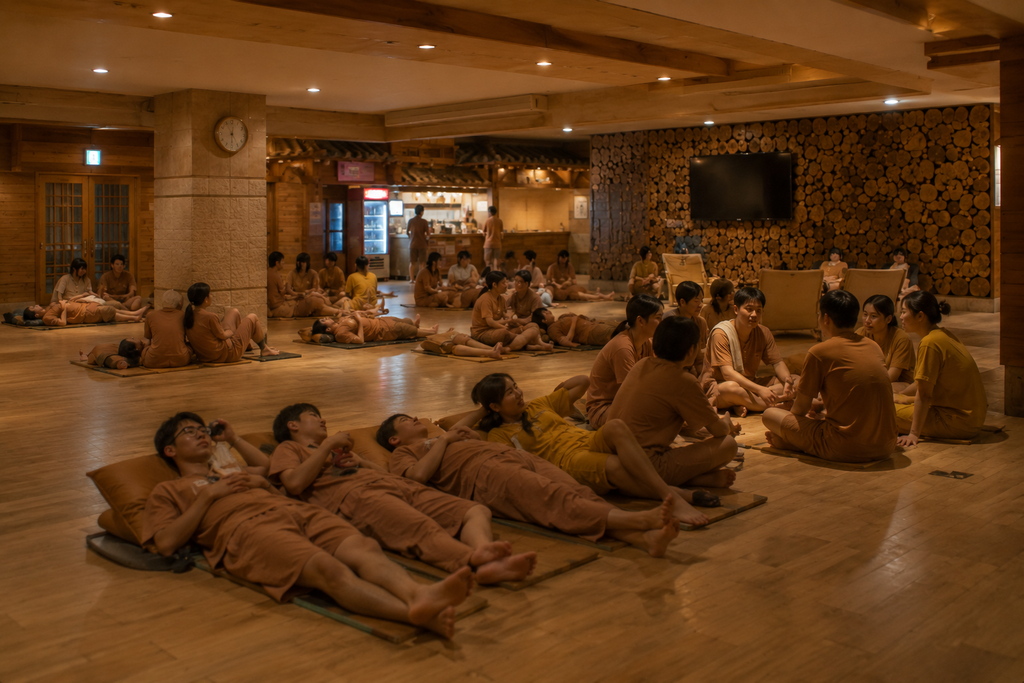
A jjimjilbang is more than a Korean sauna. Traditionally, it combines bathing and heated rooms with shared spaces where people can eat, rest, talk and sometimes sleep, turning a short visit into several hours of unhurried time.
You may see someone sleeping on the heated floor. Another person is eating eggs or drinking sikhye. Groups of friends talk in matching clothes. Someone else is stretched out with a towel over their face, apparently determined not to move for another hour.
The food matters more than an outsider might expect. Boiled eggs and sweet rice punch have become almost inseparable from the image of the jjimjilbang, and Korean tourism materials routinely present eating and resting as part of the experience rather than as distractions from it.
There is something distinctly Korean about this refusal to divide leisure into neat categories. A place can be for bathing, eating, talking, sleeping and recovering without needing to decide which one it is.
The same sensibility appears elsewhere in Korean life. A café can become a workspace. A convenience store can become a place to eat dinner. A mountain can become an after-work exercise route. The sauna fits comfortably into that culture of spaces that do more than their name initially suggests.
The New Sauna Culture Is Also More Social
The old image of the sauna as a place for solitary relaxation is only half the story.
Some younger Koreans are going to saunas precisely because they offer a way to spend time with other people without requiring a conventional social setting. Running clubs have begun incorporating sauna visits into their routines, while organised gatherings bring people together around an activity that is neither a meal nor a night out.
That may explain why the revival feels different from a simple return to an old habit.
The café has long been one of Korea’s default meeting places. Bars and restaurants serve a similar function, but both come with expectations about what you order, how long you stay and what kind of social occasion you are having. A jjimjilbang offers a looser alternative. You can talk, sit quietly, eat something, fall asleep or separate for an hour and meet again later.
There is no obvious performance required.
That quality is increasingly attractive in a culture where leisure can itself become another scheduled activity.
From Neighbourhood Bathhouse to Premium Sauna
The revival is not happening entirely at traditional bathhouses.
Alongside old neighbourhood facilities, Korea now has premium sauna clubs, private rooms and highly designed wellness spaces that borrow elements from the jjimjilbang while presenting them through a more contemporary aesthetic. Some visitors are interested in privacy; others are looking for carefully designed heat-and-cold routines or a more curated version of the experience.
This creates an unusual spectrum.
At one end is the inexpensive neighbourhood bathhouse that has been serving local residents for decades. At the other are polished spa complexes where Korean sauna culture is combined with pools, themed rooms, restaurants and premium wellness programmes.
The two may look very different, but they share an underlying idea: staying somewhere for a while rather than moving through it as quickly as possible.
That is one reason the jjimjilbang translates surprisingly well into the current wellness economy.
Why Is the Sauna Trend Happening Now?
Part of the answer lies outside Korea.
The United States is experiencing its own “new sauna wave”, with community-oriented sauna spaces being presented as alternatives to cafés, bars and clubs. The appeal is not limited to heat therapy. These places are increasingly designed around social connection, recovery and a more intentional way of spending time.
Korea’s situation is different because the infrastructure already exists.
What is fashionable elsewhere has been ordinary here for decades. The interesting development is that Korean consumers themselves are beginning to look at that familiar culture differently, while international wellness culture is making the underlying concept newly legible.
A sauna that once looked old-fashioned can suddenly look ahead of its time.
It does not require a new app, a complicated membership or a new piece of equipment. It requires somewhere warm to sit, somewhere cool to recover and enough time not to rush.
Korea’s Sauna Culture Is Older Than the Wellness Boom
There is a danger in describing all of this as a new trend.
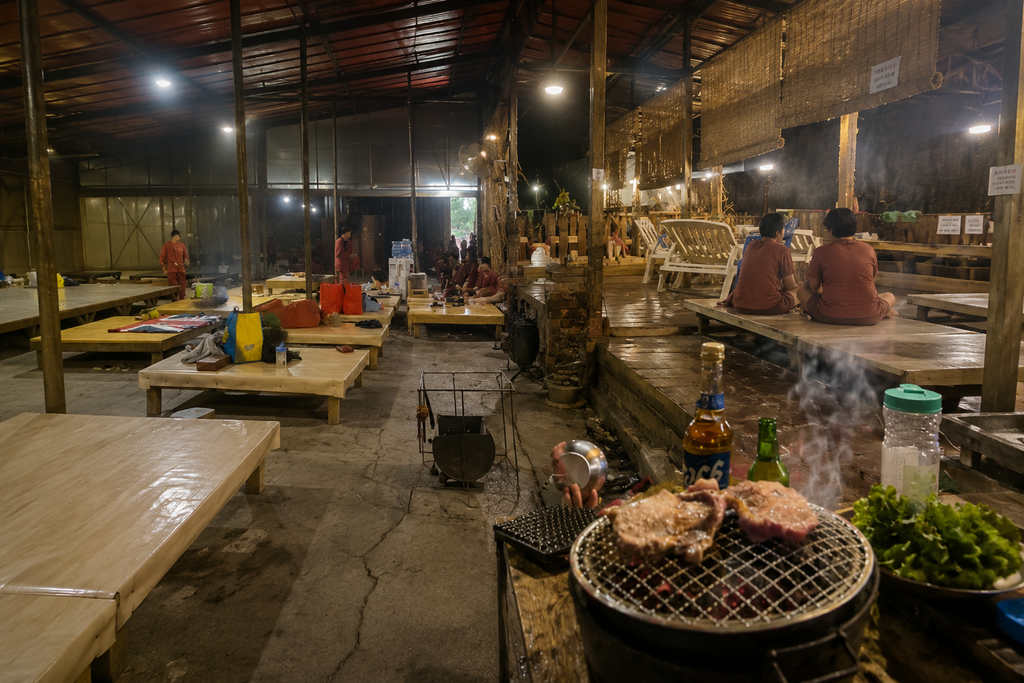
The language surrounding it may be new, but the underlying culture is not. Koreans have been using public baths and jjimjilbangs as places to rest and socialise for generations. What is changing is the context in which younger people encounter them.
That distinction matters because it prevents the story from becoming another version of “Korea invented wellness.”
It did not.
Instead, Korea happens to have an established public culture that now overlaps neatly with several ideas that are fashionable internationally: recovery, community, analogue leisure, affordable wellness and digital disconnection.
Even the physical design of the jjimjilbang reflects this history. Heated rooms, communal floors and shared resting areas were not created as Instagram backdrops. Their appeal came from practicality, comfort and the social habits that developed around them.
The aesthetic may now be retro. The reason people stay is much older.
Foreign Visitors Are Discovering the Experience Too
For travellers, the jjimjilbang has become one of the more distinctive ways to experience everyday Korean life.
Korea’s tourism authorities have long highlighted Korean-style saunas as experiences that appeal to foreign visitors, particularly because they combine bathing, heated rooms, food and relaxation in a format that is difficult to replicate elsewhere.
That makes the sauna different from many attractions marketed to tourists.
You are not simply looking at Korean culture. You are temporarily participating in one of its ordinary routines.
There is a learning curve, of course. The separation between bathing areas and communal spaces, locker-room etiquette and the expectation of communal bathing can feel unfamiliar at first. But that unfamiliarity is part of the appeal. A visitor who spends an afternoon in a jjimjilbang is seeing a version of Korea that rarely appears in a palace tour or carefully staged cultural performance.
The experience is domestic rather than ceremonial.
The Sauna May Be Korea’s Original Slow Space
Modern life has produced an entire vocabulary for slowing down: digital detox, recovery, mindfulness, wellness, screen-free time, social connection.
Korea’s jjimjilbang predates most of it.
The irony is that the culture is being rediscovered at precisely the moment when people elsewhere are searching for ways to achieve what a Korean bathhouse has quietly offered for years. You leave your shoes and belongings in a locker, put on simple clothes, enter a warm room and stay there without much to accomplish.
There is no itinerary.
That may be why the revival feels more substantial than a passing retro trend. Young Koreans are not simply copying something their parents enjoyed. They are adapting an old social institution to a different set of pressures.
The bathhouse becomes a recovery room after a run, a place to meet friends without drinking, a few hours away from a phone, somewhere inexpensive enough to visit regularly or, occasionally, simply a warm floor on which to lie down and do absolutely nothing.
5,668 Public Bathhouses
South Korea had 5,668 public bathhouses in 2025, down from a peak of 10,098 in 2001. The decline makes the renewed interest among younger consumers particularly striking.
A Different Kind of Korean Cool
Korea’s global cultural influence is often described through things that are easy to package: music, television, beauty products, fashion, food.
The sauna is harder to package because its appeal depends on staying.
There is no obvious object to buy at the end of the experience, no particular photograph that proves you were there and no efficient way to reduce several hours of rest to a single attraction. Its value lies in the time itself.
That may be precisely why it fits the current moment.
As young Koreans rediscover the jjimjilbang, they are not necessarily returning to the past. They are taking an old institution and giving it a new purpose, one shaped by crowded schedules, fitness culture, social media and the growing desire to be unreachable for a while.
The result is an unusually Korean kind of modernity: something familiar becomes interesting again because the world around it has changed.
The sauna did not suddenly become cool.
People changed, and then they noticed what had been there all along.