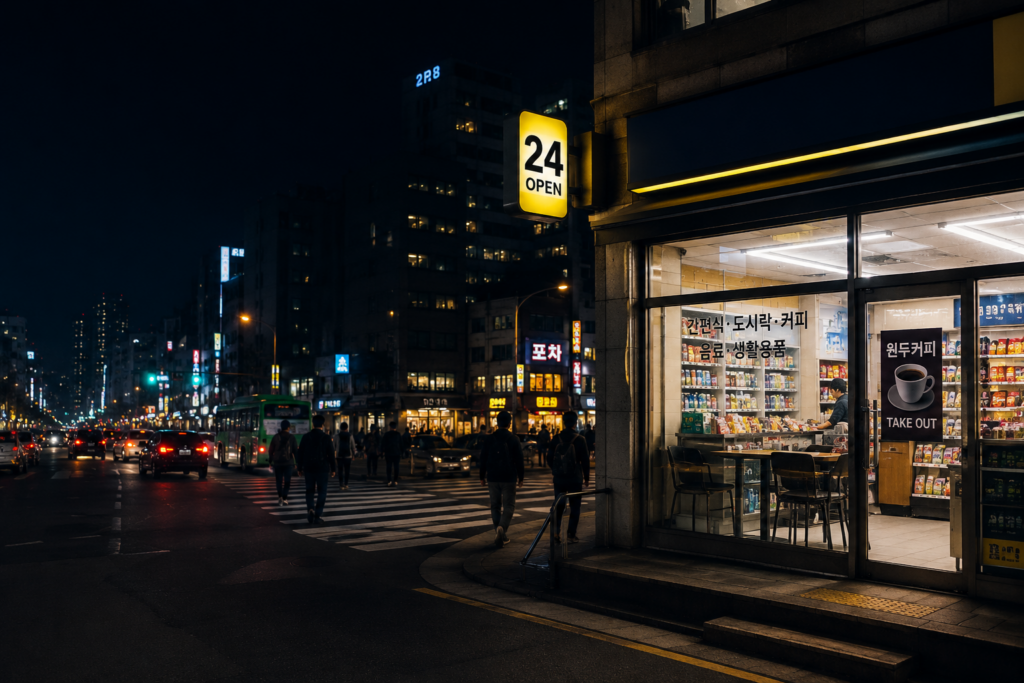
After midnight in Seoul, the city does not go quiet so much as change hands.
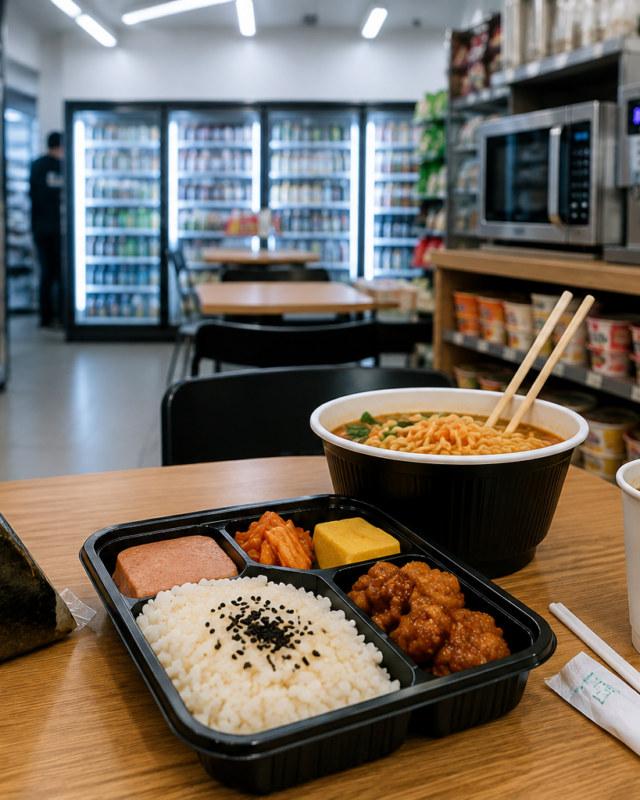
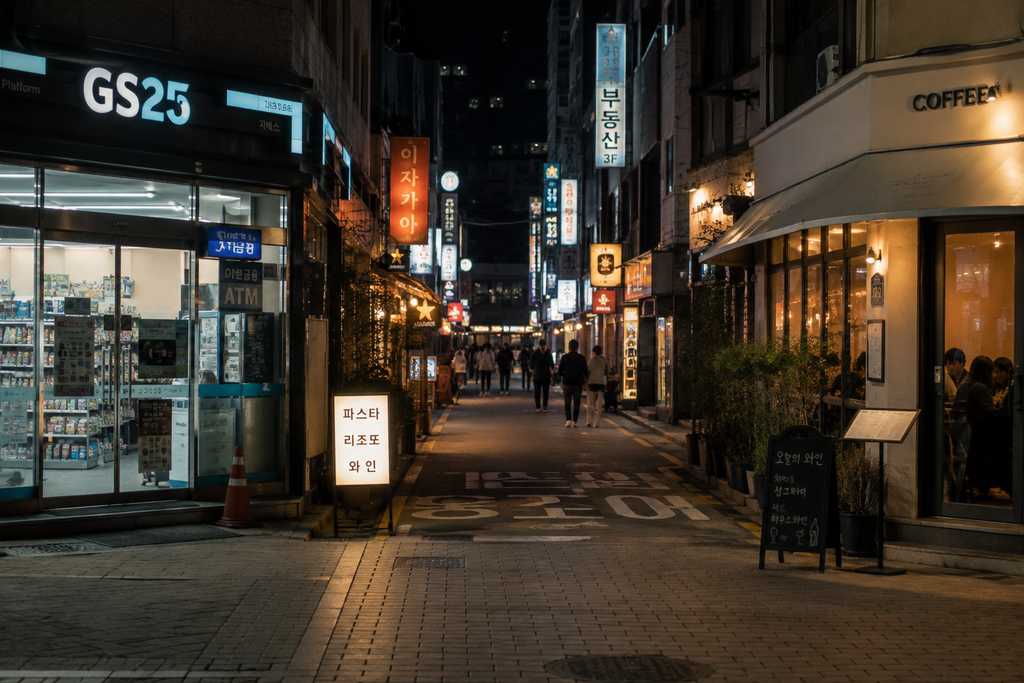
A convenience store throws a rectangle of white light onto the pavement. Someone waits beside the microwave for a cup of noodles to finish heating. A delivery rider pulls up at the curb, helmet still on. A few diners linger over a meal that began hours earlier. Down the street, a PC bang glows behind its windows, rows of monitors lighting faces in the dark.
For a visitor seeing this for the first time, the scene can feel faintly unreal.
Korea does not, of course, keep every business open until morning. Most restaurants close. Cafés turn off their lights. Shops follow ordinary daytime schedules. But in the busier parts of Seoul and other major cities, finding somewhere to buy food, pick up something you forgot, or simply sit for another hour after midnight can be surprisingly easy.
The more interesting question is not why Koreans stay awake.
It is how Korean cities became so accommodating to the people who do.
The Convenience Store Explains a Lot
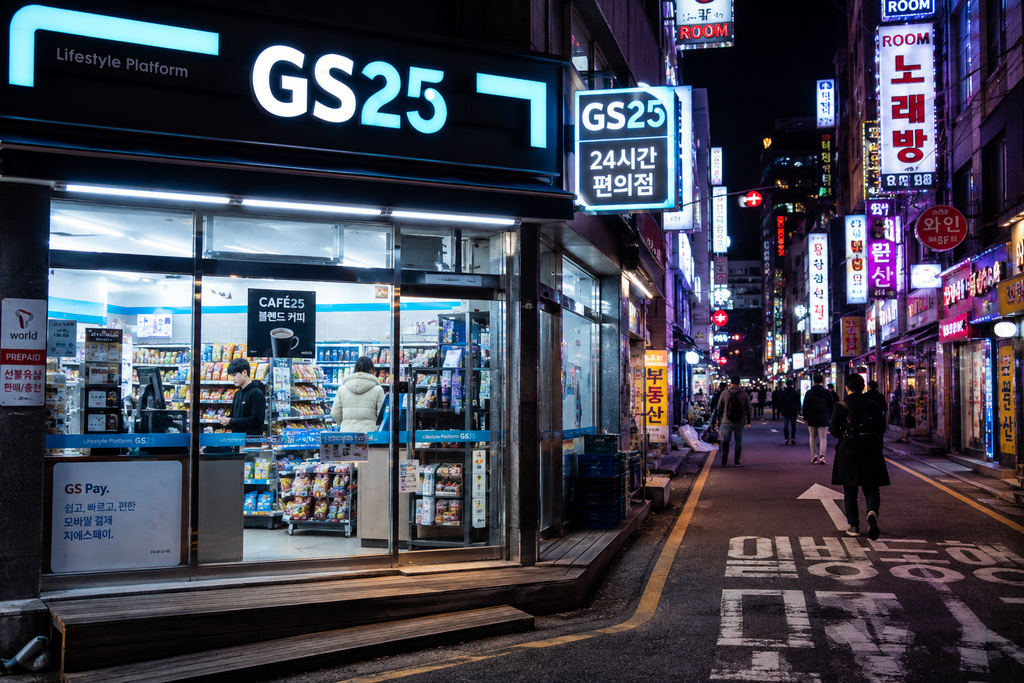
Few places tell the story better than the convenience store.
In Korea, the neighborhood convenience store can be much more than a place to buy snacks. Depending on the branch, you can collect a parcel, withdraw cash, heat up a meal, buy toiletries, grab breakfast, or sit down with something to eat. The format grew alongside dense urban neighborhoods and the rise of smaller households, where a full supermarket trip is not always necessary.
That gives the 24-hour sign a particular kind of meaning.
You do not have to plan around the store. The store is there when your plans have already fallen apart.
A bottle of water on the walk home. A meal after a late shift. A phone charger left behind at the hotel. A parcel waiting after you have finished work.
Small problems. Small solutions.
The convenience comes from the fact that none of these errands requires rearranging the day.
A store that is small, close, and still open at an inconvenient hour can quietly become indispensable.
Korea’s Late-Night Economy Grew Around Convenience
The spread of late-opening businesses followed the way Korean cities themselves changed.
Neighborhoods became denser. Competition between retailers intensified. Everyday necessities moved closer to apartment buildings, offices, universities, and transport hubs. Convenience stores fit neatly into those spaces, often occupying tiny footprints where a larger shop could not.
Then household size began to change.
Someone living alone may not need a week of groceries. They may need dinner. A drink. Toothpaste. A few things for tomorrow morning.
Convenience stores adapted accordingly, filling their shelves with smaller portions, ready-to-eat meals, and products suited to quick, unplanned purchases. Korean reporting has repeatedly linked the growth of convenience-store retail with the expansion of single-person households and demand for easily accessible food and household goods.
The shopping habit that emerged from this is less about stocking up than solving the immediate problem.
You do not always buy for the week.
Sometimes you buy for tonight.
What Stays Open After Midnight?
The answer changes from neighborhood to neighborhood, but the options can stretch surprisingly far.
| Place | What you might find after midnight |
|---|---|
| Convenience store | Ready-to-eat meals, drinks, groceries, toiletries, and everyday essentials |
| Late-night restaurant | Meals outside conventional dining hours |
| PC bang | Gaming, food, drinks, and somewhere to spend several hours |
| Jjimjilbang | Bathing, resting, eating, and, at some locations, overnight stays |
| Late-night café | Somewhere to meet, work, read, or simply sit |
| Delivery services | Meals and other goods brought to your home |
None of this means every place operates around the clock. Opening hours vary, sometimes dramatically.
The distinction matters because the familiar picture of Korea as a country where everything stays open all night is simply wrong.
What stands out instead is the number of alternatives.
One door closes. Another may still be lit a few minutes away.
The Night Does Not Arrive All at Once
In many cities, evening has a recognizable ending.
Dinner finishes. Shops pull down their shutters. Streets empty. By midnight, much of the ordinary machinery of the day has stopped.
Seoul can feel less definite.
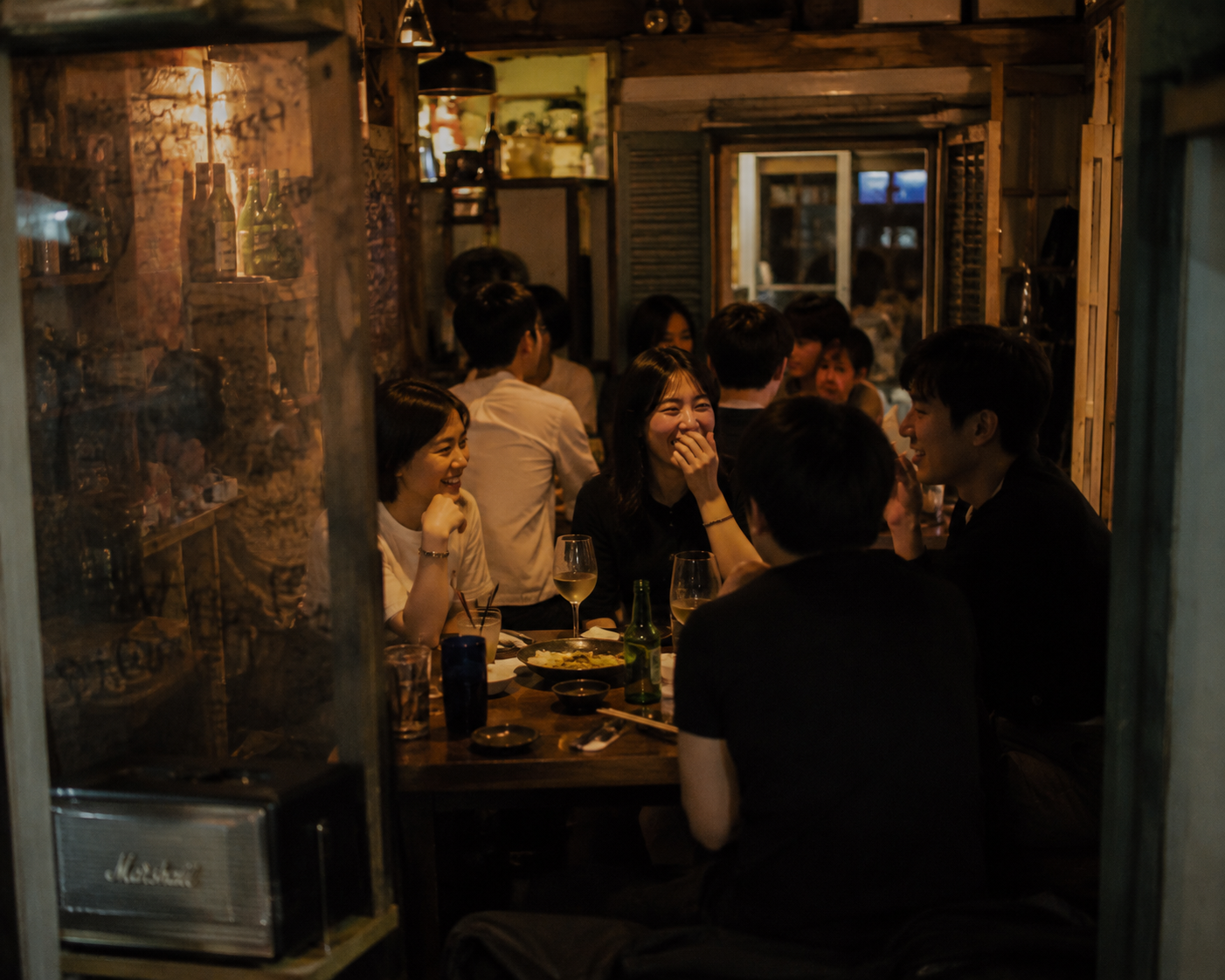
One neighborhood may be winding down while another is filling up. A restaurant serving dinner gives way to one serving a later meal. Convenience stores remain bright. People spill out of bars and start looking for food again. A night-shift worker begins work just as someone else is finally heading home.
The city has no single closing bell.
Seoul’s government has begun treating that quality of urban life as a policy question, too. In August 2026, the Seoul Metropolitan Government announced a plan for a “Vibrant 24-Hour Economy,” bringing nighttime culture, sports, tourism, transportation, safety, and commercial districts into a broader nighttime strategy. The ambition goes beyond keeping individual shops open: the hours between evening and morning are being considered as part of the city’s usable public life.
The policy may be new.
The habit is not.
Density Makes Late-Night Convenience Possible
Walk through a busy Korean neighborhood and the geometry becomes obvious.
A convenience store may sit beneath an apartment building. A café waits across the street. A restaurant occupies the corner near the subway entrance. Another store is only a few minutes away.
Dense cities give businesses something valuable: customers already passing through.
A shop ten minutes away may not seem worth visiting at midnight for a carton of milk.
The shop downstairs is different.
Distance changes the meaning of convenience. A store does not have to offer something extraordinary when getting there requires almost no effort.
That helps explain the peculiar familiarity of Korean convenience stores. Their usefulness comes not only from what sits on the shelves, but from how little thought it takes to reach them.
The People Who Need the City at Different Hours
Not everyone finishes work at six.
Hospital workers. Restaurant staff. Drivers. Delivery workers. Students. Security guards. Countless others move through schedules that have little relationship to conventional business hours.
For them, a shop open late is not part of some exotic nightlife. It is simply open when they need it.
That makes the idea of Korea as a nation of habitual night owls too simple.
The city has to accommodate people whose days do not line up.
A convenience-store employee working through the night and a customer buying dinner at 2 a.m. may have almost nothing in common beyond the hour. Yet the same fluorescent-lit room serves both of them.
Look at the 24-hour sign that way and it becomes less a symbol of nightlife than a piece of infrastructure.
But 24 Hours Is Not Always Good Business
The lights cost money.
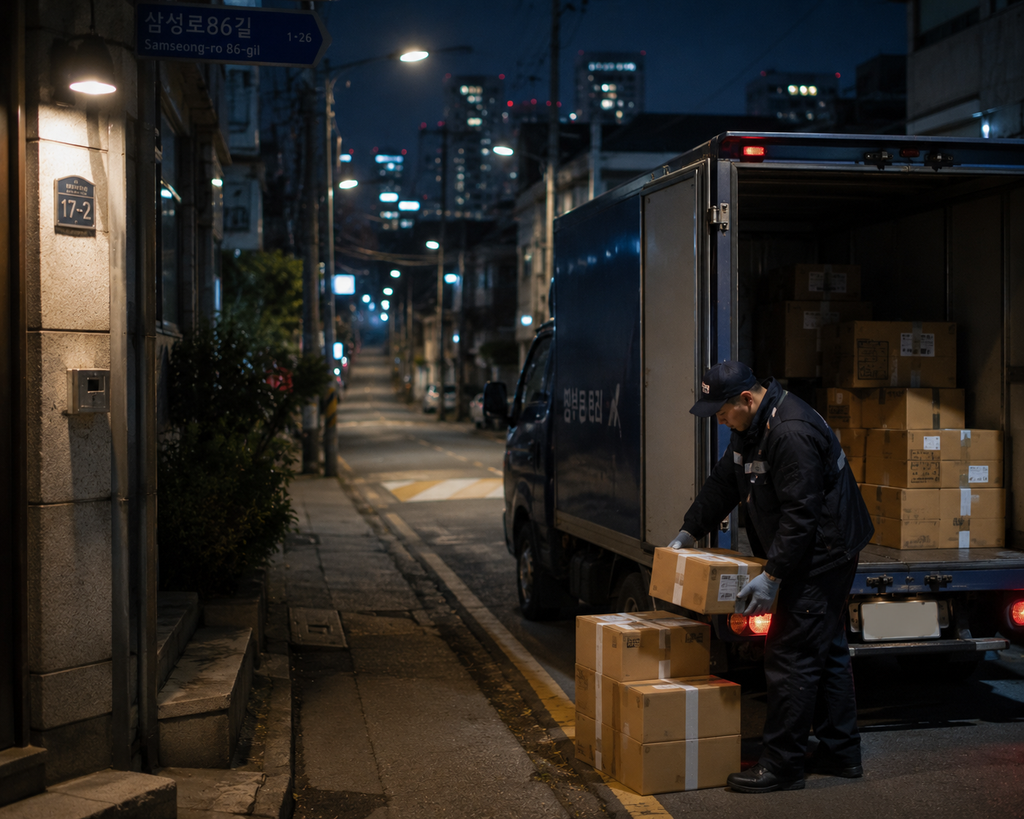
Someone has to work the overnight shift. Electricity has to be paid for. And after midnight, enough customers need to walk through the door to make the whole arrangement worthwhile.
Convenience-store owners have been making that calculation for years. Rising labor costs, rents, and intense competition have made overnight operation harder for some franchisees. Some stores have reduced their hours; others have moved toward unmanned operation. Korean reporting has documented those pressures repeatedly.
So the 24-hour store should not be mistaken for a permanent feature of Korean life.
It is a business decision.
Where people keep coming, the lights stay on.
Where they do not, the shutters come down.
A store open all night makes far more sense in a busy commercial district, beside a university, near a major station, or in a densely populated neighborhood than on a quiet suburban street.
The Convenience Store Became More Than a Shop
Walk into one late enough, and the place can feel strangely domestic.
Someone tears open a meal and eats at the counter.
Someone else sits with a drink.
A student grabs snacks before heading back to a dorm. A worker buys breakfast on the way home. A delivery rider pauses between orders for something quick.
The business remains a store. But after enough repetition, it starts to occupy another role: a tiny piece of neighborhood infrastructure.
That quality is especially visible in Korea, where convenience stores are so numerous and so deeply embedded in residential and commercial streets. People pass through them constantly. They become familiar without ever becoming destinations.
The store does not need to be remarkable.
It needs to be there.
Korea Is Not a Country Where Everything Stays Open
Calling Korea a country that “never sleeps” makes an easy travel headline.
It also misses the point.
Plenty of businesses close early. Small restaurants take regular days off. Traditional markets follow their own schedules. Many cafés shut down at night. Even convenience stores are increasingly asking whether staying open until morning makes financial sense.
What a visitor may notice instead is the sheer number of choices left after one option disappears.
The restaurant you wanted has closed. Another one may still be serving.
The supermarket is dark. The convenience store downstairs is not.
You are not ready to go home. Somewhere nearby, people are still eating, working, talking, gaming, or simply sitting beneath the lights.
The night does not necessarily end when one kind of business closes.
That is a different sort of convenience.
And Now Seoul Is Trying to Build on It
For years, late-night activity developed almost organically around restaurants, convenience stores, entertainment districts, and transport hubs.
Now Seoul is beginning to treat the nighttime economy as something a city can shape.
In 2026, the city’s strategy expanded beyond shopping to include late-night culture, sports, tourism, public transportation, safety, and neighborhood businesses. Plans for the Han River have also looked toward extending activity from daytime into the night, tying together transport, recreation, food, festivals, and nearby commercial districts.
None of this means Seoul will become a city where every business operates until dawn.
The city is responding to something its residents have understood for years:
The day does not necessarily end when the office closes.
So, Why Are So Many Korean Shops Open 24 Hours?
No single explanation covers it.
Convenience stores made ordinary shopping possible at almost any hour. Dense neighborhoods kept those stores close to the people who needed them. Smaller households created demand for quick, individual purchases. Businesses competed for customers whose schedules had little patience for conventional opening hours.
Over time, those pressures became part of the rhythm of Korean cities.
The 24-hour sign is simply the most visible version of it.
What matters more is the expectation behind the sign: when something ordinary goes wrong at an inconvenient hour, someone, somewhere nearby, may still have a solution.
A convenience store glowing at 2 a.m. can feel reassuring for that reason.
Not because Korea never sleeps.
Because the city has learned to leave a light on for the people who are still awake.