In Korea, education often extends far beyond the classroom, and parents can play a surprisingly large role in managing it.
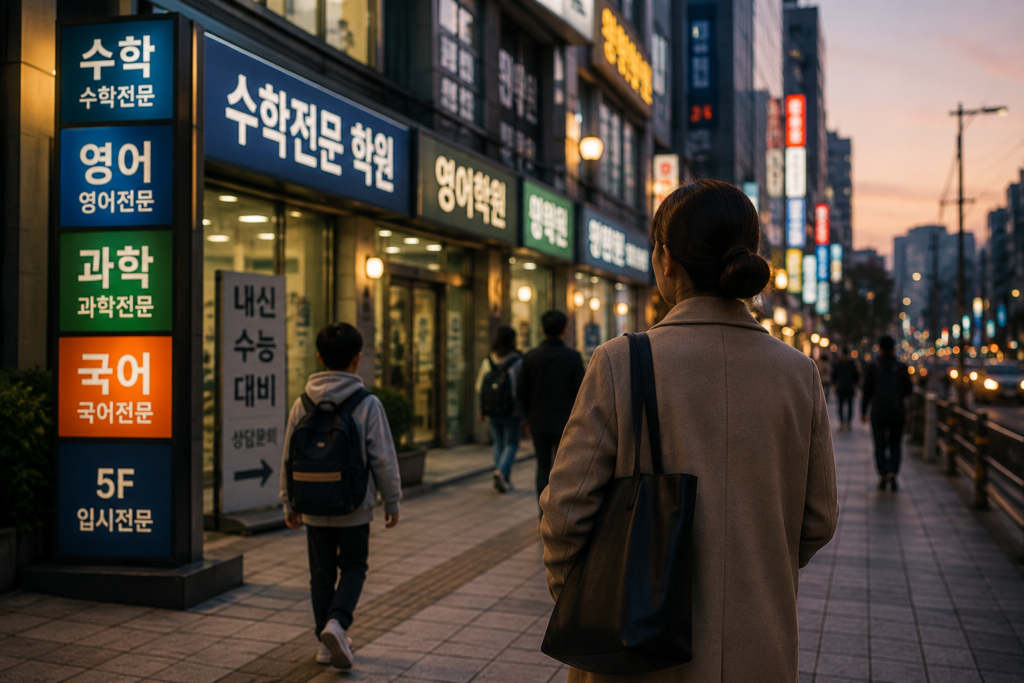
It is evening. A child steps out of a private academy, a backpack hanging from one shoulder. A parent waits nearby, checking the time before the next class. Another student disappears into a building across the street.
For someone from a country where school largely ends when the final bell rings, the scene can be difficult to place.
In Korea, the school day can stretch well into the night.
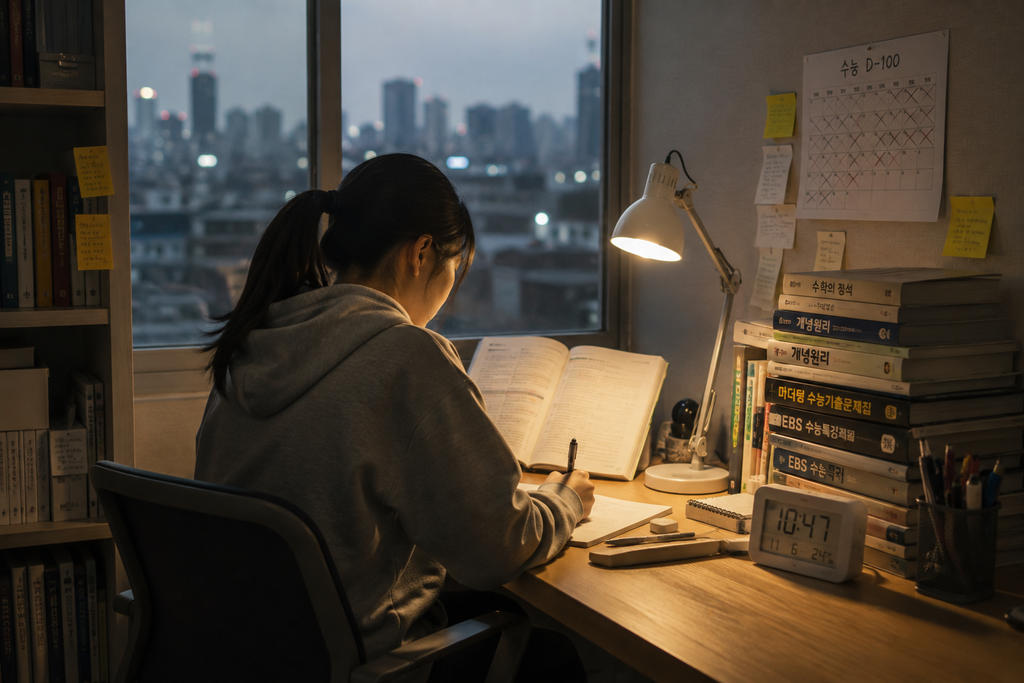
A child may spend the morning at school, the afternoon at a hagwon, and the evening preparing for another test. Parents may know the grades, the homework, the academy schedule, the next exam, and the subject their child is struggling with.
From the outside, it can look like an extraordinary degree of parental involvement.
There is even a familiar English phrase for one extreme of it: “helicopter parenting.”
The term describes parents who hover over their children’s lives, monitoring and intervening more closely than necessary. In Korea, researchers and international organizations have discussed this behavior within a much larger educational system shaped by intense competition and high expectations for academic performance. The OECD has specifically pointed to relatively high levels of helicopter parenting in Korea in connection with those pressures.
So why does education occupy so much room in Korean family life?
To understand that, you have to look beyond the classroom.
Education Was Never Just About School
For much of modern Korean history, education carried an unusually large promise.
A good education could lead to a better university. A better university could open doors to more desirable jobs. A desirable job could offer security and social standing in a country that experienced extraordinary economic change within a single generation.
The logic was simple.
The competition was not.
For families who had watched education transform a person’s prospects, spending heavily on a child’s education was difficult to dismiss as unnecessary.
That history still shows up in the numbers.
Korea now has one of the highest levels of educational attainment in the OECD. In 2024, 71 percent of Koreans aged 25–34 had completed tertiary education, compared with an OECD average of 48 percent.
A university degree is no longer unusual.
But that has not made competition disappear.
It has pushed the competition higher.
The Competition Starts Before University
The pressure does not begin with the university entrance exam.
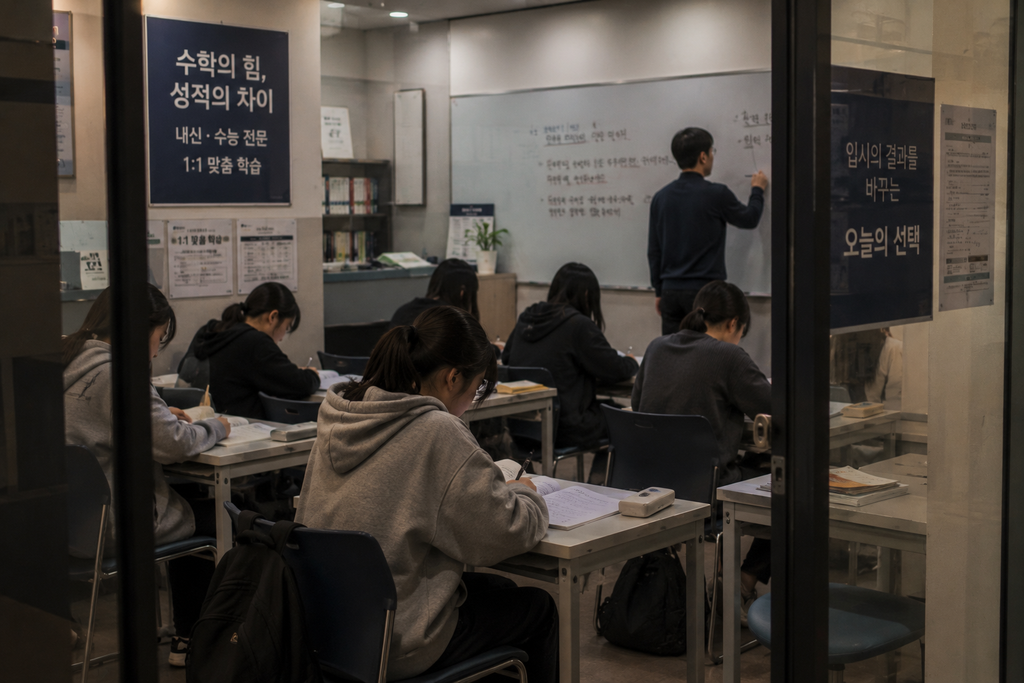
Children can enter private education while they are still in elementary school. English, mathematics, reading, music, sports, and other activities can fill an afternoon that, in another country, might have belonged to homework or play.
The Korean word hagwon refers to the private academies that occupy a central place in this system.
Walk through Gangnam in the evening and the signs are everywhere.
Walk through Gangnam in the evening and the signs are everywhere: English, mathematics, science, exam preparation.
Students move between buildings with backpacks on their shoulders while parents keep track of the clock.
And this is not simply a wealthy-family phenomenon. Private education has become widespread enough to form part of the country’s broader educational environment.
The figures declined from the previous year.
The scale remains enormous.
Why Pay for Another School After School?
This is one of the first questions many foreigners ask.
If children already spend most of the day at school, why send them somewhere else afterward?
Part of the answer is competition.
Parents may not be paying for an entirely different education. They may be paying for additional practice, help with a difficult subject, earlier preparation, or simply the reassurance that their child is not falling behind.
According to Korea’s 2025 private education survey, the most commonly stated purpose for general-subject private education was making up for school lessons, followed by studying ahead and preparing for the next level of schooling.
That complicates the familiar image of Korean parents sending their children to academies solely because they want them to get ahead.
Sometimes the motivation is more defensive.
If everyone else is receiving extra instruction, opting out can feel dangerous.
Your child may be doing perfectly well.
But what if everyone else’s child is moving faster?
When Everyone Is Competing, Opting Out Becomes Difficult
Imagine a parent who would prefer their child to have a lighter schedule.
Then they discover that classmates are taking additional mathematics lessons, studying English after school, and preparing for the next exam.
Their child might be fine without another academy.
Maybe.
But certainty is impossible.
The decision stops being simply about whether another class is useful. It becomes a question of risk.
How much can you afford to let your child fall behind?
The OECD has described Korea’s educational environment as highly competitive and noted the pressure parents can feel to ensure that their children perform well.
That helps explain why the system can persist even when families find it expensive, tiring, and stressful.
Nobody has to believe the system is perfect.
They only have to believe that stepping away from it might hurt their child.
This Is Where “Helicopter Parenting” Comes In
The phrase helicopter parent did not originate in Korea. It is used internationally for parents who monitor and intervene closely in their children’s lives.
But the concept fits Korea’s educational environment particularly well.
When academic performance carries significant weight, parents have more reasons to stay involved.
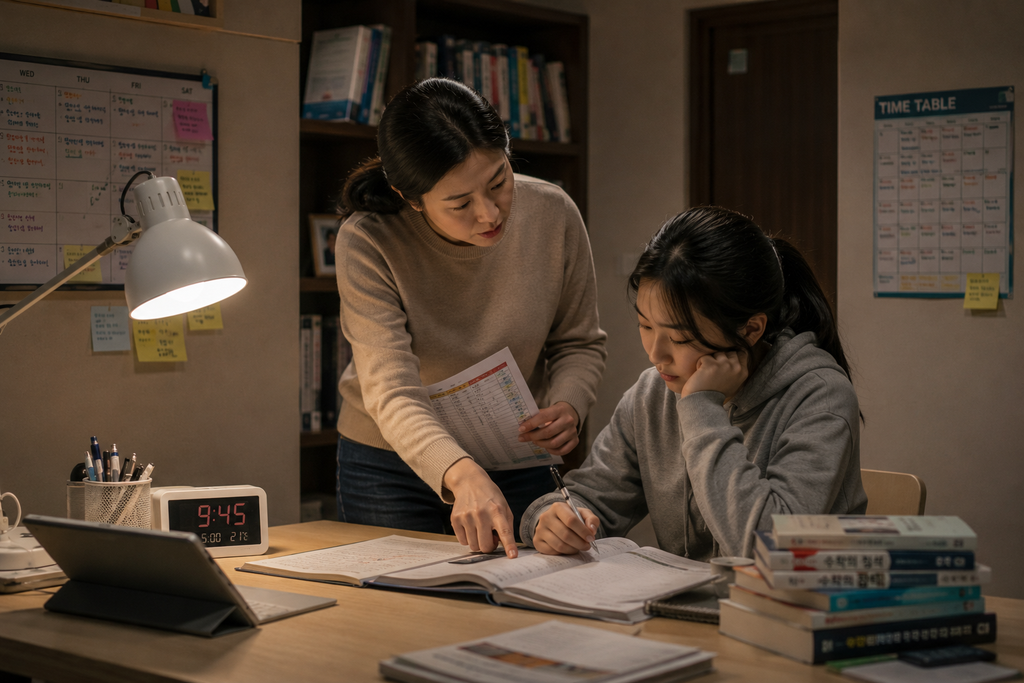
They arrange academy schedules. They communicate with teachers. They monitor grades. They compare educational options. They keep track of what comes next.
The OECD has described Korean parents as experiencing a strong culture of “helicopter parenting” or “over-parenting,” particularly in the context of educational competition. It notes that parents, especially mothers, may become deeply involved in managing their children’s daily lives in an effort to maximize educational opportunities.
But calling these parents simply “controlling” misses something.
A great deal of the behavior comes from anxiety.
Parents are trying to protect their children from a future they cannot see.
The Mother Waiting Outside the Academy
This may be one of the most revealing images in Korean education.
A student finishes an evening class.
Outside, a parent is waiting.
Perhaps they drive home together. Perhaps another academy is next. Dinner might be eaten between classes. Homework is waiting at home.
From outside the family, the schedule can look like micromanagement.
Inside the family, the same schedule may feel like care.
That difference matters.
The same action can be read in two entirely different ways: a parent controlling a child’s life, or a parent making sure the child has every opportunity available.
Korean parents are not a single group, and attitudes toward education vary widely. But when academic achievement carries this much social weight, intensive involvement can begin to feel less like an unusual parenting choice and more like what a responsible parent is supposed to do.
The Cost Is Not Only Financial
The price of private education is easy to see.
In 2024, 60.9 percent of surveyed households with school-aged children said education expenses were a financial burden relative to their income. Among households that considered education expenses burdensome, 71.9 percent identified private education outside school as the largest source of that burden.
But money is only part of the cost.
Time matters.
The OECD has found that Korean students spend substantially more time studying outside formal classroom hours than many students elsewhere in the OECD.
Every extra class takes an hour from somewhere else.
Sport.
Hobbies.
Unstructured play.
Doing nothing at all.
Parents pay with time, too. Scheduling classes, checking grades, communicating with teachers, arranging transportation, and thinking about the next educational step can become another job layered onto family life.
Children study more.
Parents manage more.
It Is Changing, But Not Disappearing
The picture is not frozen.
Korea’s 2025 private education expenditure fell 5.7 percent from the previous year, while participation declined to 75.7 percent. The numbers suggest that spending is not simply climbing forever.
But the underlying competition remains.
Educational attainment is exceptionally high, and academic achievement continues to matter greatly to families. In PISA 2022 data, 89 percent of Korean parents said academic achievement was an important factor when choosing a school, compared with 78 percent across the OECD.
So the interesting question is no longer whether Korean parents care about education.
They clearly do.
The harder question is how much of a child’s education a parent should manage.
Why Does Education Become a Family Project?
Perhaps this is the part that feels most unfamiliar to an outsider.
School does not always remain entirely within the child’s world.
Parents are involved.
Academies are involved.
Teachers are involved.
Private tutors may be involved.
Families discuss grades, schedules, university choices, and future careers years before a child is old enough to make many of those decisions independently.
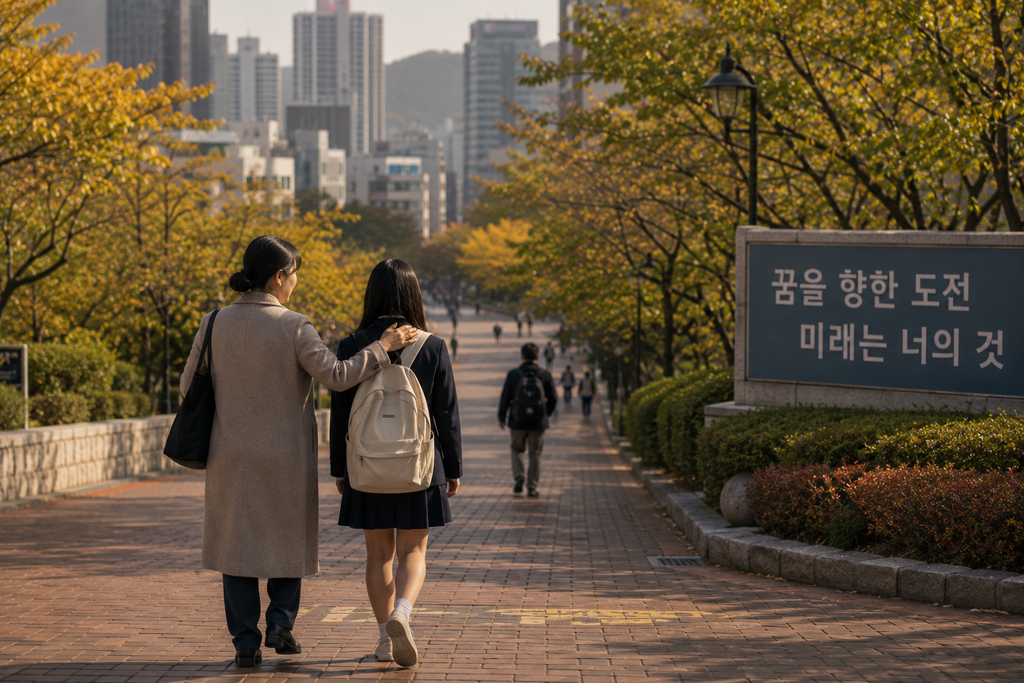
Education becomes something a family manages together.
That arrangement has obvious advantages. A child who is struggling can receive help quickly. Parents can provide resources that a school may not have. Students can receive highly specialized instruction.
But support has a point where it can become surveillance.
A child can begin to feel that every hour needs a purpose, every grade carries a consequence, and every choice is being watched.
That is the uncomfortable side of helicopter parenting.
So, Why Are Korean Parents So Involved?
It is tempting to say that Korean parents are simply more ambitious.
The reality is less flattering and more complicated.
Education became one of the country’s most important routes to social mobility. Competition intensified as more Koreans gained access to higher education. Private academies filled the space between what schools could provide and what families believed their children needed.
Then participation became widespread.
And once enough families were doing it, opting out became difficult.
Parents responded by becoming more involved.
Not all of them want their children to spend every evening studying. Many would probably prefer a less pressured system.
But when falling behind seems capable of changing a child’s future, doing less can feel like taking a risk with that future.
That is the part of Korean education that can be hardest to see from outside.
The parent waiting beneath the academy sign may look like a helicopter parent.
Sometimes they are.
But beneath the hovering is often something much more ordinary: a parent who is afraid that if they stop watching—even for a moment—their child might be the one who falls behind.
And in a system built around competition, that fear can be remarkably difficult to switch off.