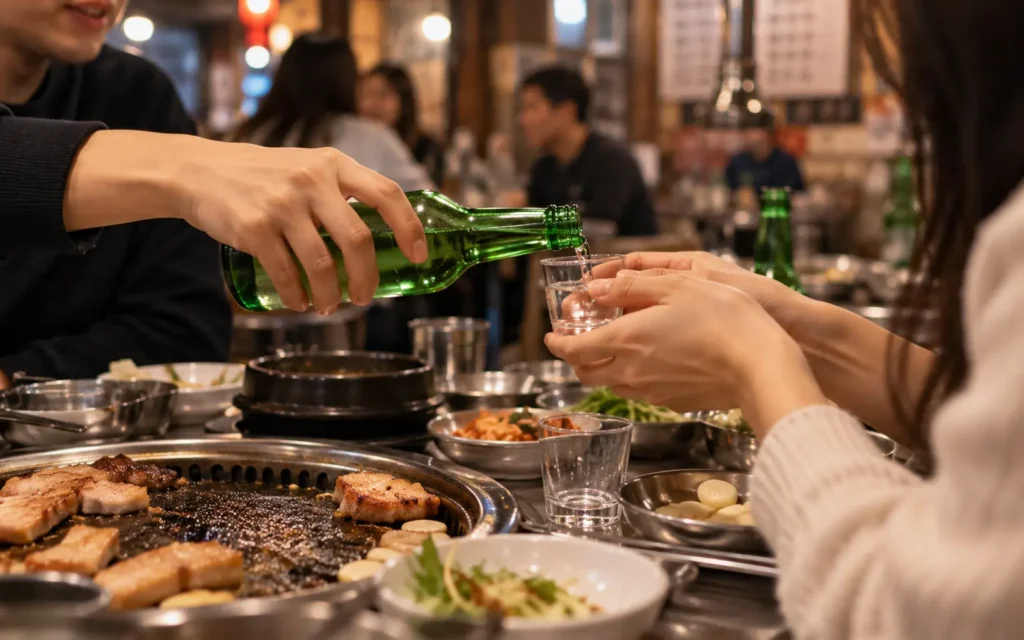
A green bottle lands between two grills of pork belly with a soft knock against the metal table. Someone twists off the cap. The oldest person at the table reaches for the bottle first, and the youngest lifts a small glass with both hands. When the drink reaches him, he turns slightly away before swallowing.
No one explains the choreography. The meat keeps sizzling. Chopsticks move between plates of kimchi and garlic, another empty glass appears, and the bottle changes hands.
Soju occupies this peculiar territory in Korean life: inexpensive enough for an ordinary dinner, ritualised enough to expose the relationships around the table. For decades it followed office workers after work, students into late-night restaurants, families through celebrations and friends through bad news. The drinking culture surrounding it has begun to loosen, particularly among younger Koreans, but the small clear glass still carries traces of hierarchy, reciprocity, food and a social world built around pouring for someone else.
Before the Green Bottle
The drink now associated with fluorescent restaurants and convenience-store refrigerators has a much older ancestor.
Several theories surround the origins of Korean soju, though the introduction of distillation during the Goryeo period through contact with the Yuan dynasty in the 13th century remains the most widely accepted account. Traditional soju came from fermented grain that was distilled into a strong, aromatic spirit. Places such as Andong developed their own traditions, with some forms of Andong soju reaching roughly 40 to 50 percent alcohol by volume. It belonged to a broader Korean culture of regional liquors rather than to a single national formula.
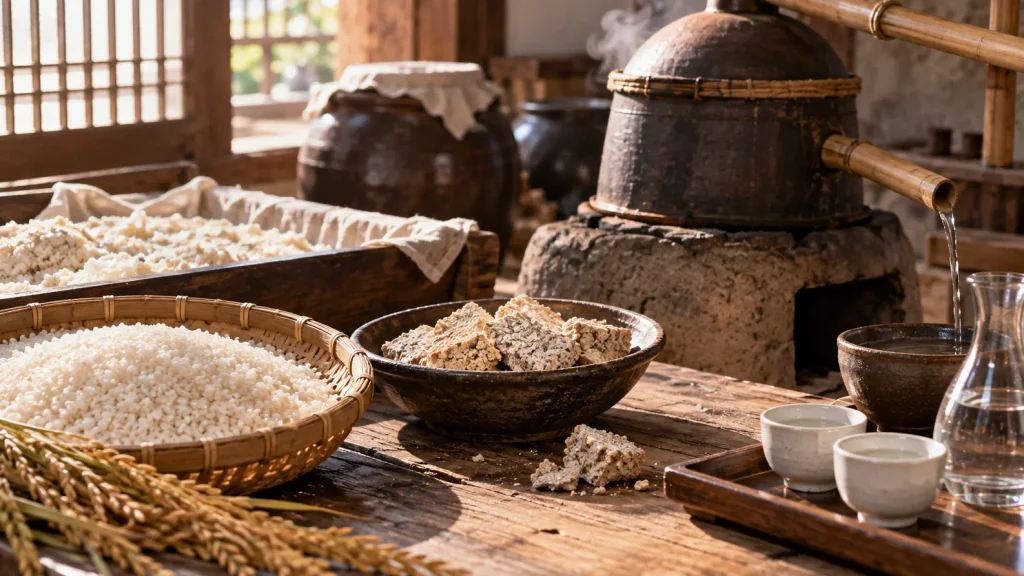
The drink most people now picture when they hear soju emerged from a very different economic moment. Food shortages prompted the South Korean government in 1965 to prohibit grain-based distilled soju, pushing producers towards diluted spirits that could be manufactured at scale.Producers shifted toward neutral spirit made from ingredients such as sweet potatoes, molasses and tapioca, diluted it with water and adjusted the flavour. Cheap, scalable and consistent, diluted soju spread through the country while traditional distilled versions receded from everyday drinking.
1965
Food shortages led South Korea to prohibit grain-based distilled soju. Diluted soju expanded rapidly in the years that followed, reshaping the drink most Koreans encountered in everyday life.
Its strength fell as its reach widened. Mainstream diluted soju moved from around 30 percent alcohol in the mid-1960s toward the teens over subsequent decades, softening the burn and extending the amount of time a bottle could remain in play at dinner. The industrial version lost much of the grain character of older distilled spirits. It gained something socially useful in return: neutrality.
A drink that demanded little ceremony from the palate could absorb a great deal of ceremony from the people drinking it.
The Bottle Belongs to the Table
Soju rarely arrives alone.
It sits beside pork belly crisping at the edges, bubbling kimchi stew, sliced raw fish, spicy stir-fries or a late plate of grilled intestines. The Korean word anju covers food eaten with alcohol, though the relationship runs deeper than a snack placed beside a drink. A long evening can unfold through repeated cycles of eating, pouring and talking until the table accumulates empty plates and green bottles.
The modern diluted spirit fits that rhythm well. Its relatively clean flavour does not compete aggressively with garlic, fermented sauces, chilli or fatty meat. Korean tourism material routinely pairs soju with dishes such as samgyeopsal, and official cultural accounts describe affordability and mildness as central to its broad appeal.
Price also flattened social boundaries. Premium whisky announces itself when it arrives. Wine can arrive with a vintage, a region and a discussion of the bottle. Everyday soju traditionally asks much less of the buyer. The same familiar format can appear at a student dinner, a construction crew’s meal, a reunion of old friends or a restaurant table occupied by executives.
The bottle does not erase the differences between those people. Sometimes it makes them easier to see.
A Small Glass Carries Rank
Watch who pours.
Traditional Korean drinking etiquette discourages filling your own glass. Someone else pours for you; you return the gesture. With an older or more senior person, the bottle and glass are commonly handled with two hands, or one hand supports the arm holding them. A younger drinker may turn the head slightly away while taking a sip in front of an elder. Seoul’s official tourism guide still lists these gestures among standard drinking manners.

The movements take seconds, yet they reveal a table’s social geometry. Age can determine who receives first. Seniority can alter how formally a glass is held. Among close friends the gestures loosen until someone pours one-handed while arguing over dinner and nobody notices.
Soju became particularly suited to this exchange because of the glass itself. A bottle contains multiple small pours, forcing the act to repeat. Someone notices an empty glass. Someone reaches across the table. Another person accepts. Conversation continues while reciprocity keeps circulating in liquid form.
Foreign visitors sometimes encounter these gestures as a list of etiquette rules to memorise. Around an actual Korean table they often look less rigid. A hand slides under a wrist almost automatically. Someone who has spent thirty years receiving drinks from elders may perform the movement without interrupting a sentence.
The ritual survives partly because it can become invisible to the people practising it.
Work Had a Second Shift
For generations of Korean office workers, the most culturally loaded bottle often appeared after the working day had technically ended.
The hoesik — a company meal or gathering — brought colleagues away from desks and into restaurants, frequently with alcohol on the table. Managers and junior employees who addressed one another formally at work could spend hours eating and drinking together. Another venue might follow the first. Karaoke, beer or another round could stretch the night further.

Soju suited the old structure almost perfectly. It was inexpensive, easily shared and strong enough to change the atmosphere quickly. The rules around pouring also mapped neatly onto workplace hierarchy: seniority at the office could follow everyone to the dinner table.
Those evenings carried an ambiguity familiar to many workers. A company dinner could create friendships and allow conversations that the office suppressed. It could also extend managerial authority into private time. Attendance might feel voluntary on paper while refusal carried a social cost.
The tension began surfacing long before the pandemic. A 2019 survey of 1,824 employees found 64.5 percent said they could refuse a work dinner without negative consequences, evidence that the old expectation was already weakening. Younger workers later emerged from the pandemic with even less appetite for compulsory late-night gatherings.
The table remained. The obligation began losing its grip.
Then Someone Poured Beer on Top
Soju’s social adaptability becomes particularly visible when it stops being drunk as soju.
Mix it with beer and the table gets somaek, a name stitched together from soju and maekju, the Korean word for beer. The combination became closely associated with group drinking, company dinners and communal toasts. Ratios vary, techniques multiply and everyone seems to know someone who insists that their version tastes better.
Making it can turn into theatre. A spoon or chopstick agitates the glass. Beer foams upward. Someone announces the mixture with the concentration of a bartender working with much finer ingredients. Then five people lift their glasses at once.
The point was rarely complexity of flavour.
Somaek accelerates participation. One person prepares it, the table watches, everyone joins the toast. The drink creates a small event inside the larger meal, and repeated events can keep a group moving through an evening even after conversation has run out of easy subjects.
That social machinery explains part of soju’s durability. It can function as a spirit, an accompaniment to food, a component in another drink or simply the object everyone reaches for when a toast begins.
The Younger Table Looks Different
Walk into a gathering of Koreans in their twenties now and the green bottle no longer carries the inevitability it once did.
Korea Disease Control and Prevention Agency data for 2024 showed that 56 percent of South Koreans aged 19 to 29 either did not drink or drank no more than once a month, up from 37.9 percent when the survey series began in 2005.
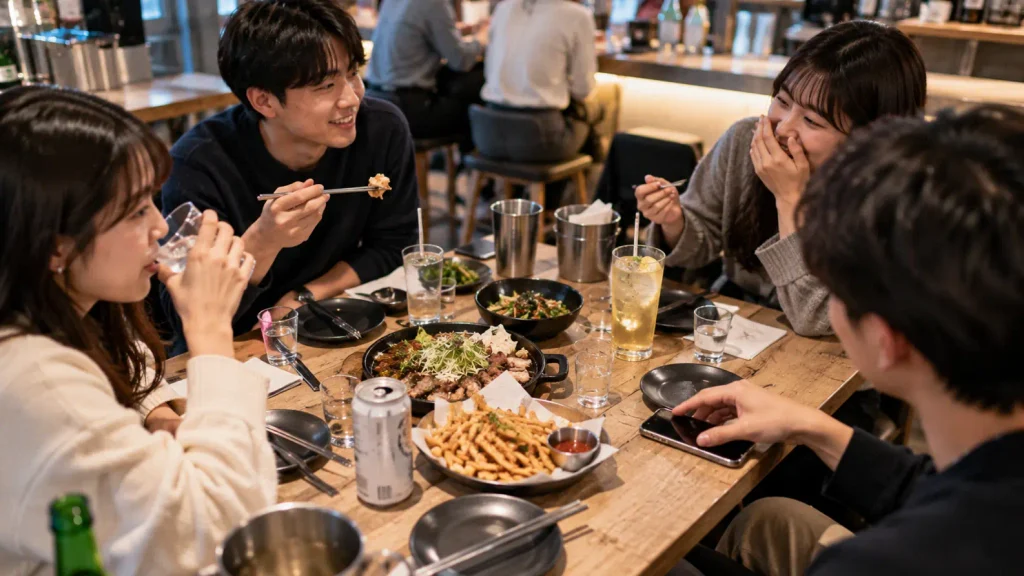
The change reaches beyond alcohol. Younger workers guard evenings more closely, exercise more deliberately and tend to question the assumption that professional loyalty requires staying out drinking with colleagues. Company dinners still take place, though many finish earlier, make alcohol optional or move to lunch. Bars have responded with highballs, lighter drinks and non-alcoholic choices; soju producers themselves have spent years lowering alcohol levels and introducing flavoured products.
A refusal no longer carries exactly the same meaning at every table. Someone can hold sparkling water while colleagues drink. Another person might have one glass during dinner and leave before the second round. The older rituals have not vanished evenly — workplaces, families and generations differ — but drinking capacity commands less social prestige than it once did.
Soju’s role therefore becomes easier to see at the moment it stops being compulsory. The bottle mattered partly because drinking once provided a widely understood method for producing closeness: stay longer, pour another glass, disclose something you would not have said at three in the afternoon. Younger Koreans are keeping some of the closeness while renegotiating the price of admission.
The Spirit Has Split in Two
At the same time, soju itself has started recovering a history that mass production once obscured.
Alongside the familiar diluted bottle sits a growing category of distilled spirits made with rice, nuruk and regional ingredients. Traditional producers in Andong never disappeared, while newer premium brands have introduced younger consumers to soju that carries aroma, grain character and a higher price. Korea’s cultural authorities now promote traditional sool as both culinary heritage and a contemporary craft category.
The two versions can share a name while asking for completely different attention. One disappears easily into a noisy dinner. The other may arrive in a designed bottle and get poured slowly into a tasting glass.
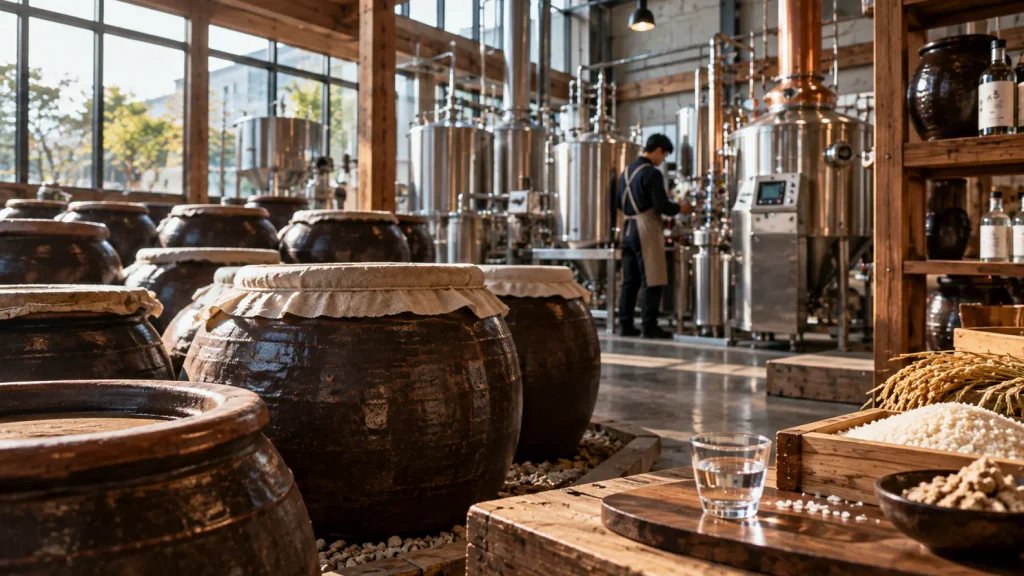
That split echoes the broader change around drinking in Korea. Quantity once provided much of soju’s cultural visibility: bottles accumulating beneath restaurant tables, the second round becoming a third, colleagues measuring an evening by how late it ended. The newer landscape leaves more room for taste, choice and refusal.
Still, the old green bottle keeps its place beside grills and stew pots. Cultural habits rarely wait for a clean replacement.
One Glass Left
Near midnight, a restaurant table begins to clear.
The pork belly grill has gone dark. A server stacks empty dishes while four friends put on coats and check the last train times on their phones. One green bottle remains, less than a glass at the bottom.
A man reaches for it, sees that his friend’s cup is empty and tips the bottle over. A few clear drops fall out — not enough for a proper pour.
He laughs, sets the bottle down and slides the empty glass back across the table.