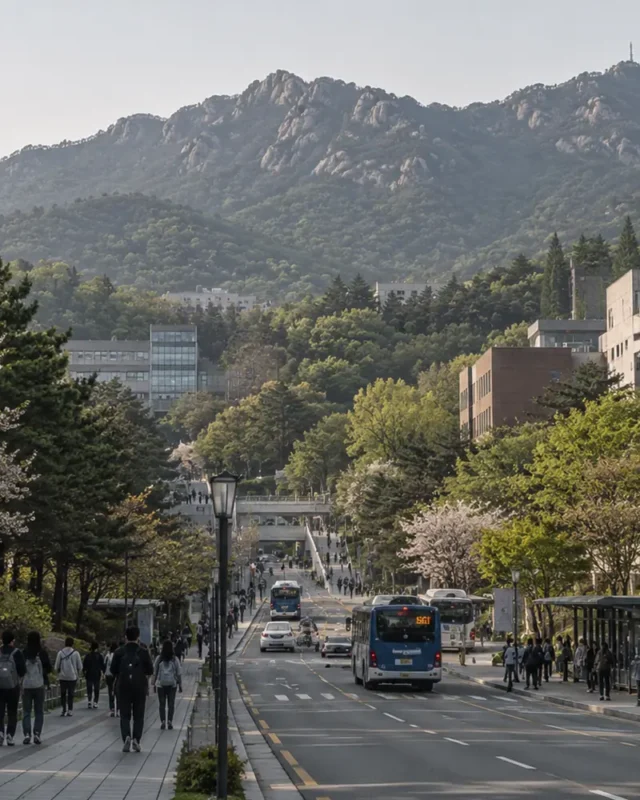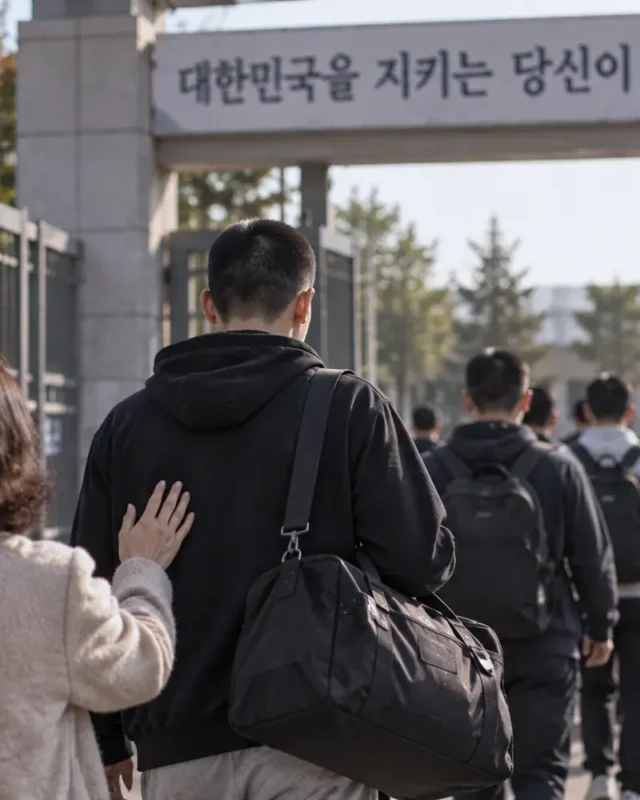
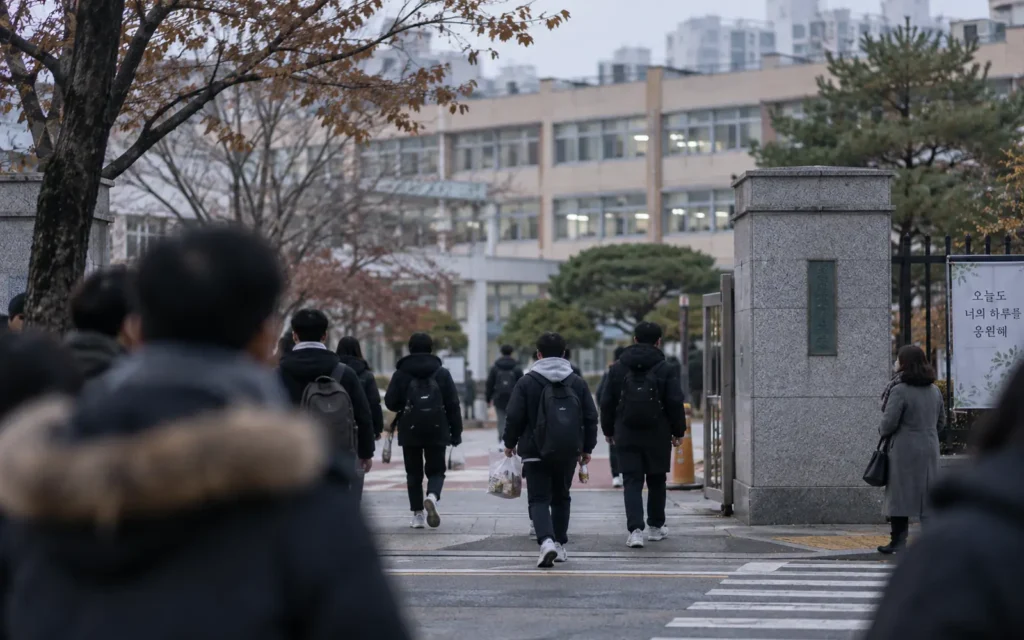
At 7:40 on a November morning, the streets around a Seoul high school can feel strangely quiet.
Students arrive in dark coats, clear plastic bags and convenience-store drinks in hand, carrying the last pages of notes they were reading on the bus. Parents wait outside school gates or sit in nearby cafés, checking their phones.
Inside the classrooms, desks face forward. The clocks seem louder than usual. An entire generation begins the same examination.
The exam lasts for hours. Its influence lasts much longer.
In South Korea, university entrance sits close to the centre of family life, education spending and expectations about work. The competition begins years before an application is submitted, running through school rankings, private academies, mock examinations and increasingly careful decisions about subjects, neighbourhoods and how much time can be spared from the next score.
South Korea’s higher-education system expanded dramatically during the country’s economic transformation. University became accessible to a much larger share of the population, while employers continued to attach value to educational credentials. A degree alone no longer guarantees a secure career, leaving families to compete more intensely for the institutions believed to offer the strongest routes into desirable companies and professions.
When a School Name Follows You
Ask a Korean student about university and the conversation can move quickly from a campus to a future workplace. The name on a diploma can shape a first impression in recruitment, the alumni network available after graduation and the expectations surrounding a young person’s career.
At the top sits the group known as SKY: Seoul National University, Korea University and Yonsei University. Other universities carry strong reputations within particular fields, regions and professional networks, creating a hierarchy that reaches well beyond those three names.
The hierarchy is not absolute. Graduates of less prestigious universities build exceptional careers, while students from elite institutions can struggle to find work. The difference often appears earlier, in assumptions about academic ability, ambition and opportunity attached to the name of a university.
That makes the entrance process feel consequential long before anyone reaches the campus gate.
The Race Starts Long Before the Exam
The famous university entrance examination is only the most visible part of the competition. By their final years of high school, many students have already spent years preparing through school grades, mock exams, extracurricular records and subject choices.
Students leave school and move into private academies for mathematics, English, science or exam preparation, sometimes continuing late into the evening. Gangnam became particularly associated with this education market, though private education extends far beyond Seoul.
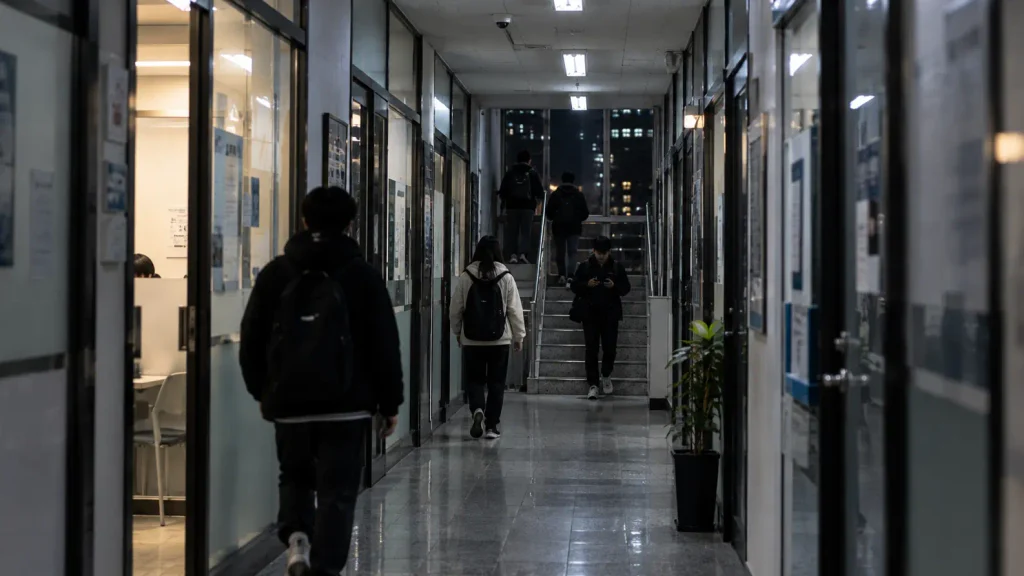
The scale of spending reflects the pressure around it. Families may resent the financial burden and the hours their children surrender, yet stepping away can feel risky when everyone else appears to be preparing harder.
27.5 TRILLION WON
South Korean households spent about 27.5 trillion won on private education in 2025, while 75.7 per cent of elementary, middle and high school students took part.
A student does not necessarily need to believe tutoring guarantees success.
It can be enough to believe that everyone else is doing it.
The Exam Has a Name Everyone Knows
On the day of the College Scholastic Ability Test, or Suneung, the country’s attention narrows towards schools, classrooms and clocks.
Flights adjust schedules during the English listening test. Construction work can pause. Police officers help late students reach examination centres. Parents gather at temples, churches and other places of worship while television crews follow the morning traffic and students arriving at the gates.
The CSAT does not determine every university admission decision. Universities combine exam scores with school records and other criteria in different ways. Still, the test compresses years of preparation into a single day and can shape which institutions become realistic options.

For the student at the desk, the hierarchy is reduced to something much simpler.
A question.
A clock.
A page still unfinished.
Seoul Pulls the Ladder Towards Itself
Korea’s university hierarchy is also a map of opportunity.
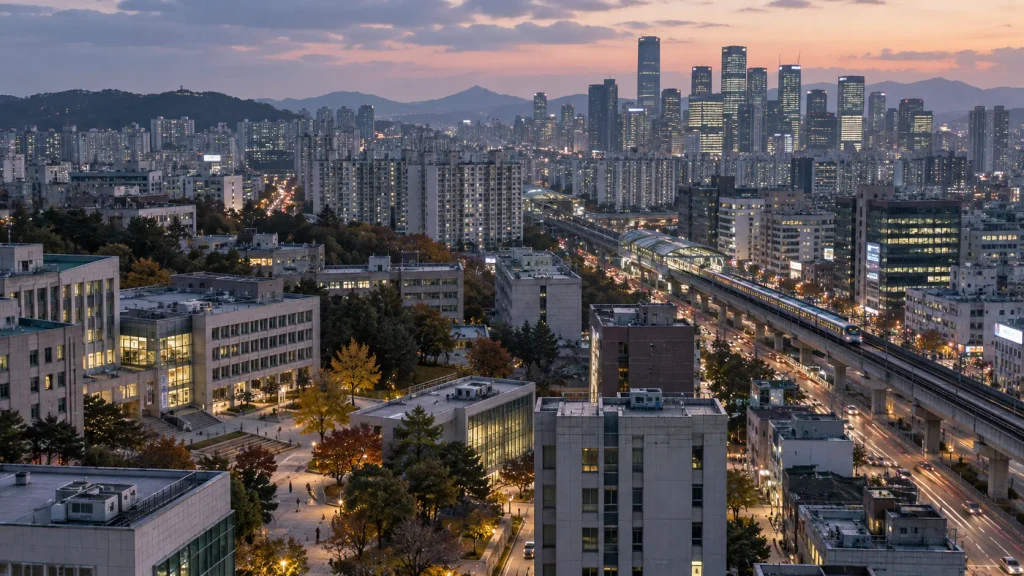
The Seoul metropolitan area contains many of the country’s most prestigious universities, major corporations, government institutions, cultural organisations and professional networks. Students from other regions often move towards the capital for university, then remain because so many desirable jobs cluster around the same place.
The pattern reinforces itself. Strong universities draw ambitious students. Companies recruit from them. Graduates build networks nearby. New students arrive because those networks already exist.
Regional universities face changing demographics and local economic pressures, with some developing strong reputations in specific disciplines while others struggle to attract applicants. For families, choosing a university can therefore mean choosing a city, a professional network and perhaps a future home.
When Everyone Goes to University
Competition intensified as higher education expanded.
A university degree once marked a relatively uncommon educational achievement. As attendance became widespread, the degree itself carried less distinction. Families began competing over the institution attached to it instead.
The escalation follows a familiar path. A common degree makes a respected university more valuable. More students targeting respected universities makes distinctions between institutions sharper. Employers facing thousands of applications gain another signal for sorting candidates.
Experience, skills, interviews and qualifications all matter. Still, university reputation remains one of the earliest filters in a crowded labour market.
The competition becomes partly about getting ahead and partly about avoiding the feeling of being left behind.
Parents Enter the Equation
A Korean university application rarely concerns only the student.
Parents may start thinking about education years before the entrance exam. They compare schools and neighbourhoods, monitor mock-exam results and discuss which subjects could open or close particular university options.
Part of that intensity comes from history. Many Korean parents grew up during periods when education could dramatically change a family’s economic position. University represented a route into professional work and a more secure life than the previous generation had known.
That memory still shapes expectations.
A grade on a report card can carry the imagined weight of a future workplace, income, social circle and housing situation.
The child may see the same number and think only about Friday night.
The Cost of Falling Behind
The pressure shows up far from university campuses.
Students spend evenings in study rooms and libraries. Parents compare application strategies. Private academies advertise programmes built around marginal improvements in exam performance. Neighbourhoods with strong schools and dense education markets attract families willing to move for a better academic environment.
The cost is financial, but it is also measured in time.
Sport, hobbies, part-time work and empty afternoons compete with preparation. At the same time, young Koreans have increasingly questioned whether elite credentials deliver the security earlier generations expected, particularly in a society where housing is expensive and desirable jobs remain limited.
A student can spend years preparing for a prestigious university and discover that another competition begins immediately after graduation.
The University Name Can Open a Door
Korean companies have increasingly moved away from openly screening candidates solely by university prestige. Skills, internships, portfolios and practical experience carry more weight in many industries.
The older hierarchy has not vanished.
A prestigious university can still influence the first stage of professional life, particularly when large numbers of applicants compete for a limited number of positions. Alumni networks add another layer, connecting graduates across corporations, government offices, law firms, hospitals and other institutions.
None of that guarantees employment.
It simply adds another signal to a competition that already has plenty.
The Old Hierarchy Meets a New Economy
Korea’s economy has changed faster than its education hierarchy.
Technology companies, startups, creative industries and global businesses increasingly recruit for specialised skills that do not map neatly onto university prestige. Coding, design, data analysis, language ability and industry experience can create opportunities outside traditional routes.
The older credential system remains alongside them.
One student may spend years pursuing a prestigious university while also building technical skills employers will test directly. Another may decide that a four-year degree is not the best route and enter a specialised field through different training.
Families still value the university name.
Young people have more reasons to ask what the name can actually deliver.
Competition Does Not End at the Campus Gate
University entrance is often described as though admission marks the finish line.
For many graduates, it simply changes form.
Students compete for internships, scholarships and exchange programmes. Graduates compete for jobs at major corporations, public institutions and professional firms. Later come promotions, professional qualifications and further education.
The intensity varies by field. Medicine, law, finance, large corporations and public-sector careers can attract enormous numbers of applicants, while other industries place more weight on portfolios, technical ability or experience.
University remains one of the earliest filters.
A teenager choosing where to apply can therefore feel as though they are choosing much more than four years of study.
A Different Generation Is Asking Different Questions
The younger generation inherited a credential-driven system while entering a society where the older promises of education feel less certain.
Housing costs, delayed marriage, changing employment patterns and the rising cost of living have changed expectations around adulthood. A prestigious degree can still carry substantial value without providing the straightforward upward mobility that earlier generations associated with educational success.
The result is a more complicated relationship with university.
Some students still work intensely towards elite institutions. Others pursue specialised programmes, civil-service examinations, skills-based careers or industries that barely existed when their parents were students.
The hierarchy remains visible.
The definition of a successful life around it is less settled.
So Why Are Korean Universities So Competitive?
Education matters in Korea, but the pressure cannot be explained by academic ambition alone.
University sits where family aspiration, economic history, regional inequality, private education, corporate recruitment and social status meet. Rapid industrialisation gave education an unusually powerful role in upward mobility. The expansion of higher education then created another problem: once a university degree became common, families began competing over where that degree came from.
Each part reinforces the next. Prestigious universities attract ambitious students. Companies recruit heavily from recognised institutions. Families invest more heavily in preparation. Students watch previous generations and adjust their own ambitions.
The system has exceptions everywhere. Vocational schools, regional universities, specialised institutions and alternative career routes all exist, and attitudes differ across families and generations.
The hierarchy remains visible enough to shape behaviour long before the application form arrives.
The Morning After the Exam
By late afternoon on Suneung day, the streets outside examination centres begin to fill again.
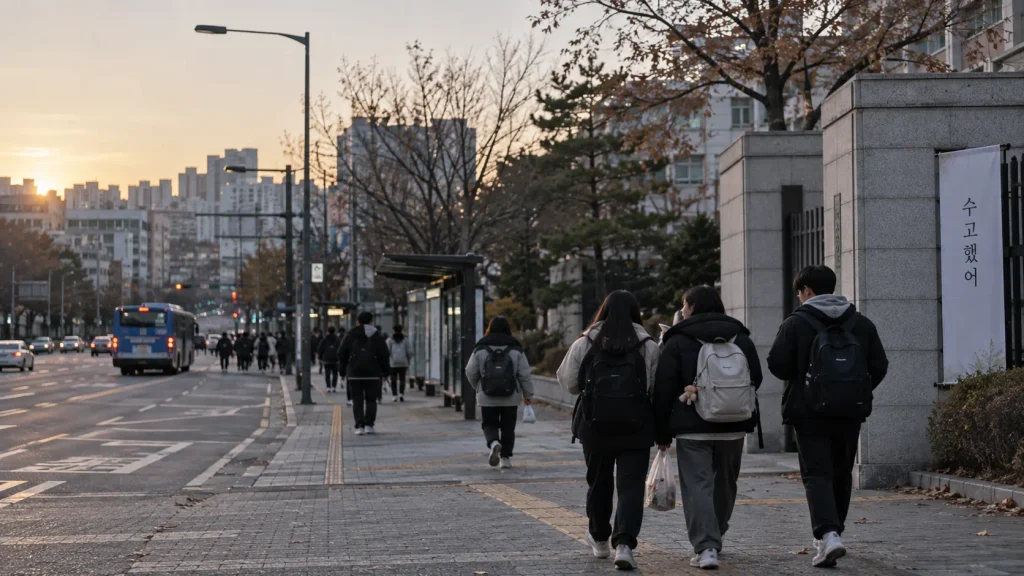
Students emerge carrying the same bags they brought in that morning. Some compare answers. Others avoid the conversation. Parents scan faces in the crowd, looking for a familiar expression before asking the question that has occupied the day.
The papers will be marked later.
For now, one student walks towards the bus stop, the exam booklet tucked under an arm, the phone already lighting up with messages.
Somewhere in Seoul, another student is doing the same.
The next application deadline is still weeks away.